Extreme Heat Costs Bangladesh Workers Tk 77,000 Crore Per Year, IIED-OKUP Study Reveals
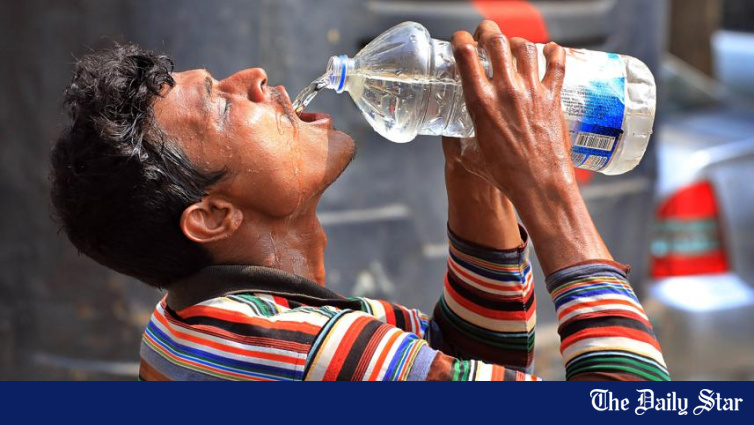
Dhaka, August 12, 2026 — Extreme heat driven by climate change is costing Bangladesh's informal workers an estimated Tk 77,000 crore (approximately $6.6 billion) in lost wages every year, according to a landmark new study by the UK-based International Institute for Environment and Development (IIED) and the Bangladeshi migrant rights organisation OKUP. The figure is equivalent to roughly 1.4 percent of national GDP — a staggering loss for an economy that relies on labour-intensive export sectors like ready-made garments, construction, and agriculture.
🔥 The Human Toll Behind the Numbers
For Abdur Rahim, a construction worker in Dhaka's Adarshanagar area, the statistics translate into a daily reality of exhaustion, dehydration, and dwindling earnings. He spends long hours toiling under the open sky with no ceiling above him, let alone a fan. His shirt clings to his skin. A day off is not an option — his family depends entirely on his daily wages, so staying home means losing a day's income.
Rahim's experience is echoed across Bangladesh's vast informal workforce, which accounts for 85 percent of total employment. The study, conducted between 2024 and 2026, interviewed 175 households in Dhaka whose members work in construction, rickshaw pulling, and garment manufacturing. Of these, 122 families were engaged in outdoor work and 53 in indoor work, mainly in the garment industry.
📊 The Data: Outdoor vs Indoor Workers
The study's findings quantify what workers have long reported anecdotally:
- ☀️ 23.7 working days lost per year on average by outdoor workers due to extreme heat
- 🏢 13.5 working days lost per year by indoor workers, including RMG factory workers
- 💸 $1,756 average annual income for outdoor worker families — 41 percent below Dhaka's living wage of $2,997
- 💸 $1,985 average annual income for indoor worker families — 34 percent below the living wage
- 📉 $1,607 / $1,896 — incomes after heat-related losses, widening the gap to 46.4 percent and 36.8 percent respectively
- 🌏 1.4 percent of GDP — total annual wage loss attributable to extreme heat
Researchers observed workers during work and rest periods, conducted group discussions and family case studies, and had a panel of three physicians review the health findings. They combined these with data from the National Labour Force Survey and regional temperature readings to extrapolate national economic losses.
🚧 Health Consequences: A Silent Crisis
Beyond income losses, the study documents a quietly unfolding public health crisis. Rehana, a garment worker in Dhaka's Pallabi area, told researchers that many of her colleagues suffer from kidney problems but hide their conditions for fear of losing their jobs.
“We cannot drink as much water as our bodies need in hot weather. During working hours, we usually limit our water intake because drinking enough water means frequent urgency to go to the toilet, which disrupts our work,” she said. “We also cannot sleep properly at night because of the oppressive heat.”
The consequences include heat exhaustion, dehydration, kidney strain, and a worsening of pre-existing conditions. Critically, the study found that indoor workers face nearly the same rate of heat exhaustion as outdoor workers — challenging the assumption that factory walls offer meaningful protection.
🏢 Why the RMG Sector Should Take Notice
The findings carry profound implications for Bangladesh's $45 billion ready-made garment industry, which employs over 4 million workers — the majority of them women. Many RMG factories operate with inadequate ventilation, and worker dormitories often feature tin roofs and a single fan, leaving little opportunity for recovery after shifts.
For international buyers increasingly focused on Environmental, Social, and Governance (ESG) compliance, the study raises uncomfortable questions about supply chain resilience and worker welfare. Brands sourcing from Bangladesh may soon face pressure to fund heat-adaptation investments in supplier factories — from improved ventilation and cooling to schedule adjustments during peak summer months.
🧬 Researchers Call for Policy Action
Ritu Bharadwaj, Director of Climate Resilience, Finance, and Loss and Damage at IIED, emphasised that for these workers, heat exposure does not end when their shift ends. “They leave a hot workplace for a home with a tin roof, one fan and frequent power cuts, leaving them with little opportunity to recover,” she said.
Dr Fahmida Khatun, Executive Director of the Centre for Policy Dialogue (CPD), called for enforceable labour regulations covering drinking water, shade, ventilation, and adequate rest during extreme heat. She argued that heat-related illnesses should be formally recognised as occupational risks, and that climate-responsive social protection should provide temporary income support to informal and daily-wage workers when extreme heat disrupts their livelihoods.
“The cost of inaction is likely to exceed the cost of adaptation,” Dr Khatun warned — a calculation that should resonate with policymakers preparing Bangladesh's climate finance strategy ahead of LDC graduation.
🌐 Strategic Context: A Climate-Vulnerable Export Economy
Bangladesh ranks among the world's most climate-vulnerable countries, and the heat crisis intersects directly with its export ambitions. The findings build on earlier World Bank research that estimated extreme heat could cost Bangladesh $1.8 billion and 465,000 jobs annually in Dhaka alone — with the new IIED-OKUP study suggesting the national toll is several times larger once informal workers and other cities are included.
For an export economy preparing to lose duty-free market access in 2026, the cumulative drag of heat-related productivity losses could erode competitiveness just as Bangladesh needs it most. The study's authors argue that targeted investments in workplace adaptation — cooling, hydration, schedule flexibility, and protective labour standards — could pay for themselves many times over in preserved wages, sustained productivity, and reduced healthcare costs.
The IIED-OKUP study was led by Ritu Bharadwaj, with N Karthikeyan, Swati Chaliha, Shakirul Islam, and Urmi Jahan Tanni as co-researchers. The findings were officially disclosed on August 12, 2026 — bringing long-overdue quantitative rigour to a crisis that Bangladesh's poorest workers have been living with for years.
This news was originally published by The Daily Star. For the full original report, please visit: https://www.thedailystar.net/business/economy/news/extreme-heat-costs-workers-tk-77000cr-year-study-4245566
Related on BangladeshExport
📬 Get Bangladesh Trade News in your inbox
Weekly digest of export industry news, policy updates, and market analysis.
📰 Related Stories