Bangladesh Six Months of BNP Govt: Dollar and Reserves Relief But Investment Sluggish
Dhaka, August 18, 2026 — Six months into the BNP government led by Prime Minister Tarique Rahman, Bangladesh has achieved visible relief on the dollar supply and foreign exchange reserves front, but investment remains sluggish and the broader economic recovery is yet to begin — with Finance Minister Amir Khosru Mahmud Chowdhury himself acknowledging that economic recovery will take two years. The Prothom Alo English assessment, published on 18 August 2026, paints a picture of an economy that has gained stability at the macro level but continues to struggle with micro-level recovery, persistent inflation pressure, banking sector weakness, revenue shortfall, and an acute energy crisis.
📊 The Mixed Scorecard at Six Months
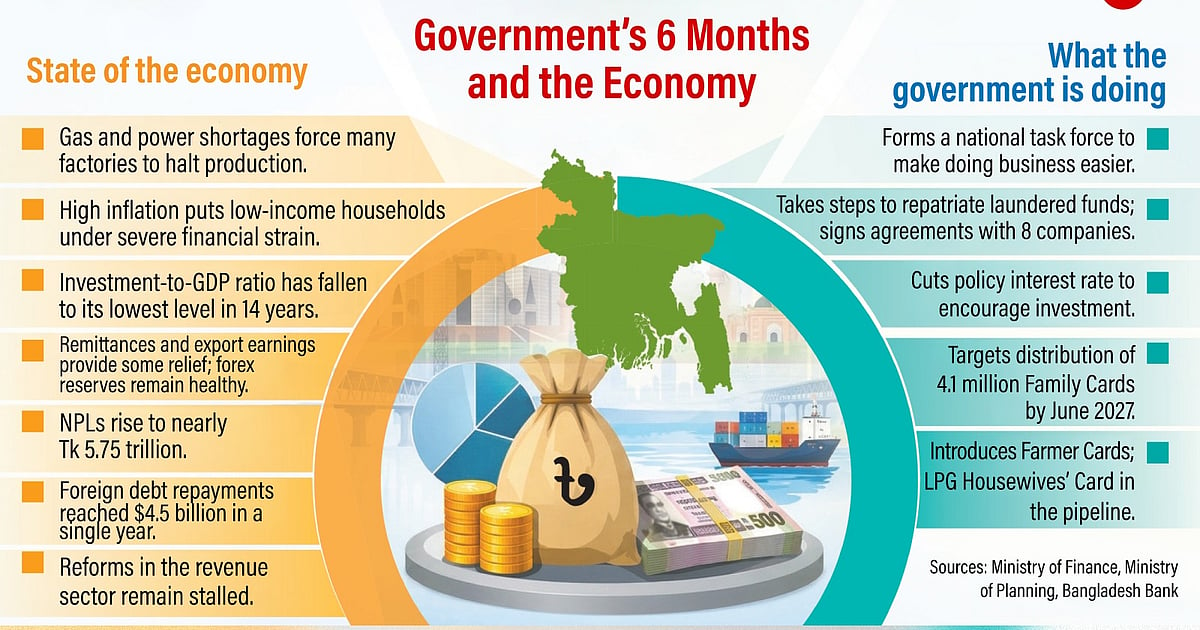
The BNP government's six-month report card shows clear divergence between external stability indicators and real-economy outcomes:
- ✅ Dollar supply — improved; FX market more stable
- ✅ Foreign exchange reserves — rebuilt; gross reserves at $37.24 billion as of 18 August
- ✅ Exchange-rate regime reform — initiated by interim government, continued by BNP govt
- ⚠ Inflation — 4 of 6 months above 9%; eased to 8.32% in July 2026
- ⚠ Investment — no clear signs of turnaround
- ⚠ Employment — no clear signs of improvement
- ⚠ Gas and electricity shortages — disrupting industrial production
- ⚠ Banking, revenue, energy sector reforms — visible progress limited
- ⚠ Revenue shortfall — Tk 880 billion below target in FY26
- ⚠ Real purchasing power — wage growth below inflation for 4+ years
💰 The Dollar and Reserves Story: A Real Achievement
The BNP government has genuinely achieved stability on the external front — with both the dollar supply and foreign exchange reserves showing visible improvement over the past six months. The improvement builds on work initiated by the interim government, which had begun reforms to the exchange-rate regime and banking sector — with both initiatives continued and intensified under the BNP administration.
The fact that the country now has gross foreign exchange reserves of $37.24 billion (BPM6: $32.43 billion) and a current account surplus represents meaningful progress compared to where the economy was in mid-2024, when reserves had fallen to uncomfortable levels and the dollar shortage was disrupting industrial production. The BNP government's success in stabilising the external account has given Bangladesh Bank greater capacity to support commercial banks in opening LCs for industrial imports — a critical input for RMG raw materials, capital machinery, and energy commodities.
🔴 The Inflation Story: Persistent Pressure on Households
Despite the external stability gains, inflation remains the BNP government's most pressing economic challenge. People have been under pressure of high inflation for nearly four years — with controlling inflation remaining a major challenge for the BNP government. The data tells a sobering story:
- 📉 Interim government — brought inflation down to 8.5% by end of its tenure
- 🔴 BNP government 6 months — inflation above 9% in 4 of 6 months
- 🟢 July 2026 — inflation eased somewhat to 8.32%
- 👥 Real wage decline — wage growth below inflation for 4.5+ years
- 💵 FamilyCards — introduced to support low-income and poor people
- 👥 Middle class — "suffering the most, and it is also the largest group"
Even with inflation easing somewhat to 8.32 percent in July 2026, consumers do not feel the impact of lower inflation when they go to the market. This gap between statistical inflation and lived consumer experience reflects several factors: (1) the weighting of food in household consumption baskets, where prices remain elevated; (2) the lag between wholesale price adjustments and retail price pass-through; (3) the cumulative erosion of purchasing power over four years of elevated inflation, which has not been reversed by modest recent declines.
💲 The Revenue Shortfall: Tk 880 Billion Below Target
The National Board of Revenue (NBR) fell short of its revenue collection target by around Tk 880 billion in FY26 — an enormous shortfall that has direct implications for fiscal policy and the government's capacity to fund public investment. Revenue growth was particularly weak during the final six months of the fiscal year — which coincided with the BNP government's first months in office. The main reasons for the failure to collect revenue at the desired rate:
- 📜 Lack of reform — the NBR reform agenda has been slow to implement
- 📜 Abolition of certain supplementary duties — initiated by interim government, reducing revenue
- 🛡 Reduced tariff protection — tariff cuts on imports lowered customs revenue
- 💰 Weak economic activity — lower import volumes and industrial production reduced tax base
- 💼 Compliance challenges — tax administration continued to struggle with enforcement
For FY27, the government has set a Tk 6.04 trillion revenue target — an ambitious 12 percent increase over FY26 actual collection. The Tk 880 billion FY26 shortfall creates a high baseline hurdle for the FY27 target, particularly given the ongoing challenges with NBR reform, tax net expansion, and the broader economic slowdown. The BNP government's recent directive to "stop raising tax load on existing taxpayers, expand scope" — articulated by PM Tarique Rahman at the Revenue Conference 2026 — is the policy response to this challenge, but its implementation will take time.
🚧 Banking, Revenue, Energy Reforms: Limited Visible Progress
The Prothom Alo assessment notes that visible progress in reforms of the banking, revenue, and energy sectors remains limited — a frank acknowledgment that the structural reform agenda announced by the BNP government has not yet translated into measurable outcomes. The government has taken several initiatives:
- 🤝 National task force — formed to remove unnecessary obstacles to business
- 🏭 Private investment in closed state-owned factories — initiatives taken to bring in private capital
- 💰 Bangladesh Bank policy rate cut — lowered to support economic activity
- 💰 Tk 190 billion refinancing programme — part of broader stabilisation and revival measures
- 📜 Capital market reform steps — initiatives to control inflation and reform capital market
- 💵 FamilyCards — for low-income and poor people support
However, the impact of these initiatives on the real economy has been limited so far — partly because they require time to translate into operational outcomes, and partly because the binding constraints (energy supply, banking sector health, revenue mobilisation) are structural challenges that cannot be resolved through short-term policy measures.
🚧 The Energy Crisis: Disrupting Industrial Production
The acute energy crisis — particularly the gas shortage that has halted production at over 100 textile factories in Narsingdi — is identified as a major factor making economic recovery more difficult. The Prothom Alo assessment notes:
- 🚧 Without uninterrupted gas and electricity, normal production is disrupted
- 💲 Risk of reduced market supply — creating conditions for prices to rise
- 💼 Energy shortages discourage new investments — and increase risk to existing investments
- 👥 Fewer new jobs created — as investment slows
The energy crisis creates a vicious cycle: gas and electricity shortages disrupt industrial production, reducing market supply and pushing prices up; higher prices increase pressure on households and reduce real purchasing power; declining real incomes reduce consumer demand, further discouraging industrial investment; and reduced investment means fewer new jobs are created — perpetuating the economic stagnation. Breaking this cycle requires either restoring reliable energy supply (which depends on LNG cargo procurement, FSRU repairs, and domestic gas field investment) or accelerating renewable energy deployment (rooftop solar, agrivoltaics).
💰 Tk 190 Billion Refinancing Programme
The BNP government yesterday (Monday, 17 August 2026) released a list of measures it is taking to stabilise and revive the economy, including initiatives to control inflation, steps to reform the capital market, and a Tk 190 billion refinancing programme. This is part of the broader Tk 60,000 crore stimulus package announced in May 2026 — with the Tk 41,000 crore refinancing facility that 38 banks have signed up for representing the operational core of the programme. Loan disbursements under the facility are set to begin on 1 September 2026.
🌐 FM Khosru's Two-Year Recovery Timeline
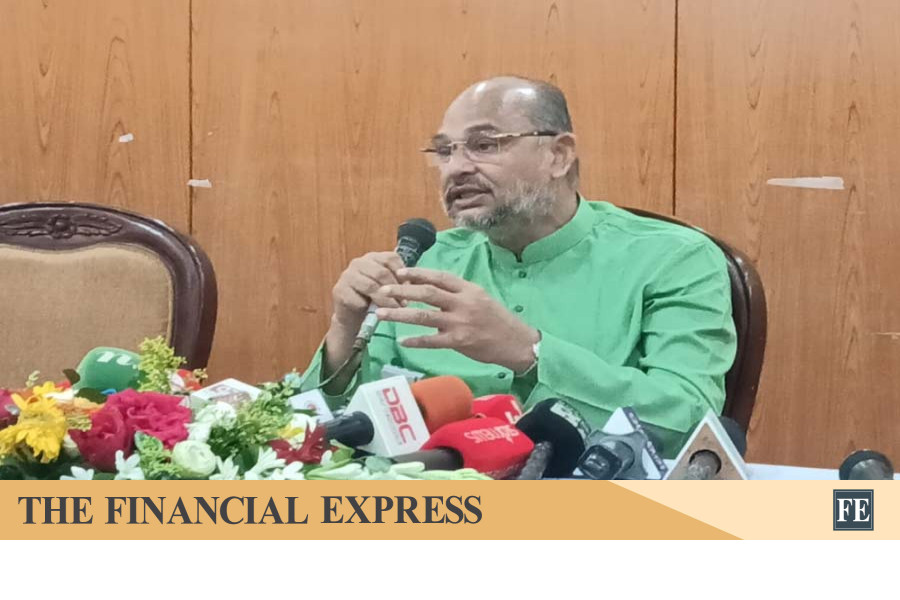
Finance Minister Amir Khosru Mahmud Chowdhury has himself acknowledged that economic recovery will take two years — a candid assessment that aligns with the broader industry view captured in the TBS economy review of 18 August and the BKMEA's measured assessment of the BNP government's first six months. The two-year timeline implies that meaningful recovery is not expected until mid-2028 — well into the BNP government's first full term and just ahead of the next scheduled election cycle.
This candid acknowledgment is significant because it sets realistic expectations for the public and provides political cover for the structural reform agenda. Rather than promising quick fixes, the government is signalling that it understands the depth of the economic challenges and is committed to a multi-year reform programme — with the macro stabilisation achieved in six months being the foundation, not the destination.
📊 The Inheritance: Awami League Legacy Crises
The Prothom Alo assessment provides important context on the economic crisis inherited from the Awami League government — describing multiple crises that accumulated during the final years of the previous administration:
- 💰 Severe dollar shortage — emerged, disrupting industrial imports
- 💰 Foreign exchange reserves declined rapidly — from comfortable to uncomfortable levels
- 🔴 Rising inflation — increased cost of living for ordinary people
- 💰 Money laundering allegations — through bank loans, gained momentum
- 🌐 Foreign loan dependence — for large projects, continued to grow
- 🚢 Imported fuel dependence — continued to grow, increasing energy import bill
The interim government that took over after the Awami League's fall initiated some reforms in the exchange-rate regime and banking sector — improving the supply of dollars and foreign exchange reserve situation. Inflation eased somewhat. But investment, employment, and economic growth remained weak — setting the stage for the BNP government's inheritance of a "relatively stable foreign exchange market but an economy that remains weak overall."
🌐 The Bigger Picture: Recovery Yet to Begin
The Prothom Alo English assessment captures the fundamental reality of Bangladesh's economy at the six-month mark of the BNP government: "Overall, the economy has gained some stability, but recovery is yet to begin." This sentence encapsulates both the achievement and the challenge of the new administration. The achievement is that the macroeconomic stabilisation programme — anchored on dollar supply restoration, reserve rebuild, monetary policy normalisation, and targeted stimulus — has succeeded in halting the economic decline and creating a platform for recovery.
The challenge is that translating this macro stability into micro-level economic recovery requires structural reforms that take time: banking sector clean-up (5-year strategic framework launched), NBR separation and tax net expansion, energy sector reform (LNG supply restoration, domestic gas field development, renewable energy scale-up), National Single Window operationalisation, BIDA/BEZA/BEPZA one-stop service implementation, and investment climate improvement. These reforms are the focus of the government's medium-term agenda — but their visible impact on the real economy will only emerge over 12–24 months.
For the BNP government, the Prothom Alo assessment provides both validation and warning. The validation is that the macro stabilisation agenda has worked, with the dollar and reserves relief being a real and visible achievement. The warning is that the public's patience for visible recovery is limited — particularly given four years of inflation pressure, declining real wages, and persistent energy shortages. The next 12–18 months will be decisive: whether the government can translate stabilisation into recovery, whether the energy crisis can be resolved, whether the stimulus package actually restarts distressed factories, and whether the structural reforms begin to deliver visible improvements in the business environment. For Finance Minister Khosru and Prime Minister Tarique Rahman, the two-year recovery timeline is both an honest acknowledgment of the challenge ahead and a commitment to the structural reform agenda needed to deliver on the BNP government's economic promise.
This news was originally published by Prothom Alo English. For the full original report, please visit: https://en.prothomalo.com/business/local/azzar7dv7q
Related on BangladeshExport
📬 Get Bangladesh Trade News in your inbox
Weekly digest of export industry news, policy updates, and market analysis.
📰 Related Stories