Bangladesh Aims To Add Third FSRU Before 2028, Plans 300 New Gas Wells
State Minister Mahdi Amin unveils two-, five- and 10-year energy plans following PM-business leaders meeting: third FSRU by 2028, 150+150 gas wells, land-based LNG terminals, solar priority
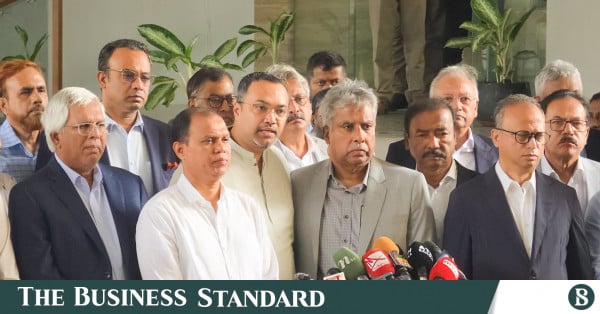
🚢 Bangladesh is targeting the addition of a third Floating Storage and Regasification Unit (FSRU) before the beginning of 2028, alongside an ambitious programme to drill 300 new gas wells in two phases, as part of a comprehensive energy security strategy announced by State Minister for Power, Energy and Mineral Resources Mahdi Amin. The plans, unveiled after a high-level meeting between Prime Minister Tarique Rahman and leaders of more than 20 business organisations, represent the most specific timeline yet for expanding Bangladesh's LNG import and domestic gas production capacity.
📊 Mahdi Amin made the remarks while speaking to journalists after the meeting at the Secretariat, which focused on the government's short-, medium- and long-term plans for the power and energy sector, including electricity, gas, energy and mineral resources, with an emphasis on supporting industrialisation and employment. The government also presented its two-, five- and 10-year plans to the business leaders, he said. The multi-horizon planning framework provides a structural roadmap for addressing the energy crisis that has constrained industrial production and driven load-shedding across the country.
🚢 Third FSRU Targeted Before 2028
Bangladesh currently has two floating LNG terminals, or FSRUs, although one remained out of operation for an extended period. Alongside efforts to repair the damaged terminal, the government is planning to expand the country's floating LNG capacity. "The initial target is to have three FSRUs and later five. We are trying to add the third FSRU before the beginning of 2028," Mahdi said.
The long-term vision of five FSRUs represents a significant expansion of Bangladesh's LNG import infrastructure. With current combined capacity of approximately 1,000 mmcfd from two FSRUs, a five-FSRU fleet would provide 2,500-3,000 mmcfd of regasification capacity — enough to fully bridge the gap between domestic gas production and industrial demand. The third FSRU alone would add 500-750 mmcfd, materially easing the gas supply constraints that have forced industries to curtail production.
- 🚢 Current FSRU count: 2 (one recently damaged)
- 🚢 Short-term target: 3 FSRUs before 2028
- 🚢 Long-term vision: 5 FSRUs
- 🔍 Gas wells being drilled (Phase 1): 150
- 🔍 Gas wells planned (Phase 2): 150
- 🏛 Land-based LNG terminals: Planned (no timeline specified)
- ☀ Solar priority: Highest emphasis
- 📜 Plans presented: 2-year, 5-year, 10-year
- 👥 Meeting participants: 20+ business organisations
🔍 300 New Gas Wells In Two Phases
The government is also prioritising domestic gas exploration to reduce reliance on LNG imports. Around 150 gas wells are currently being drilled, he said. Once that programme is completed, another 150 wells will be taken up. The 300-well two-phase programme represents the most ambitious domestic gas exploration drive in Bangladesh's history — a meaningful structural response to the country's declining domestic gas reserves that have driven growing dependence on imported LNG.
Bangladesh's domestic gas production has been declining for several years as existing fields deplete without sufficient new discoveries to offset the production decline. The 300-well programme, if executed successfully, could reverse this trajectory by adding meaningful new production capacity. The success of the programme will depend on Petrobangla's drilling capacity, the availability of drilling rigs and skilled personnel, and the geological success rate of the wells — historical Bangladeshi exploration wells have shown a roughly 50% success rate, meaning the 300-well programme could yield 150-200 productive wells.
🏛 Land-Based LNG Terminals And Distribution Network
Plans are also underway to build land-based LNG terminals and expand gas transmission and distribution networks. The land-based LNG terminal strategy complements the FSRU expansion — while FSRUs can be deployed relatively quickly (12-24 months for vessel conversion and mooring installation), land-based terminals provide larger regasification capacity (typically 1,000+ mmcfd per terminal) and longer asset life. A balanced portfolio of FSRUs and land-based terminals would provide Bangladesh with both speed of deployment and scale of capacity.
The expansion of gas transmission and distribution networks is critical to ensuring that regasified LNG and newly produced domestic gas can reach industrial consumers across the country. Bangladesh's gas transmission network has historically been concentrated around the Chattogram-Dhaka corridor, with limited connectivity to the north and southwest. Expanding the transmission network would unlock industrial development in regions that currently lack reliable gas access.
☀ Solar Energy Gets Highest Priority
On future electricity generation, Mahdi said the government wants to develop a diversified system combining solar power with oil, gas and coal. Solar energy will receive the greatest emphasis as the government seeks greater energy self-sufficiency, he said. The broader goal is to develop a power and energy system capable of ensuring uninterrupted supplies to industry and business while diversifying the country's energy sources.
The explicit prioritisation of solar energy — above oil, gas and coal — represents a strategic shift in Bangladesh's energy mix narrative. The country's renewable energy roadmap targets 10,000 MW of renewable capacity within five years, with rooftop solar contributing 3,000-4,000 MW. The State Minister's reaffirmation of solar priority signals that the government intends to translate this target into specific project commitments, supported by the recently announced $1.85 billion green transition plan.
🤝 Public-Private Partnership Framework
Business leaders raised various problems and proposals during the meeting, Mahdi said. He said businesses had made significant contributions to industrialisation and economic growth through their investment, labour and sacrifice. "The government will provide the necessary policy support from the public sector, while the private sector will implement them," he said. He stressed that the public and private sectors must work together to move the country forward.
The public-private partnership framing for energy sector implementation is strategically significant. The government's role in providing policy support — including tariff structures, land allocation, regulatory approvals and fiscal incentives — would catalyse private sector investment in gas exploration, LNG infrastructure, solar capacity and transmission networks. This model has been successfully used in regional peers including India and Vietnam to scale energy infrastructure deployment without straining public finances.
📜 Acknowledging Accumulated Problems
The accumulated economic problems built up over a long period could not be resolved fully in a day, month or year, he said, but added that the government had commitment, sincerity and specific plans at the highest level to address them. Business leaders presented their concerns, and the government believes those challenges could also create new opportunities, he said. The government plans to strengthen cooperation with business organisations and apex bodies and continue such consultation meetings, he added.
The commitment to continued consultation meetings with business organisations signals a structural shift in the government's engagement model — moving from episodic crisis-driven engagement to regular dialogue with the private sector. This model, if sustained, would provide the government with real-time feedback on energy sector challenges and the business community with greater visibility on policy direction.
🌏 Strategic Implications For Bangladesh's Energy Future
For Bangladesh's broader energy future, the plans announced by Mahdi Amin represent the most comprehensive structural response to the country's energy crisis to date. The combination of short-term FSRU expansion, medium-term gas well drilling, long-term solar prioritisation and ongoing public-private partnership creates a multi-dimensional framework that addresses both immediate supply constraints and long-term energy security.
For Bangladesh's export economy, the energy plan's success is strategically critical. Reliable gas and electricity supply is a prerequisite for industrial production, export delivery and competitiveness against regional rivals. If the third FSRU is operational by 2028 and the 300-well drilling programme yields meaningful new production, the country's energy supply constraints would be materially eased — supporting the export-led growth trajectory needed to achieve the $1 trillion economy target by 2034.
The coming months will reveal whether the government can translate the announced plans into specific project commitments, financing arrangements and implementation timelines. The credibility of the broader energy diversification agenda depends on the timely execution of the third FSRU project and the commencement of the first 150-well drilling programme. Without measurable progress on these flagship initiatives, the plans risk joining the long list of Bangladeshi energy strategies that have failed to translate ambition into operational outcomes.
This news was originally published by The Business Standard. For the full original report, please visit: https://www.tbsnews.net/economy/energy/govt-aims-add-third-fsru-2028-mahdi-amin-1542461
Related on BangladeshExport
📬 Get Bangladesh Trade News in your inbox
Weekly digest of export industry news, policy updates, and market analysis.
📰 Related Stories