Tk 47 Crore Project Proposed to Revive Fisheries in 29 South-West Baors
Five-year community-based management plan targets at least 10 percent production increase across Jashore, Jhenaidah, Chuadanga and Kushtia
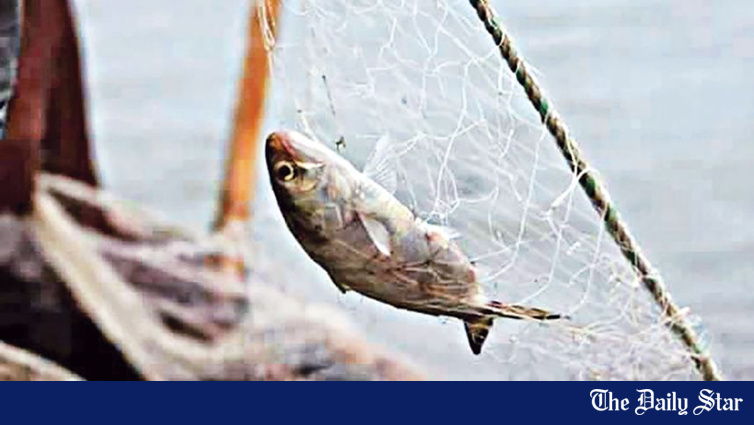
🐟 The Department of Fisheries (DoF) has proposed a Tk 47.55 crore project to develop fisheries resources in 29 baors across four south-western districts, increase fish production and improve the livelihoods of genuine fishers. The five-year initiative, titled Community-Based Fisheries Resource Management in Selected Baor Areas, represents one of the more focused public investments in the country's neglected inland open-water fishery in recent years.
🗺 Baors are crescent-shaped water bodies formed when a river changes course, leaving behind an isolated section of its former channel. These oxbow lakes dot the floodplains of south-western Bangladesh, where the shifting rivers of the delta have created dozens of such water bodies over centuries. Concentrated in the greater Jashore region, they have long served as common-pool fisheries for local communities — and, in equal measure, as a textbook case of how open access degrades a natural resource without deliberate management.
📋 A press release issued by the Ministry of Fisheries and Livestock said the project aims to increase fish production in the baors of Jashore, Jhenaidah, Chuadanga and Kushtia by at least 10 percent. The plan includes excavating and re-deepening the baors, establishing fish sanctuaries, upgrading fingerling production facilities, and strengthening training and community-based management so that gains survive beyond the project's lifetime.
👩🌾 The project was initiated by the Jashore deputy commissioner last year. The proposal was subsequently forwarded to the Planning Commission after the government approved its staffing structure, and it is now awaiting an assessment of its costs and activities, according to the release — meaning the money has not yet begun to flow and implementation timelines will depend on the commission's scrutiny.
👥 A management model, not just a digging project
🏓 Md Delwar Hossain, secretary of the Ministry of Fisheries and Livestock, said the project aims not only to increase fish production but also to establish an effective management system involving local fishers. Plans include designating selected water bodies as fish sanctuaries, monitoring them to protect fish stocks, and providing training to local people, he said — a formulation that signals the government wants community stewardship at the core rather than contractor-led civil works alone.
🌊 Md Khaled Kanak, director general of the DoF, described the initiative as a community-based fisheries development project. He said projects aimed at improving the livelihoods of baor fishers had been lacking for a long time. Many baors have become shallow due to siltation, damaging fish habitats and reducing productivity, he said. The project seeks to restore these water bodies and establish an effective community-based management system, he added.
🧮 The diagnosis matters because the problems of the baors are well documented. Years of sedimentation have shrunk water depth and area, dry-season water retention has fallen, and encroachment has claimed the shallow margins. Overfishing by lessee-driven arrangements has repeatedly squeezed out subsistence fishers, the very group the ministry says it wants to prioritise as genuine fishers. Fingerling stocking without habitat restoration and access rules has produced disappointing returns in past cycles, which is why the combination of excavation, sanctuaries, hatchery upgrading and training in one package reads like a corrective drawn from experience.
🍟 Why inland fisheries matter
📊 Fisheries occupy an outsized place in Bangladesh's food economy. Fish supplies the majority of animal protein in the average Bangladeshi diet, and the sector contributes a few percent of national GDP while supporting the livelihoods of millions of rural households — fishers, fish workers, traders, fingerling producers and transporters alike. Bangladesh ranks among the world's largest producers of inland fish, and small indigenous species harvested from floodplain water bodies are prized both for taste and nutritional density.
🚧 Yet open-water capture fisheries have stagnated even as pond-based aquaculture expanded, and degraded habitats are a central reason. Rivers cut off from floodplains, silted wetlands and polluted water bodies have all cut into the natural productivity that once made the delta one of the richest freshwater fisheries on earth. Restoring baors is therefore not just a local livelihood programme; it is habitat rehabilitation in a country where nutrition security and export ambitions — from frozen fish to value-added processed products — both depend on the health of inland water resources.
🤝 The community-based approach also has a proven lineage. Earlier projects in Bangladesh and across South Asia have shown that when fisher groups are given clear rights, sanctuaries are respected, and stocking is paired with seasonal fishing bans, production and household incomes both rise — and the resource recovers rather than degrades. The challenge has always been sustaining those institutions after donor or government funding ends, which is why the training and management components of the new proposal deserve as much attention as the excavation budget.
🔭 For the four target districts, the stakes are direct: more fish in local markets, more work for genuine fishers rather than leaseholders, and healthier wetlands that also store water for dry-season irrigation and recharge shallow groundwater. If the Planning Commission clears the Tk 47.55 crore proposal, the first test will be the quality of excavation and sanctuary demarcation; the second, and harder, test will be whether the community institutions formed under the project are still functioning — and still counting more fish in the nets — five years after the last taka is spent.
This news was originally published by The Daily Star. For the full original report, please visit: https://www.thedailystar.net/business/economy/news/fisheries-department-proposes-tk-47cr-project-29-baors-4305271
📬 Get Bangladesh Trade News in your inbox
Weekly digest of export industry news, policy updates, and market analysis.
📰 Related Stories