Bed Sheet of Kumarkhali: Bangladesh Heritage Handloom GI Textile — Buyer's Guide (2026)
Bed Sheet of Kumarkhali — Bangladesh's 2024 GI handloom cotton bed sheet, 200-year weaving tradition. Durable 15-20 year lifespan, improves with washing. HS 62114200, 8-point authenticity, 1,180 textile suppliers.
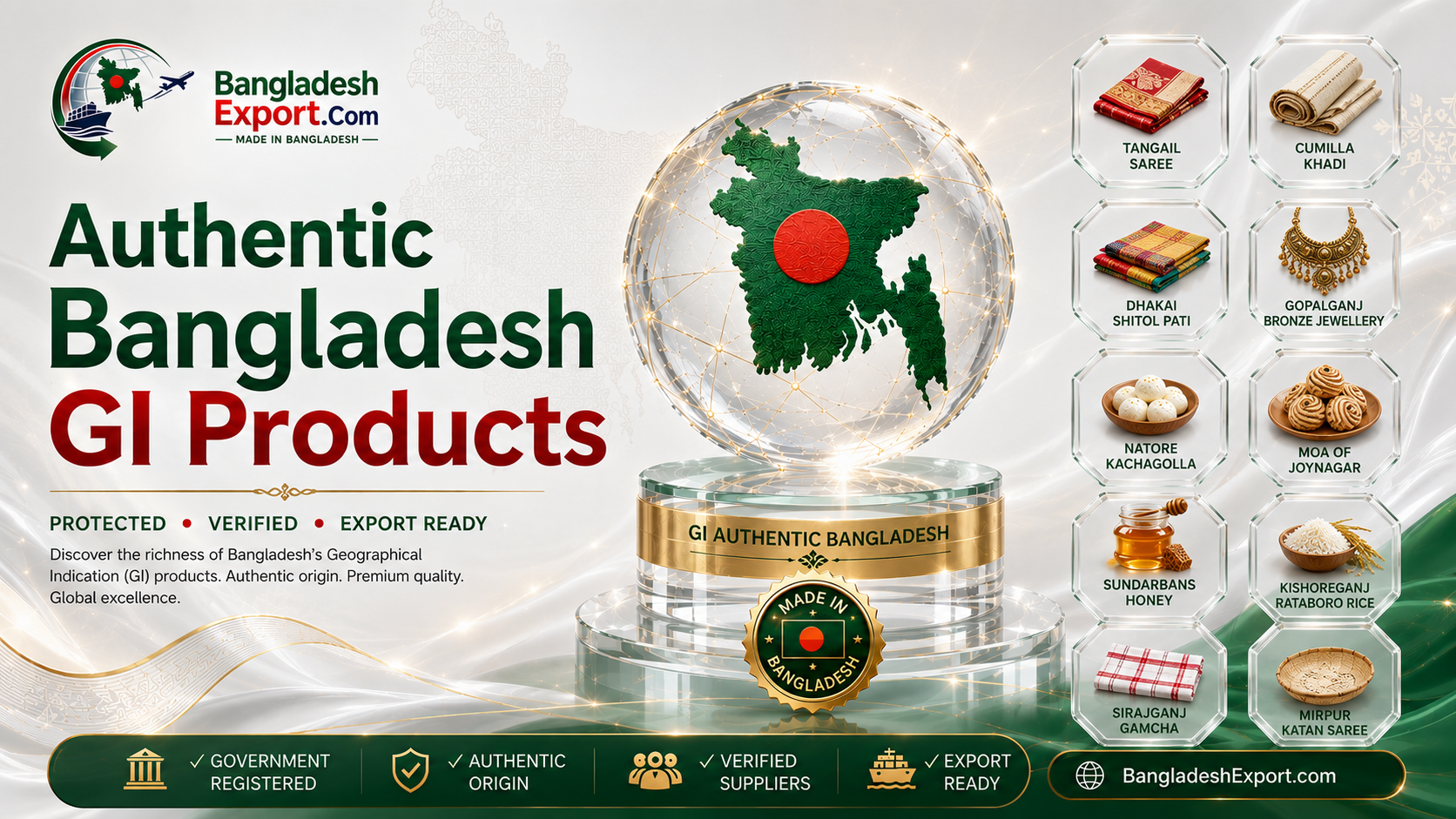
Walk into any Bangladeshi home and chances are you'll find one on the bed — a Kumarkhali bed sheet. These handwoven cotton bed sheets from the Kumarkhali upazila of Kushtia district have been a household staple in Bangladesh for over a century, known for their distinctive patterns, soft cotton texture, exceptional durability, and the characteristically vibrant color combinations that make them instantly recognizable. Registered as a Bangladesh GI product in 2024, the Bed Sheet of Kumarkhali represents one of the country's most commercially significant handloom textile products — combining everyday utility with heritage craft authenticity in a way that mass-produced factory textiles cannot replicate.
This guide is for international home-textile importers, sustainable-living brands, diaspora-goods retailers, and fair-trade textile distributors sourcing authentic Bed Sheet of Kumarkhali directly from verified weavers. We'll cover the craft's history, the 2024 GI registration, the Kumarkhali production region, the weaving technique, quality characteristics, export markets, HS codes, packaging, authenticity verification, and direct sourcing from verified textile suppliers on BangladeshExport.com.
📜 The Kumarkhali Handloom Heritage
Buyers can verify the official list of Bangladesh's registered Geographical Indication (GI) products through the Bangladesh Trade Portal: bangladeshtradeportal.gov.bd — GI Products Page
The Kumarkhali handloom tradition dates back over 200 years, with the upazila's weaving community — predominantly from the traditional Tanti (weaver) caste — developing expertise in producing large-format cotton textiles for household use. Kumarkhali's location on the banks of the Gorai river (a distributary of the Padma) provided both the water needed for cotton processing and the transportation network for distributing finished products across Bengal. By the late 19th century, Kumarkhali bed sheets had become a recognized brand across eastern Bengal, prized for their durability (a well-made Kumarkhali sheet could last 15–20 years with regular use) and their distinctive patterns that blended geometric precision with vibrant color.
The craft survived the colonial-period decline of Bengal's handloom sector (caused by the dumping of cheap Manchester mill cloth) partly because Kumarkhali's bed sheets served a practical everyday need that factory textiles couldn't fully replace — the handloom cotton's breathability, softness, and moisture absorption were superior to the stiffer mill-made alternatives in Bangladesh's hot humid climate. The Bangladesh Handloom Board and BSCIC supported the cluster through raw-material subsidies, design development, and market access programs in the post-independence period. The 2024 GI registration — part of the historic wave — formally protected the "Bed Sheet of Kumarkhali" name. See our complete 60-product GI list and our guides to Tangail Saree, Khadi of Comilla, and Gamcha of Sirajganj for related Bangladeshi GI handloom textiles.
🏛️ GI Registration & the Kumarkhali Production Region
Bed Sheet of Kumarkhali was registered as a Bangladesh GI product in 2024 by DPDT. The registered production region is Kumarkhali upazila in Kushtia district in southwestern Bangladesh. The GI registration covers handwoven cotton bed sheets produced in Kumarkhali using traditional pit-loom weaving techniques with cotton yarn. Verification follows our GI verification guide.
🧶 The Weaving Technique — What Makes Kumarkhali Distinctive
Kumarkhali bed sheets are produced on traditional pit looms — the same type of loom used for Tangail Sarees and Jamdani, but adapted for the larger format required for bed sheets. The weaving process involves several distinctive steps that set Kumarkhali sheets apart from factory-produced alternatives.
Yarn preparation: Kumarkhali weavers traditionally use medium-count cotton yarn (40s–60s count) for both warp and weft — producing a fabric that is soft and breathable but also durable enough for daily use. The yarn is typically sourced from local spinning mills and dyed with azo-free chemical dyes in the vibrant color combinations that are Kumarkhali's hallmark. Traditional color palettes include red-and-green, blue-and-yellow, and maroon-and-cream — each color combination associated with specific patterns.
Pit-loom weaving: The weaver sits in a shallow pit with the loom's horizontal beams above ground level, using body weight for warp tension. The large format of bed sheets (typically 2.0 × 1.5 meters or 2.5 × 1.8 meters) requires a wider loom than saree weaving — typically 1.8–2.0 meters wide. The weaving technique uses a plain weave base with supplementary-weft patterns for the decorative borders and central motifs. Traditional patterns include geometric diamonds, stylized floral motifs, and striped designs — each pattern with its own local name.
Pattern vocabulary: Traditional Kumarkhali bed sheet patterns include "Kalka" (mango-paisley motif), "Butidar" (scattered floral buttons), "Terral" (diagonal stripes), and "Jaal" (network pattern). The patterns are woven into the fabric — not printed or embroidered afterward. This structural integration of pattern is what distinguishes authentic handwoven Kumarkhali sheets from power-loom or printed imitations.
Finishing: After weaving, the sheet is washed, starched lightly with rice water (traditional) or cornstarch (modern), and sun-dried. The starching gives the sheet a crisp initial feel that softens with washing — a characteristic that Kumarkhali customers value as a sign of authenticity.
Production time: A standard Kumarkhali bed sheet takes 1–2 days on a pit loom. Premium sheets with intricate patterns take 3–5 days. This is the structural production-time floor — factory-produced sheets are woven in minutes on power looms.
📊 Quality Characteristics & Grading
| Grade | Yarn | Weave | Size | Pattern | Retail Range (USD) |
|---|---|---|---|---|---|
| A Premium (Handloom) | 60s count cotton, azo-free dyes | Tight, 30+ wefts/inch | 2.5 × 1.8 m | Intricate supplementary-weft | 15–35 |
| A Standard | 40s–60s cotton | Standard, 20–30 wefts/inch | 2.0 × 1.5 m | Standard patterns | 8–15 |
| B Grade | 40s cotton | Standard, 15–20 wefts/inch | 2.0 × 1.5 m | Simple stripes/borders | 4–8 |
Authentic Kumarkhali bed sheets have: soft but durable cotton hand-feel (not stiff like factory fabric), visible handloom irregularities in the weave (the mark of human craftsmanship), structurally integrated patterns (woven in, not printed), good moisture absorption (breathable in hot humid conditions), and exceptional durability (15–20 year lifespan with proper care). The sheets become softer with each wash — a characteristic that power-loom cotton cannot replicate because the handloom's lower weaving tension leaves more room for the cotton fibers to relax over time.
🌍 Export Markets & Buyer Industries
Kumarkhali bed sheet export demand is concentrated in diaspora-goods retail, sustainable-home-textile, and fair-trade segments — with growing interest from eco-conscious consumers who value hand-crafted, natural-fiber home textiles.
- Middle East (Saudi Arabia, UAE, Qatar): Bangladeshi diaspora demand for familiar home textiles. The vibrant patterns and durable cotton are valued in diaspora households. Retail USD 8–30 per sheet.
- European Union (Germany, France, UK, Netherlands): Sustainable-home-textile retail and fair-trade shops. EU buyers value the handloom provenance, the natural cotton fiber, and the story of a 200-year weaving tradition. Retail EUR 10–35 per sheet.
- USA and Canada: Bangladeshi-American diaspora demand plus growing sustainable-living retail. Retail USD 10–35 per sheet.
- Australia, Singapore, Malaysia: Growing demand from diaspora and sustainable-living segments. Retail USD 8–25 per sheet.
- India (West Bengal): Cultural affinity market. Retail INR 400–1,500 per sheet.
For buyers building sustainable-home-textile or fair-trade portfolios, Kumarkhali bed sheets offer a genuinely distinctive value proposition: 200-year handloom tradition, 100% cotton natural fiber, low-impact production (no factory energy use), exceptional durability (15–20 year lifespan — far longer than factory sheets), and GI legal protection. The sheets' improving softness with washing is a unique selling point that power-loom sheets cannot match.
🏷️ HS Codes & Customs Classification
Bangladesh uses the 8-digit HS code system. Kumarkhali bed sheets are classified as cotton home textiles:
| HS Code | Description | Typical Use |
|---|---|---|
| 62114200 | Women's or girls' garments of cotton, nes (finished cotton textile products) | Finished Kumarkhali bed sheets (primary classification) |
| 52081100 | Unbleached plain woven cotton fabric, ≥85% cotton, ≤100 g/m² | Kumarkhali fabric by meter (for buyers who sew their own products) |
HS 62114200 (cotton garments/textiles, nes) is the standard classification for finished cotton home-textile products like bed sheets. For fabric-by-meter exports (where the buyer cuts and sews their own products), HS 52081100 (unbleached cotton fabric) or 52083100 (dyed cotton fabric) applies. See our HS code directory for full tariff details.
📦 Packaging & Shipping
Kumarkhali bed sheets are durable cotton textiles with straightforward packaging requirements.
- Individual packaging: Each sheet folded with tissue paper separator and packed in a printed cardboard sleeve or cotton pouch. Premium retail packaging includes the exporter's label with DPDT GI registration number, Bangladesh Handloom Board certification, and "Handwoven in Bangladesh" origin marking.
- Bulk packaging: For wholesale orders, sheets packed in bundles of 10–50 within woven PP bags with PE liner for moisture protection.
- Shipping mode: Sea freight (20–35 days) is viable and cost-effective for bulk orders — cotton bed sheets are not time-sensitive and have indefinite shelf life. Air freight reserved for urgent sample shipments.
- Documentation: Certificate of Origin (Kushtia Chamber of Commerce), DPDT GI registration certificate copy, Bangladesh Handloom Board certification, packing list, commercial invoice. See our export documentation guide.
✅ Spotting the Fakes — Authenticity Checklist
Power-loom "Kumarkhali-style" bed sheets with printed patterns are the primary counterfeit threat. Use this checklist:
- Pattern integration: Authentic Kumarkhali patterns are woven into the fabric (visible on both sides). Printed patterns show on the front only — the reverse side is plain or has a faded mirror image.
- Weave irregularities: Authentic handloom fabric has slight variations in weft tension and beat-up density — the marks of human craftsmanship. Perfectly uniform weave indicates power-loom production.
- Edge finish: Authentic Kumarkhali sheets have hand-finished edges with subtle irregularities. Machine-overlocked edges indicate non-traditional production.
- Hand-feel: Authentic handloom cotton has a soft, slightly textured hand-feel that improves with washing. Power-loom cotton feels stiffer and smoother initially but doesn't soften the same way.
- Weight: A standard 2.0 × 1.5 m Kumarkhali sheet should weigh 400–700g. Significantly lighter suggests loose weave or synthetic blend.
- Moisture absorption: Authentic 100% cotton Kumarkhali sheets absorb moisture readily (test by placing a drop of water on the fabric — it should soak in within 2–3 seconds). Synthetic blends bead water on the surface.
- Bangladesh Handloom Board certification: Authentic Kumarkhali sheets carry Handloom Board certification with a registration number.
- DPDT GI registration certificate: The exporter must hold a valid DPDT GI registration for Bed Sheet of Kumarkhali. Request the registration number and verify independently.
For the full four-layer verification framework — including how BangladeshExport.com cross-checks textile suppliers against the Handloom Board, BSCIC, and EPB registries — see our GI verification guide.
🤝 Sourcing Verified Kumarkhali Bed Sheet Weavers
- Browse verified textile suppliers: View 1,180 verified Textiles & Fabrics suppliers — filter for handloom home-textile specialists. Look for the "Verified" badge.
- Post a free RFQ: Submit a Request for Quotation specifying "Bed Sheet of Kumarkhali" with grade, size, pattern preference, quantity, target price, and destination country.
- Check weaver credentials: Verify Bangladesh Handloom Board registration, BSCIC cooperative registration, EPB registration, and DPDT GI registration.
- Order samples first: 10–30 sheets as a trial. Inspect pattern integration, weave quality, hand-feel, and moisture absorption before placing a bulk order.
- Finalize directly with the weaver: L/C for orders over USD 5,000. No commission.
If you're a Kumarkhali bed sheet weaver: register as a supplier on BangladeshExport.com (free). Relevant industry support: Kushtia Chamber of Commerce & Industry and the broader Bangladesh exporters' association directory.
🚀 Source Authentic Kumarkhali Bed Sheets — Free RFQ
Post a free RFQ for authentic Bed Sheet of Kumarkhali from verified weavers. Specify grade, size, pattern, quantity, and destination.
🚀 Post a Free RFQ → 🔍 Browse 1,180 Verified Textile Suppliers🎯 Conclusion
Bed Sheet of Kumarkhali is one of Bangladesh's most commercially viable GI handloom products — the combination of everyday utility, 200-year weaving heritage, 100% cotton natural fiber, exceptional 15–20 year durability, and the unique characteristic of improving softness with washing creates a value proposition that factory-produced textiles simply cannot match. For buyers serving sustainable-home-textile, fair-trade, or diaspora-goods segments, authentic Kumarkhali bed sheets offer a defensible premium position with mass-market accessibility. BangladeshExport.com makes sourcing free and transparent — start with a free RFQ today.
For the complete catalog of 60+ Bangladesh GI products, see our complete GI products list. For related Bangladeshi GI handloom textiles, see our Tangail Saree guide, Khadi guide, and Gamcha guide. For broader context, see our 2026 global demand analysis.
❓ Frequently Asked Questions
What makes Bed Sheet of Kumarkhali a GI product?
Bed Sheet of Kumarkhali was registered as a Bangladesh GI product by DPDT in 2024. The registration protects the name for handwoven cotton bed sheets produced in Kumarkhali upazila of Kushtia district using traditional pit-loom weaving techniques. The registration distinguishes authentic Kumarkhali sheets from power-loom imitations and from handloom sheets produced in other regions.
How is a Kumarkhali bed sheet different from a factory bed sheet?
Three main differences. First, production: Kumarkhali sheets are handwoven on pit looms (1–5 days per sheet); factory sheets are power-loom woven (minutes per sheet). Second, pattern: Kumarkhali patterns are structurally woven into the fabric (visible on both sides); factory patterns are typically printed on the surface. Third, character: Kumarkhali cotton is softer, more breathable, and improves with washing; factory cotton is stiffer, less breathable, and doesn't soften the same way. Kumarkhali sheets also last 15–20 years — far longer than factory sheets.
What is the HS code for Kumarkhali bed sheet exports?
Finished bed sheets use HS code 62114200 (cotton textile products, nes). Fabric by meter uses 52081100 (unbleached cotton fabric).
How do I verify that a Kumarkhali bed sheet is authentic?
Eight-point checklist: (1) patterns woven into fabric (visible on both sides); (2) handloom weave irregularities; (3) hand-finished edges; (4) soft hand-feel that improves with washing; (5) weight 400–700g for standard size; (6) good moisture absorption; (7) Bangladesh Handloom Board certification; (8) DPDT GI registration.
What is the MOQ for Kumarkhali bed sheets?
Typical MOQ is 50–500 sheets. For first-time buyers, weavers may accept 10–30 sheet samples. Sea freight viable for bulk orders. Lead time 2–6 weeks depending on quantity and pattern complexity.
Where can I find verified Kumarkhali bed sheet suppliers?
BangladeshExport.com hosts 1,180 verified Textiles & Fabrics suppliers. Post a free RFQ specifying "Bed Sheet of Kumarkhali" and verified weavers will respond within 24–72 hours.