WTO Chief Backs Reasonable Transition Time For Bangladesh LDC Graduation
WTO Director-General Dr Ngozi Okonjo-Iweala says graduation is positive but graduating countries need adequate time to adjust, as Bangladesh petitions UN for extension
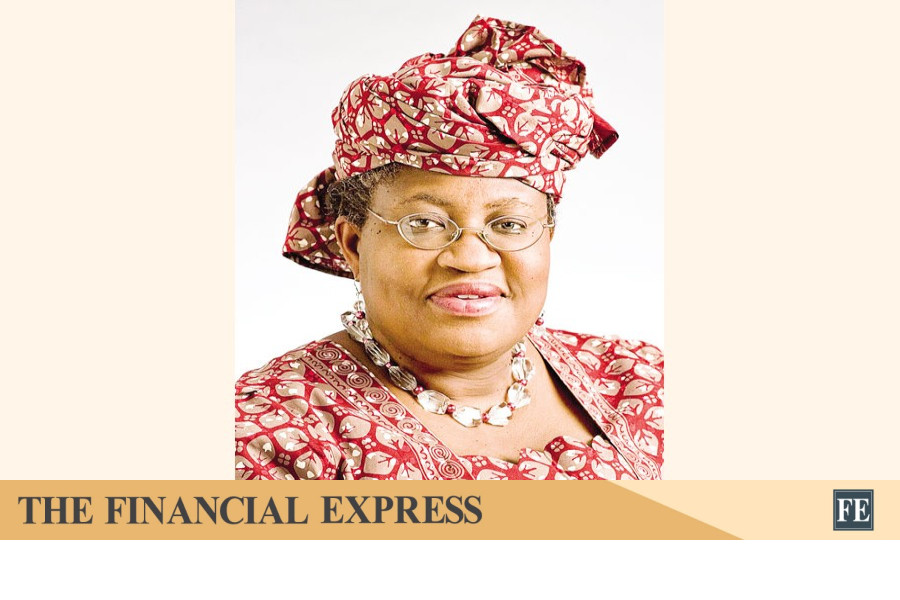
🌏 Bangladesh's graduation from the least-developed-country (LDC) category should be viewed positively as it requires a reasonable transition period to adjust the changes to be unleashed. World Trade Organisation (WTO) Director-General Dr Ngozi Okonjo-Iweala made the observation, as Dhaka has petitioned the United Nations for extending the graduation process.
📊 "First, I have to congratulate Bangladesh. Graduation is a good thing. It means that your economy is doing well and that you're coming out of the category of least developed," the WTO chief told The Financial Express at her office in the global-hub Swiss city. "Nobody wants, I hope no country wants, to remain a least-developed country forever. So, it's a good thing. It should be seen in a positive light," the DG added.
🏛 Graduation Should Not Mean Abrupt Withdrawal
The WTO chief, however, stressed that graduation should not result in an abrupt withdrawal of support and that graduating countries should be given adequate time to adjust. In this connection, she notes that the WTO is not the only multilateral institution where countries graduate from special categories. "You also have graduation in other multilaterals, the World Bank, the IMF, UN and so on. So, I think we need to look at this issue in a broader light."
According to Okonjo-Iweala, it is appropriate for graduating countries or members to have a period during which they can transition gradually, rather than facing an immediate change in their treatment. "It's absolutely appropriate that graduating countries or graduating members should have a period of time over which they are allowed to transition," the WTO chief said.
- 📜 WTO DG: Dr Ngozi Okonjo-Iweala
- 📍 Interview venue: WTO office, Geneva
- 📊 Bangladesh status: Petitioning UN for graduation extension
- 📜 Key message: Graduation is positive but needs transition period
- 🌏 Context: LDCs negotiating transition length at WTO
⚠ Preventing Economic Shocks From Sudden Graduation
The purpose, the director-general explained, is to prevent a sudden change that could expose a graduating country to economic shocks. "You don't graduate today and because of shocks you're back into the category the next day. So, it's appropriate." The key issue, however, is determining the length of the transition period, according to the WTO chief.
"I think that that's the issue at the WTO," the director-general said, adding that LDCs are negotiating over how long the transition should last and under which agreements it should apply. She also said the organisation has been working closely with LDCs to help streamline their requests concerning graduation while also engaging with other WTO members to encourage them to consider those demands.
🤝 WTO Working With LDCs On Graduation Requests
"We've been working very hard with the LDCs. I'm a strong supporter to explain to them how to streamline their requests with respect to all the things they want for graduation," the director-general said. "At the same time, we're also trying to talk to other members to be open to some of the LDC requests."
The WTO chief's explicit support for a transition period aligns with Bangladesh's formal petition to the United Nations for extending the graduation timeline. Bangladesh's interim government has been actively engaging with multilateral institutions — including the WTO, World Bank and IMF — to secure a smooth transition that preserves market access and concessional financing arrangements during the adjustment period.
🌏 Strategic Context: Bangladesh's LDC Graduation
For Bangladesh, the WTO chief's endorsement of a reasonable transition period carries significant strategic weight. Bangladesh is the largest merchandise exporter among LDCs, accounting for approximately 17 per cent of total LDC exports. The country's graduation — originally scheduled for November 2026 — would result in the loss of certain preferential market access arrangements, including EU EBA (Everything But Arms) preferences that provide duty-free, quota-free access to the EU market for the majority of Bangladesh's RMG exports.
The transition period that the WTO chief endorses would provide Bangladesh with additional time to negotiate alternative trade arrangements — including bilateral FTAs with the EU, US and other major trading partners — before the full impact of preference erosion takes effect. Without such a transition period, Bangladesh would face an abrupt adjustment that could significantly impact the country's $48+ billion export economy.
The WTO chief's framing — that graduation should be celebrated as evidence of economic progress rather than feared as a loss of support — provides a positive narrative framework for Bangladesh's engagement with the international community on post-graduation arrangements. The coming months will reveal whether the transition period that the WTO chief endorses translates into concrete extensions of preferential arrangements that give Bangladesh the adjustment time it needs to compete on fully commercial terms in global markets.
This news was originally published by The Financial Express. For the full original report, please visit: https://thefinancialexpress.com.bd/economy/ldc-graduation-wto-chief-backs-reasonable-transition-time
Related on BangladeshExport
📬 Get Bangladesh Trade News in your inbox
Weekly digest of export industry news, policy updates, and market analysis.
📰 Related Stories