Should Construction Costs Of Bangladesh Metro Rail Be So High?
Three metro-rail megaprojects at Tk 2.5 trillion approved; columnist questions abnormal costs, dollar impact on JICA financing and debt servicing burden as Bangladesh's external debt repayment soars
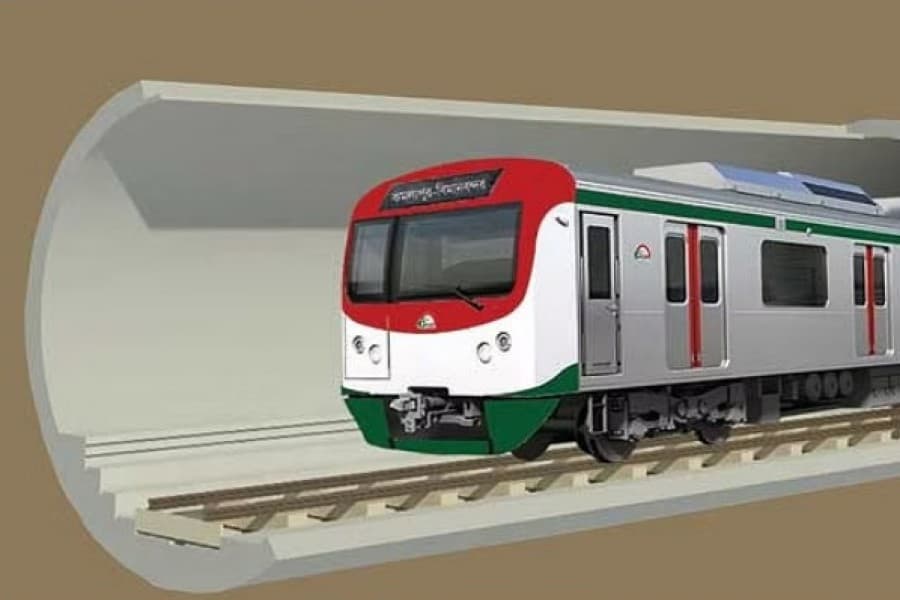
🚇 The approval of three metro-rail megaprojects at a combined cost of Tk 2.5 trillion marks the record high investment in communication in the country's history. Of these three mass rapid transit (MRT) projects, two were approved in 2019 and the third one is new. Revisions of costs and deadline for completion of the two stalled projects MRT-1 and MRT-5 (northern route) had to be made before the approval.
📊 The stated purpose is to jumpstart the city's commute free of long tailbacks as experienced on the city roads on a regular basis. Metro rail will connect the east with the west and the north with the south of the megacity. But before rushing head over heels, there is a need for an objective review of the situation. First comes the question of abnormal costs and their snowballing effects on timelines and financing.
🌏 Infrastructure Context: Unplanned City Challenges
Other prospects also do not look bright. In an unplanned city with roads and footpaths encroached upon haphazardly, the intra-city metro passengers need feeder roads to move quickly to their destinations. Even if their destinations are at a walking distance, they cannot walk with ease because of the illegal occupation of footpaths and parts of the roads. The traffic anarchy created due to mismanagement cannot be resolved by metro-rail alone.
Without addressing the unregulated traffic on the city roads, metro-rail cannot be a panacea for movement of people and vehicles in the capital or other cities. The Strategic Transport Plan-2005 envisioned an integrated system of transportation. There was recommendation for improving the quality of buses, bus route franchising, bus rapid transit etc. Later, bus route franchising was also experimentally introduced in the city.
- 💰 Total metro-rail investment: Tk 2.5 trillion
- 🚇 Projects: MRT-1, MRT-5 (northern), MRT-5 (southern)
- 📜 MRT-1 and MRT-5 northern: Financed by JICA
- 📜 MRT-5 southern: Expected financing from ADB and South Korea
- 📊 External debt repayment FY2024-25: $4.0 billion
- ⚠ Cost escalation factors: Pricey dollar, extended works, rising material costs
💰 Financing Concerns: JICA Rate Hike And Dollar Impact
Then comes the financial burden of the proposed metro-rail expansion. Although the Asian Development Bank (ADB) and South Korea are expected to finance the MRT-5 (southern route) and the Japan International Cooperation Agency (JICA) as usual provides the fund for the MRT-1 and MRT-5 (northern route), there are a few unanswered questions. The agreements on construction of the two routes were signed when the dollar was cheaper and JICA's lending rate was below 1 per cent.
The state minister for planning has tried to justify that cost escalation is due to pricey dollar, extended works and rising costs of construction materials. Well, all these are unlikely to justify the more than double expenditure. Megaprojects need mega-investment but these look far too much. More, the debt payment will as well soar sky-high. In 2024-25 fiscal year, Bangladesh had to repay US$4.0 billion in external debt — a figure that will only increase as JICA rates rise (now at 3.05%, potentially 3.55% from October) and the dollar strengthens.
🌏 Strategic Context: Debt Sustainability
For Bangladesh's broader fiscal sustainability, the metro-rail cost question connects to the country's growing external debt servicing burden. With JICA rates having tripled from below 1% to over 3%, the debt servicing costs of metro-rail projects financed by JICA will be substantially higher than originally projected. The combination of higher interest rates, dollar appreciation and cost overruns creates a compounding fiscal impact that could constrain the government's ability to fund other priority sectors including education, healthcare and social protection.
The coming years will reveal whether the Tk 2.5 trillion metro-rail investment delivers sufficient economic returns — through reduced traffic congestion, improved productivity and enhanced urban mobility — to justify the financing costs. If the returns fall short, the metro-rail programme could become a fiscal burden that constrains Bangladesh's economic trajectory for decades.
This news was originally published by The Financial Express. For the full original report, please visit: https://thefinancialexpress.com.bd/opinions/should-construction-costs-of-metro-rail-be-so-high
Related on BangladeshExport
📬 Get Bangladesh Trade News in your inbox
Weekly digest of export industry news, policy updates, and market analysis.
📰 Related Stories