Oil Rebounds as Iran Denies Trump Talks: Hormuz Dispute Uncertain
Brent up 1.3% to $84.89, WTI up 1% to $81.11; Iran rejects Trump claim of scheduled negotiations; UKMTO flags new projectile incident near Oman
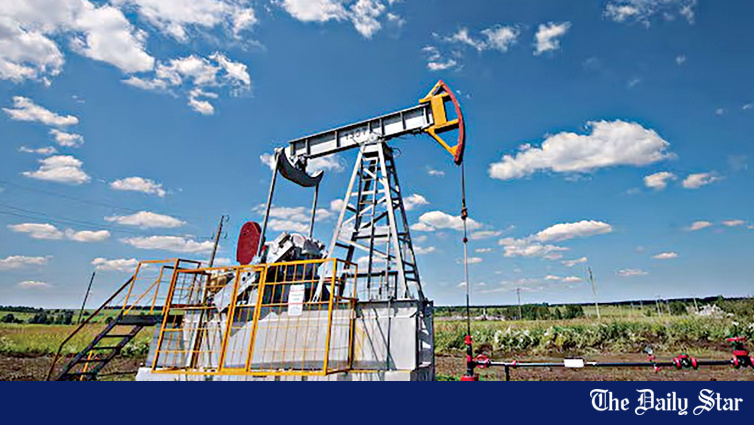
London, August 4, 2026 — Oil prices rebounded 1 percent on Tuesday from a plunge in the previous session, fuelled by concerns that Middle East supply remains at risk as a diplomatic resolution to the US-Iran war that has disrupted shipments still seems unlikely — with Iran explicitly rejecting US President Donald Trump's claim that negotiations were scheduled.
Front-month Brent futures rose $1.12, or 1.3 percent, to $84.89 a barrel by 0355 GMT after dropping 7 percent in the previous session to a three-week low. US West Texas Intermediate (WTI) crude was up 77 cents, or 1 percent, at $81.11 after falling more than 5 percent in the previous session to stand at its lowest in nearly a week.
📊 Price Recovery After Monday's Selloff
The Tuesday rebound reverses only a portion of Monday's sharp decline, which was triggered by Trump's Sunday announcement that he was holding off on new attacks on Iran pending ongoing talks to end their war and settle claims over control of the key Strait of Hormuz. The strategic waterway, which connects Gulf oil producers to global markets, was a channel for about a fifth of global shipments of crude oil and natural gas before the conflict.
- ⛽ Brent crude: $84.89/bbl (+1.3%, +$1.12)
- ⛽ WTI crude: $81.11/bbl (+1%, +$0.77)
- 📉 Monday Brent drop: -7% (three-week low)
- 📉 Monday WTI drop: -5% (lowest in nearly a week)
❌ Iran Denies Trump's Talks Claim
However, on Monday, Iran's Foreign Ministry spokesman Esmail Baghaei rejected Trump's claim, saying no negotiations with the US were taking place and no meetings were scheduled. The denial directly contradicts the Trump administration's narrative of impending diplomatic progress — and has injected fresh uncertainty into a market that had been pricing in de-escalation.
"The scale of the sell-off seems fairly overdone, given that there's still considerable uncertainty. We've been in this situation multiple times before, only to see things unravel," ING analysts said in a note. "And with Iran denying that any talks are underway and Trump issuing warnings if no deal materialises, the backdrop clearly leaves ample room for a renewed escalation."
The ING analysis captures the central tension in the current market: Monday's selloff was based on optimistic assumptions about diplomatic progress that Iran has now publicly rejected. The Tuesday rebound reflects the market re-pricing that uncertainty — though oil prices remain well below their pre-Monday-selloff levels, suggesting investors still expect some form of de-escalation eventually.
🚢 Hormuz: Central Sticking Point
The Hormuz dispute is a central sticking-point in talks. Washington says the memorandum of understanding agreed in June required Iran to open the waterway, while Tehran says the text explicitly preserved its authority. The fundamental disagreement over what the June agreement actually requires has created a diplomatic impasse that no amount of negotiation scheduling can paper over.
Analysts at Barclays said crude oil and refined product net exports through the strait averaged 4.2 million barrels per day in the week ended July 31, versus 3.2 million the previous week. The week-on-week increase suggests that some shipping is getting through despite the political dispute — but the volumes remain well below pre-conflict levels, and any sustained closure would have immediate global supply implications.
- 📊 Hormuz net exports (week ended July 31): 4.2M bpd
- 📊 Hormuz net exports (previous week): 3.2M bpd
- 📈 Weekly increase: +1.0M bpd
- 👥 Source: Barclays
🚢 Red Sea Shipping Disruption Continues
In the Red Sea, six Saudi-flagged supertankers changed course in the Gulf of Aden recently for southern Africa, while two tankers laden with Saudi oil crossed the Bab el-Mandeb Strait, shipping data showed on Monday. The routing decisions illustrate the ongoing risk assessment that ship operators are making — with some opting for the longer but safer Cape of Good Hope route around Africa rather than risking transit through the contested Red Sea corridor.
Shipping traffic at the key Gulf waterways of Bab el-Mandeb and the Strait of Hormuz held largely unchanged at the start of the week. However, Hormuz remains dangerous for vessels. On Tuesday, the United Kingdom Maritime Trade Operations (UKMTO) agency flagged an incident 20 nautical miles (37 km) northeast of Oman's Al Khasab. A cargo vessel broadcast over VHF channel 16 that it had been hit by an unknown projectile — a reminder that even outside the immediate conflict zone, the broader Gulf region remains a high-risk operating environment for commercial shipping.
💬 Analyst View: Dual-Chokepoint Risk
"While the fighting between Saudi Arabia and the Houthis has not completely halted energy flows, it has forced longer voyage times, higher insurance costs and occasional diversions," said Tim Waterer, chief market analyst at KCM Trade. "With the Strait of Hormuz, it keeps a dual-chokepoint risk in the market that prevents oil from fully unwinding its geopolitical premium."
The concept of a "dual-chokepoint risk" is critical for understanding the current oil market. Even if the Hormuz dispute is resolved, the Bab el-Mandeb Strait — disrupted by Houthi attacks on Saudi shipping — remains a separate source of supply chain risk. The two chokepoints together create a compounded risk premium in oil prices that cannot fully unwind unless both are simultaneously resolved. Given the distinct parties involved in each dispute (Iran in Hormuz, Houthis in Bab el-Mandeb), simultaneous resolution is unlikely.
🌏 Implications for Bangladesh
For Bangladesh, the oil price volatility of the past two days illustrates the precariousness of relying on Middle East energy supplies during a period of unresolved geopolitical conflict. Monday's 5-7 percent price decline offered a brief moment of hope for relief from elevated energy import costs; Tuesday's 1 percent rebound is a reminder that sustainable price declines require actual diplomatic progress, not just announcements of potential talks.
Bangladesh's energy import bill has been a significant drain on foreign exchange reserves throughout 2026, contributing to the taka's depreciation against the dollar and feeding into the 24 percent gas inflation reported in the Q4 FY26 inflation data. Any sustained reduction in oil prices would provide meaningful macroeconomic relief — but the Iran denial of Trump's talks claim suggests that such relief is not imminent.
The prudent assumption for Bangladesh's policymakers and businesses should be that Middle East energy supply disruption will continue for the foreseeable future. The diplomatic track may eventually produce results, but the timeline is uncertain and the risk of renewed escalation is real. Bangladesh's energy security strategy needs to proceed on the assumption that elevated oil and LNG prices will persist — meaning that domestic gas exploration, renewable energy investment, and energy efficiency improvements remain urgent priorities rather than optional reforms.
📋 Strategic Context
The past 48 hours of oil price action encapsulate the volatility that has defined global energy markets throughout 2026. Prices swing sharply on diplomatic announcements, only to partially reverse when the underlying facts fail to match the optimistic headlines. For traders, this creates a difficult environment in which positioning for either direction carries significant risk. For energy importers like Bangladesh, the volatility creates budgeting and planning challenges that compound the underlying price压力.
The fundamental driver of the current market — the unresolved US-Iran conflict and the broader Middle East security environment — shows no sign of imminent resolution. Iran's denial of Trump's talks claim is the latest data point confirming that the path to diplomatic de-escalation is likely to be long, uncertain, and punctuated by reversals. Oil prices will continue to react to each twist in the diplomatic narrative, but the structural premium created by the conflict is likely to persist until either a comprehensive diplomatic resolution is achieved or the conflict escalates further. For Bangladesh, the strategic message is clear: plan for continued energy price volatility, and use any periods of price decline to accelerate the structural reforms needed to reduce dependence on imported energy.
This news was originally published by The Daily Star. For the full original report, please visit: https://www.thedailystar.net/business/news/oil-ticks-after-selloff-talks-end-us-iran-war-remain-uncertain-4239741
📬 Get Bangladesh Trade News in your inbox
Weekly digest of export industry news, policy updates, and market analysis.
📰 Related Stories