Fed Raises Rates To Tackle 'Too High' Inflation, Defying Trump's Cut Demands
Federal Reserve unanimously raises rates 25bps to 3.75-4.00%; 16 of 18 policymakers expect another hike by year-end; Trump calls it a "raise against Trump"
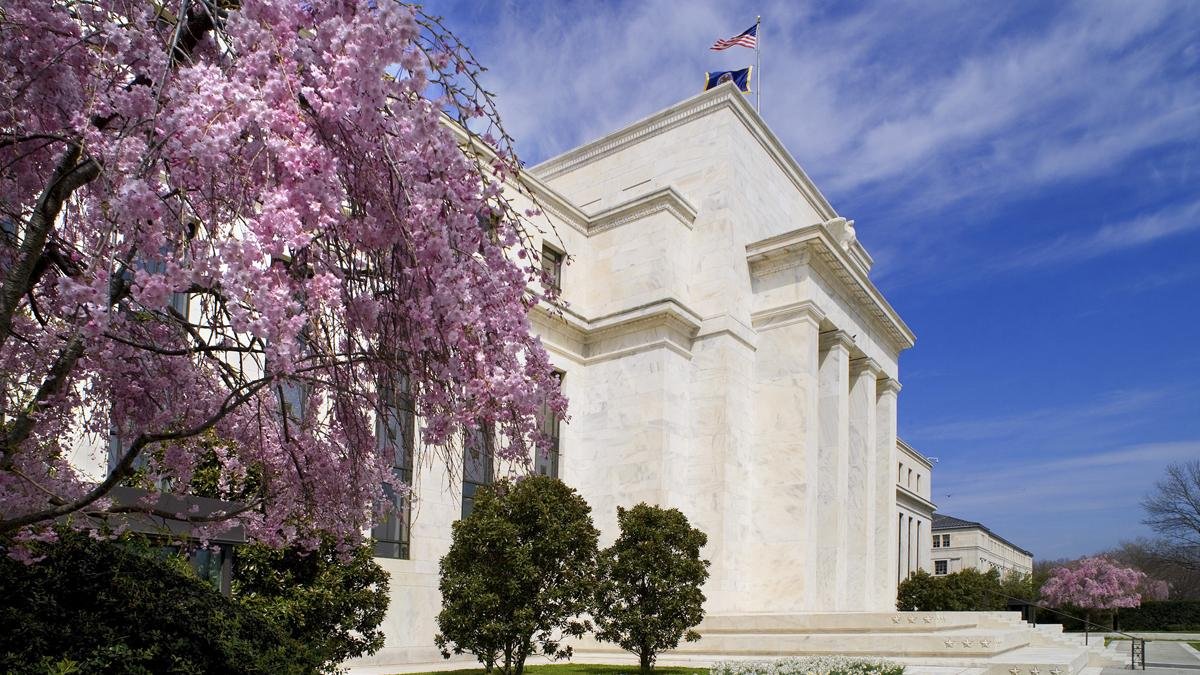
📊 The US Federal Reserve on Wednesday raised interest rates for the first time since 2023, defying President Donald Trump's demand for cuts, as central bank chief Kevin Warsh stressed the need to combat persistently high inflation. The Fed's Federal Open Market Committee voted unanimously to raise rates by 25 basis points to between 3.75 and 4.00 percent.
🏛 "The plain fact is that inflation is too high, and has been for too long," Warsh told a press conference, adding that the decision was a "serious" but necessary one. And Wednesday's rate hike may not be the last — the vast majority of Fed policymakers indicated that at least one more rate hike was likely necessary before the end of the year, according to their Summary of Economic Projections (SEP).
💰> Rate Hike Details And Projections
- 💵 New Fed rate: 3.75-4.00% (up 25bps)
- 📊 Vote: Unanimous
- 📊 Policymakers expecting another hike: 16 of 18
- 📊 CPI (August): 3.4% (unchanged, above 2% target)
- 📊 PCE forecast (year-end): 3.7% (raised 0.1pp)
- 📊 GDP forecast (year-end): 2.3% (raised 0.1pp)
- 📅 Previous rate hold: Since January 2026
- 📅 Last rate hike: 2023
📜 Inflation Drivers: Iran War, Tariffs, AI Boom
US households and businesses have been battered by years of higher-than-target inflation, and prices have surged in the wake of Trump's war on Iran, his signature tariff policies and the ongoing AI boom. The Fed had held rates steady since January, choosing to wait to gauge the effects of the Iran war's energy price shocks and to let the impact of tariffs on prices ripple through the economy. Since July, however, a growing faction of policymakers had indicated a rate hike may be required to tame inflation, as the war grinds on and prices remained elevated, particularly for energy.
On Friday, August's consumer price index came in at 3.4 percent — unchanged from the month before, but still well above the Fed's long-term two-percent target. Diane Swonk, chief economist at KPMG, said inflation had "forced the Fed's hand." "Price pressures remain too elevated and too persistent for policymakers to look through, while the economy and labor market have held up well enough to absorb tighter policy," she said.
⚠ Trump's Furious Response
The US president reacted angrily to the decision Wednesday, calling it a "raise against Trump" and accusing the Fed's rate-setting committee — which he called "hostile" — of making decisions for political reasons. The president has launched an unprecedented assault on the Fed's independence since taking office, attempting to fire a Fed Governor and launching a criminal probe against Warsh's predecessor in his quest for lower rates to spur economic activity. Wednesday's statements refrained from directly insulting or criticizing Warsh, as Trump was wont to do with former Fed chair Jerome Powell.
Trump's Republican Party faces a stern test in upcoming midterm elections, with rival Democrats seeking to wrest control of both houses of Congress and economic issues front-and-center for voters. The political dynamics of the midterms — with economic issues as the primary voter concern — create additional pressure on the Fed, as Trump seeks lower rates to stimulate economic activity before the November 3 elections.
💰> Fed Forecasts: Higher Inflation, Higher Growth
In its SEP, the Fed raised its forecast for its preferred gauge of inflation — the Personal Consumption Expenditures (PCE) price index — by 0.1 percentage points to 3.7 percent by year-end. The Fed also raised its projection for GDP growth by year-end to 2.3 percent, up 0.1 percentage points. Warsh reiterated his belief in the "resilience" of the US economy, citing its strength as being a marker of its ability to absorb tighter financial conditions. The combination of higher inflation forecast and higher GDP growth forecast suggests the Fed sees the economy as strong enough to absorb rate hikes without tipping into recession — a "soft landing" scenario where tightening cools inflation without causing a downturn.
🌏> Market Reaction And Global Implications
US stock markets largely priced in Wednesday's rate hike, but they were still down on the news — expected with any rate hike as investors adjust their portfolios. For global financial markets, the Fed's rate hike and the signal of further tightening have multiple transmission channels: stronger dollar (pressuring emerging market currencies including the Bangladeshi taka), higher Treasury yields (potentially triggering capital outflows from emerging markets), and tighter global financial conditions (constraining access to international capital).
For Bangladesh, the Fed's rate hike carries the transmission channels analysed in our companion article: currency pressure on the taka, higher import costs, potential RMG export demand effects, mixed remittance impact, and increased external debt servicing costs. The unanimous vote and the 16-of-18 consensus for further tightening suggest that the tightening cycle is not yet over — meaning these transmission channels will continue to affect Bangladesh through at least the end of 2026, with potential extension into 2027 if inflation remains above target.
The coming months will be critical for both the US economy and global financial stability — as the Fed continues tightening into supply-driven inflation (energy prices from the Iran war, tariff-driven import costs) while the political pressure from the Trump administration intensifies ahead of the November midterms. The tension between monetary policy independence and political pressure will shape not only US interest rates but the global economic environment that Bangladesh and other emerging markets must navigate.
This news was originally published by The Daily Star. For the full original report, please visit: https://www.thedailystar.net/business/economy/news/fed-raises-rates-tackle-too-high-inflation-4275786
📬 Get Bangladesh Trade News in your inbox
Weekly digest of export industry news, policy updates, and market analysis.
📰 Related Stories