Iran War Triggers Oil Refining Golden Era: Big Oil Windfall Won't Last
BP refining margin hits $30/barrel, Exxon downstream profits $5.5B, Shell at 102% utilisation; structural decline postponed, not reversed
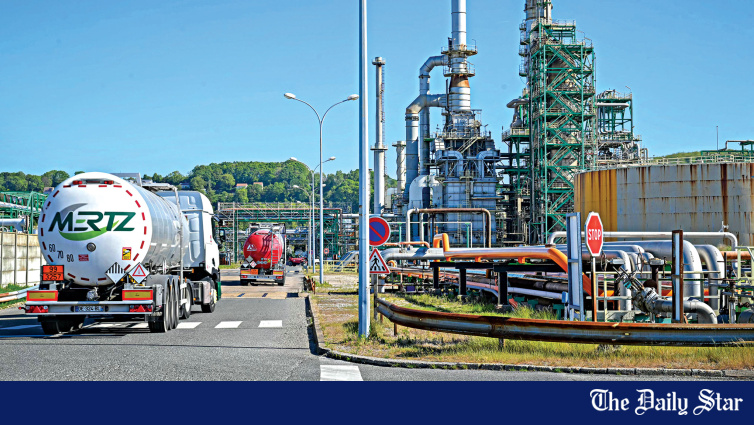
London, August 4, 2026 — Bumper oil refining profits triggered by the Iran war are turbocharging Big Oil's earnings, breathing new life into a business many investors had largely written off — though the sector's renewed profitability is built on war-driven scarcity rather than structural improvement, and is unlikely to reverse the refining industry's long-term decline.
The sector looks poised to produce unusually strong returns for several years, but long-term structural changes in oil consumption mean refining's star will likely fade quickly once the immediate conflict-driven supply disruptions ease. The result is a temporary golden era that benefits Western oil majors while masking the deeper fragility of the global refining business.
🏭 Decades of Western Retreat from Refining
Despite occupying a critical position in the global energy supply chain, refining has long been the least glamorous corner of the oil business. Western oil majors have steadily retreated from the sector over the past two decades, deterred by high operating costs, notoriously volatile margins, rising carbon costs, and growing competition from state-backed refiners in the Middle East, Africa, and Asia.
That retreat accelerated in the late 2010s, particularly in Europe, as governments and companies increasingly bet that rapid electric vehicle adoption would curb fuel demand by the 2030s, reducing the need for new refining investment. The strategic logic seemed sound at the time: why invest in capacity that would soon be obsolete?
As a result, Western oil giants' refining capacity shrank dramatically:
- 📊 Combined refining volumes (BP, Chevron, Exxon, Shell, TotalEnergies): 16.4M bpd in 2005 → 10.4M bpd in 2025
- 🌏 Share of global total: 22% in 2005 → 13% in 2025
- 👥 Shell alone: Reduced refinery interests from 40 to just 7 over the period
- 💰 Source: Reuters Open Interest calculations
🔥 Iran War Triggers Refining Margin Explosion
The refining environment has improved considerably in the past year, thanks to a spike in military conflict in several oil-rich regions. The combination of the months-long effective closure of the Strait of Hormuz — which has limited refiners' access to crude — and Tehran's attacks on refineries throughout the Middle East have sent refining margins for gasoline, diesel, and jet fuel to record highs.
The loss of Middle Eastern crude forced refineries, particularly in Asia, to cut operating rates. While China has enormous crude stockpiles, it chose to scale back refining activity aggressively and halt fuel exports to offset its sharp reduction in crude imports — a strategic decision that removed significant supply from the global market.
Together, these disruptions removed roughly 5 million barrels per day, or around 6 percent, of pre-war global refining output in the second quarter. Global refinery runs averaged around 78 million bpd, the lowest level since the depths of the COVID-19 pandemic in 2020, according to the International Energy Agency (IEA).
🧪 Russian Refining Also Hit by Ukrainian Drone Attacks
Meanwhile, months of relentless Ukrainian drone attacks on Russian energy infrastructure have sharply reduced Russia's refining output, forcing Moscow to ban diesel exports. That announcement sent diesel prices soaring — compounding the supply shock from the Middle East and creating a truly global refined product shortage.
The combined impact of the two conflicts on refining profitability has been dramatic. The refined product shortage has left Big Oil with enormous pricing power and encouraged operators to run plants at full capacity. US refineries, which emerged as the world's largest fuel suppliers during the conflict, operated at 97 percent of capacity in the week to July 24, well above their long-term average of around 90 percent.
💰 Big Oil Earnings: Record Downstream Profits
The financial results have been extraordinary across the major integrated oil companies:
- 📊 BP refining-indicator margin: $30/bbl in Q2 (up from $17 in Q1, $12 a year earlier); averaged $42/bbl so far in Q3
- 💰 Exxon downstream profits: $5.5B in Q2 (strongest since 2022, driven by record diesel production)
- 💰 Chevron downstream earnings: $4.9B (highest level this decade)
- 💰 Shell adjusted earnings (products division): $2.5B (highest this decade, 102% utilisation rate)
TotalEnergies Chief Executive Patrick Pouyanne summed it up neatly when he told analysts late last month that the company's refining segment had performed in "an exceptional way." BP reports earnings on Tuesday, with markets expecting similarly strong downstream numbers from the British major.
🛢️ Why the Boom Won't Last
Most of the immediate pressures supporting these refining margins are likely to ease — the question is how quickly. A sustainable resolution to the US-Iran conflict involving a full reopening of the Strait of Hormuz and the eventual recovery of Chinese refining activity would help loosen fuel markets meaningfully, but when that might occur is anyone's guess.
What's clear is that the industry's problems cannot be repaired immediately. Fixing damage to dozens of refineries in the Middle East and Russia will take months, and in some cases years. In the meantime, global spare refining capacity remains exceptionally thin — meaning any new disruption could push margins even higher before they eventually normalise.
📋 Demand Side: Strategic Stockpile Rebuilding
There's also reason to be positive on the demand side of the equation. The Iran war has revived concerns about energy security. Many governments are thus expanding strategic storage facilities for both crude oil and refined fuels to protect against future supply shocks. Governments need to start by simply refilling inventories depleted during the conflict.
- 📊 Global oil stocks drawdown Q2: 5.1M bpd
- 📈 Forecast Q3 drawdown: 2.2M bpd further
- 👥 Source: US Energy Information Administration (EIA)
Rebuilding inventories of diesel, jet fuel, and gasoline will likely take years, creating persistent demand for refined products even after the immediate conflict-driven supply disruptions ease. Alan Gelder, senior vice president for refining at consultancy Wood Mackenzie, expects refining margins and utilisation rates to remain strong through the end of the decade, supported by continued growth in oil demand and a limited pipeline of new refining projects.
⚠️ The Deeper Fragility
But the boom masks a deeper fragility. Today's windfall profits are being generated by war, damaged infrastructure, and scarcity — not by a structural improvement in the industry's underlying fundamentals. Refiners are benefiting because the world has lost capacity faster than demand has disappeared. But that might not be the case for long.
Several countries with limited domestic refining capability are now reassessing whether they need more local processing capacity. Australia, for example, is already considering such plans. Over time, those investments could create a new wave of capacity and eventually lead to oversupply — recreating the very conditions that drove Western majors out of the refining business in the first place.
The oil majors understand this reality. A few years of exceptional margins may slow the decline of the refining sector. But they are unlikely to reverse it — meaning today's windfall profits are better understood as a temporary reprieve than as a structural revival of an industry whose long-term trajectory remains firmly downward.
🌏 Implications for Bangladesh
For Bangladesh, the global refining margin explosion has direct implications. The country imports all of its refined petroleum products — meaning that the record refining margins being earned by Big Oil are ultimately being paid by Bangladeshi consumers and businesses through higher fuel import bills. The 24 percent gas inflation and 13.8 percent fuels and lubricants inflation reported in Bangladesh's Q4 inflation data are direct downstream effects of the global refining margin spike.
The strategic implication is clear: Bangladesh's energy import bill will remain elevated as long as the Iran war continues to disrupt Middle East refining capacity. With foreign exchange reserves already under pressure and the taka depreciating against the dollar, the prolonged period of high refined product prices represents a meaningful macroeconomic headwind — one that no domestic policy can fully offset while global supply conditions remain tight.
This news was originally published by The Daily Star. For the full original report, please visit: https://www.thedailystar.net/business/global-economy/news/iran-war-ushers-oil-refining-golden-era-it-wont-last-4239346
📬 Get Bangladesh Trade News in your inbox
Weekly digest of export industry news, policy updates, and market analysis.
📰 Related Stories