Iran Economy Contracts 10.1% During US War: Official Statistics
Iran's GDP shrank 10.1% YoY in Q1 of Persian calendar (March-June 2026) amid US-Israeli strikes, Hormuz blockade and longstanding sanctions; global oil prices surge as conflict spreads

📊 Iran's economy has contracted sharply during the US-Iran war, with the country's gross domestic product (GDP) shrinking by 10.1 percent year-on-year from late March to late June, a period known in Iran as the first quarter of the Persian calendar, according to the Statistical Center of Iran on Sunday. The 10.1% GDP contraction represents one of the most severe economic downturns recorded by any major economy in recent years — exceeding the contraction experienced by most economies during the COVID-19 pandemic.
🌏 Iran has been at war with the United States since late February, when US-Israeli strikes killed the Islamic republic's supreme leader and senior military officials at the start of a vast offensive. The strikes sparked Tehran's retaliation in blocking the Strait of Hormuz — causing global oil prices to surge — as the conflict spread in the Middle East. Aside from this, Iran's economy has long struggled with hyperinflation and devaluation of its currency, caused in large part by economic sanctions.
💰 Economic Impact Data
- 📊 GDP contraction: -10.1% YoY (Q1 Persian calendar, March-June 2026)
- 📅 War start: Late February 2026 (US-Israeli strikes)
- 🚢 Iran retaliation: Blocked Strait of Hormuz
- 💰 Pre-existing conditions: Hyperinflation, currency devaluation, sanctions
- 📊 GDP contraction comparison: More severe than most COVID-era downturns
🌏 Context: War's Economic Devastation
The 10.1% GDP contraction captures only the first quarter of the Persian calendar (approximately March-June 2026) — meaning the full economic impact of the war, which continues into September 2026, is likely to be significantly larger when subsequent quarters are reported. The contraction reflects the combined impact of multiple channels: military destruction of infrastructure, the Hormuz blockade's effect on Iran's own oil exports, the collapse of international trade relationships as sanctions tightened, and the domestic economic disruption caused by mobilisation and war-time conditions.
The pre-existing economic conditions — hyperinflation, currency devaluation and sanctions — meant that Iran's economy was already weakened before the war began. The US withdrawal from the nuclear deal in 2018 and the subsequent reimposition of sanctions had already pushed Iran's economy into a prolonged downturn. The war compounded these structural weaknesses with acute shock — creating a combined structural-and-cyclical crisis that may take years to reverse even if the conflict ends.
🌏 Implications For Global Energy Markets And Bangladesh
For global energy markets, Iran's economic contraction underscores the structural disruption to oil supply that has driven Brent crude above $100/barrel throughout 2026. Iran's own oil exports — historically approximately 2 million bpd — have been effectively zero since the Hormuz blockade began. The loss of Iranian supply, combined with Saudi pipeline disruptions and the broader Middle East conflict, has created the sustained supply tightness that has pushed global oil prices to multi-year highs.
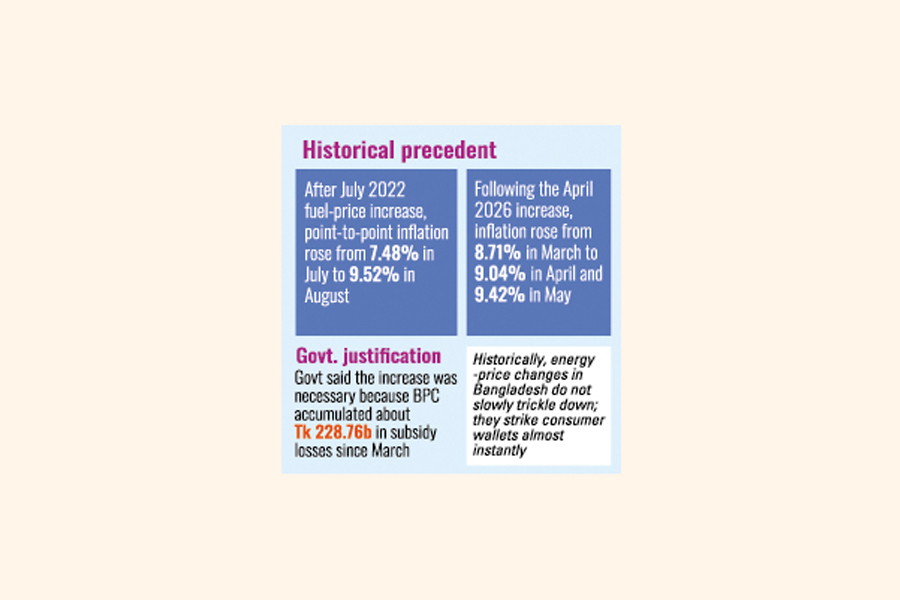
For Bangladesh, the Iranian economic contraction is indirectly but meaningfully relevant. The elevated oil prices driven by the Iran war have increased Bangladesh's fuel import bill by billions of dollars annually, forcing the government to raise domestic fuel prices twice in 2026 (April and September) and causing BPC losses of Tk 22,876 crore. A resolution of the Iran conflict — whether through the diplomatic path hinted at during the UNGA or through military conclusion — would be the single most impactful event for Bangladesh's energy import costs and the inflation trajectory that those costs drive.
The coming weeks will reveal whether the UNGA diplomatic engagement can produce a ceasefire or de-escalation that would allow Iran's economy to begin recovery — and global oil prices to retreat from the $100+ levels that have pressured Bangladesh's macroeconomic stability throughout 2026.
This news was originally published by The Daily Star. For the full original report, please visit: https://www.thedailystar.net/business/news/iran-economy-contracts-during-us-war-official-statistics-4278656
📬 Get Bangladesh Trade News in your inbox
Weekly digest of export industry news, policy updates, and market analysis.
📰 Related Stories