Diversified Power System Is Bangladesh's Answer To Energy Crisis
Bangladesh's installed capacity exceeds generation by 50%+ due to fuel shortages; Adani shutdown exposes risks of single-supplier dependence, argues Syed Fattahul Alim
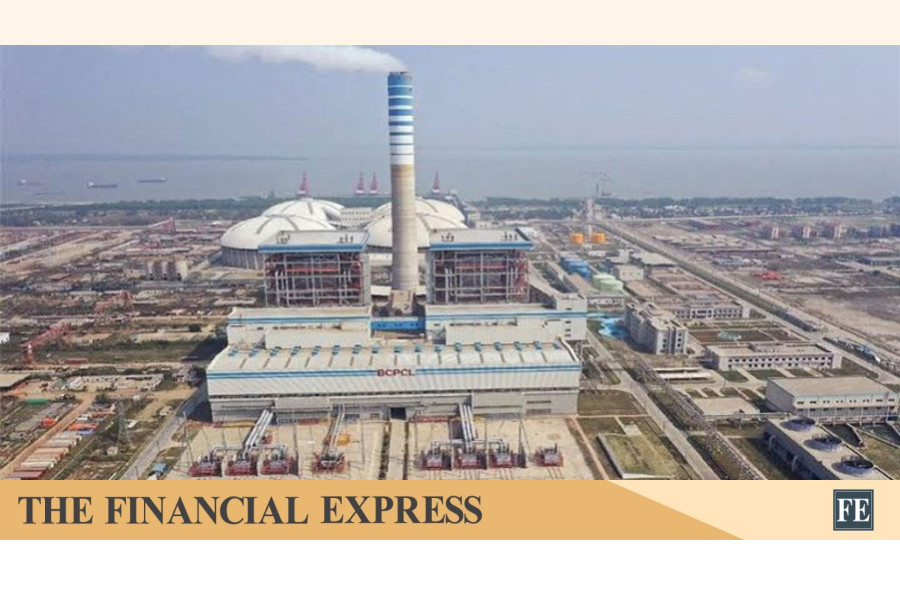
⚠ Bangladesh's power crisis has reached a stage where load-shedding is disrupting industrial production, increasing business costs and affecting services dependent on uninterrupted electricity. The fragility of the system became clearer after one of the two 800-megawatt units of Adani Power's Godda plant located in Jharkhand of India went out of operation following what has been described as a boiler-related "technical fault". The plant had only recently increased generation after weeks of reduced output, exposing Bangladesh's vulnerability to disruptions at a single cross-border supplier.
📊 The Adani shutdown raised immediate concerns about Bangladesh's ability to maintain reliable power supply through the coming winter and beyond. With multiple domestic power plants already operating below capacity due to gas, coal and liquid-fuel shortages, the loss of 800MW from Godda compounded an already strained generation fleet. The episode underscores the structural fragility of Bangladesh's power system — a fragility that has been building for years as the country expanded installed capacity without corresponding growth in fuel supply security.
📜 Adani PPA: Asymmetric Protection?
That raises questions about the 25-year Power Purchase Agreement (PPA) under which the Bangladesh Power Development Board (BPDB) purchases 1,496MW from Godda. Does the agreement contain any guarantee that Bangladesh will receive the contracted power without interruption? The publicly available PPA defines "Forced Outage" and contains a section on liquidated damages for scheduled maintenance and forced outages. It also provides for a performance security deposit. So, there are contractual safeguards in the agreement.
What is striking, however, is the elaborate protection provided to the seller against default by the buyer. The agreement records a Government of Bangladesh guarantee for the payment obligations of BPDB and the Power Grid Company of Bangladesh. BPDB is also required to maintain letters of credit to secure capacity and energy payments. One wonders whether the protection available to Bangladesh against repeated failure of supply is equally strong in practice. The asymmetry is structurally significant — Bangladesh has committed sovereign guarantees for its payment obligations, but the remedies available to Bangladesh for repeated supply disruptions appear to be limited to standard commercial arbitration.
- 📊 Adani Godda plant capacity: 1,600MW (2 units of 800MW each)
- 📜 PPA contracted capacity: 1,496MW to BPDB
- 📅 PPA tenure: 25 years
- 🏛 Dispute resolution: Singapore International Arbitration Centre
- 📊 Gas-fired installed capacity: ~12,000MW
- 📊 Gas-fired actual generation: below 5,000MW (due to gas shortage)
- 📅 Domestic gas well drilling target: 150 wells by 2030-31
- 📊 Rooftop solar target: 3,000-4,000MW before next summer
💵 Cross-Border PPA And Legal Recourse
Since the transaction is cross-border, the issue of legal redress has another dimension. But one should not confuse a commercial power purchase agreement with a treaty between two sovereign states. Bangladesh cannot simply take every technical breakdown at Godda to an international court as a violation of international law. The first line of remedy lies in the contract itself. Section 19 of the PPA provides a dispute-resolution mechanism, including arbitration under the Singapore International Arbitration Centre.
The arbitration-based dispute resolution mechanism is structurally slow — international arbitration cases typically take 18-36 months to resolve, with limited interim relief available for ongoing supply disruptions. For Bangladesh, this means that even strong contractual remedies cannot deliver immediate relief when a foreign supplier experiences technical failures. The lesson is that contractual remedies must be complemented by structural diversification — reducing dependence on any single supplier to a level where individual outages do not create systemic crises.
🤝 Political Dimension And Engineering Reality
But is the latest interruption political? BNP acting secretary general Ruhul Kabir Rizvi has publicly asked why technical faults are occurring repeatedly and whether sabotage or conspiracy might be involved. Such questions may be politically understandable, especially when the source of power is located in another country and relations between Dhaka and New Delhi have their own complications. But suspicion is not evidence. A boiler fault has first to be investigated as an engineering failure.
The political framing of cross-border supply disruptions — while understandable given the historical sensitivity of Bangladesh-India relations — risks obscuring the more fundamental structural issue. Even if every Adani outage is genuinely technical, the recurring pattern of disruptions at a single 1,600MW plant exposes the systemic risk of depending on one cross-border supplier for a significant share of peak generation capacity. Diversification, not political recrimination, is the durable solution.
🚧 The Real Problem: Capacity Without Fuel
The real problem, therefore, is not Adani alone. Bangladesh has created a power system with an installed capacity far higher than the electricity it can actually generate because many plants lack gas, coal or liquid fuel. Gas-fired plants alone have around 12,000MW of capacity, but generation has lately hovered below 5,000MW because of shortage of gas. Coal plants, too, are not operating at full capacity, while furnace-oil plants are costly and themselves dependent on imported fuel. Add to this the recurring technical faults at major thermal plants, and the gap between installed capacity and actual generation widens further.
The structural mismatch — 12,000MW of installed gas-fired capacity generating less than 5,000MW — represents one of the most significant underutilised asset bases in any major Asian power system. The plants exist, the transmission infrastructure exists, and the customer demand exists — but the fuel supply chain cannot support full generation. Closing this gap requires either increased domestic gas production, expanded LNG import capacity, or a structural pivot to alternative generation sources that do not depend on imported fuel.
💰 Immediate And Medium-Term Response
For the immediate crisis, the government has little choice but to operate available liquid-fuel plants where necessary, secure emergency fuel cargoes, clear legitimate dues to producers and allocate scarce gas according to national priority. Hospitals, water supply, telecommunications, export-oriented industries and other critical services cannot be allowed to go dark merely because the system has no contingency margin. At the same time, BPDB should maintain genuine reserve capacity so that the failure of one or two units does not collapse the entire supply.
For the medium and long term, however, emergency purchases are not an answer. The government has announced a plan to drill 150 gas wells by 2030-31 and expand LNG-import capacity. Domestic exploration is indispensable and should have been undertaken much earlier. But simply building more LNG terminals would again deepen dependence on an imported commodity, the price and physical supply of which can be disrupted by wars, shipping problems or turmoil in the Strait of Hormuz. Diversification should not lead to new dependencies.
🌏 Renewable Energy As Energy Security Strategy
Renewable energy, especially rooftop solar, should therefore be treated as part of energy security rather than only a climate obligation. The government is already looking for financing to add 3,000MW to 4,000MW of rooftop solar before next summer. That should be accelerated alongside battery storage, grid modernisation and industrial solar systems. Cross-border power trade should also continue, including hydroelectricity from Nepal and, in future, Bhutan, but no single foreign plant or country should be allowed to become indispensable to Bangladesh's power security.
The framing of renewable energy as an energy security strategy rather than only a climate obligation is strategically important. While Bangladesh's renewable energy roadmap has historically been driven by climate commitments and Nationally Determined Contribution (NDC) targets, the recurring power crises of recent months have made a more pragmatic case: renewables reduce dependence on imported fuel, are immune to international supply disruptions, and can be deployed at scale in decentralised configurations that strengthen grid resilience.
🤝 Strategic Imperative: Energy Security Through Diversity
The lesson from the present crisis is that Bangladesh cannot build its power security on excessive dependence on any single imported fuel, foreign supplier or cross-border power source. Energy security means having enough domestic resources, diverse imports, renewable capacity, reserve generation and enforceable contracts so that failure at one point does not paralyse the entire system. The government should address the present emergency with whatever resources are available, but its real task is to build a diversified power system that can withstand the loss of any single component without collapsing into crisis.
For Bangladesh's export economy, the diversification imperative is particularly urgent. Every hour of load-shedding at an export-oriented factory translates into delayed shipments, eroded buyer confidence and competitive disadvantage against regional rivals. The coming fiscal year will reveal whether the government can translate its ambitious renewable energy targets and gas exploration plans into measurable capacity additions — or whether Bangladesh's power system will remain structurally fragile, vulnerable to the next technical fault at any single plant in the country's generation fleet.
This news was originally published by The Financial Express. For the full original report, please visit: https://thefinancialexpress.com.bd/columns/diversified-power-system-is-answer-to-present-crisis
Related on BangladeshExport
📬 Get Bangladesh Trade News in your inbox
Weekly digest of export industry news, policy updates, and market analysis.
📰 Related Stories