CPD Study Reveals Supply Shortages and Trader Collusion Drive Bangladesh Food Price Inflation
Think-tank's supply chain study of 10 essential commodities finds price spreads exceeding 100% for potatoes, brinjal, and green chilli, with farmers, millers, and commission agents capturing largest margins
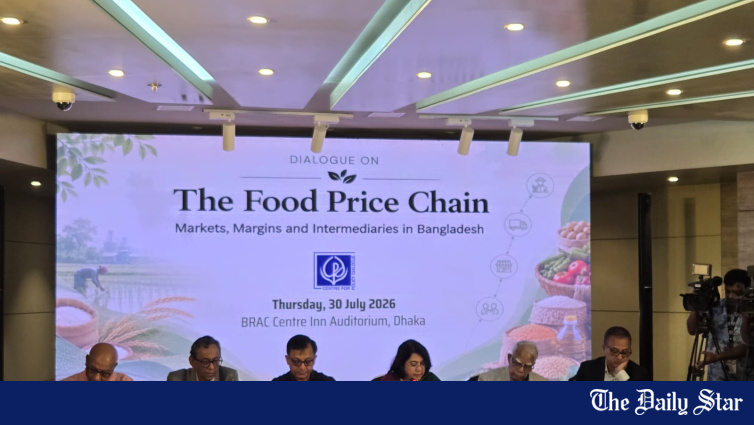
Dhaka, July 30, 2026 — Supply shortages, trader collusion, and hoarding are the most frequent causes of high food prices in Bangladesh, according to a new study by the Centre for Policy Dialogue (CPD) on the food price chain. 📊 The independent think-tank unveiled the findings at a dialogue at the BRAC Centre Inn in Dhaka on July 30, 2026, highlighting the structural issues driving food inflation that hits low-income households hardest. 🏪
🔍 The CPD said it conducted the research to trace the supply chains of selected essential food commodities from retail markets back to producers, as food prices in Bangladesh have remained persistently high and volatile. The study provides crucial insights into why food costs remain elevated despite government efforts to control inflation. 📈
📊 Study Methodology and Scope
🔬 The CPD research team collected data from 10 retail markets selected through sampling in the Dhaka Division. In each market, the team surveyed 5 retailers for each of the 10 selected commodities, resulting in 500 retailer interviews. The commodities studied include:
- 🍚 Medium-quality rice — staple food
- 🫘 Lentils — protein source
- 🧅 Local onions — essential ingredient
- 🥔 Potatoes — staple vegetable
- 🌶️ Green chilli — essential spice
- 🍆 Brinjal — common vegetable
- 🥚 Hen eggs — protein source
- 🥩 Beef — protein source
- 🐟 Rui (carp) — fish protein
- 🐔 Chicken — protein source
📊 This comprehensive methodology allowed CPD to map the entire supply chain from farm to retail, identifying where price increases occur and who benefits from the margins. 📋
💰 Key Findings: Price Spreads and Margins
📈 The study found that farmers, millers, urban wholesale commission agents, and retailers pocketed the largest share of consumers' expenditure through gross margins in most cases. CPD Senior Research Associate Foqoruddin Al Kabir presented the detailed findings:
- 📊 Price spread at farmer level — exceeded 50% for onions and fish
- 📊 Higher spreads — topped 100% for potatoes, brinjal, and green chilli
- 📉 Negative margins — chicken and beef farmers received negative net margin, largely due to high feed costs
- 🔄 Volatility — brinjal and green chilli prices were highly volatile across all market participants
💸 The finding that price spreads exceed 100 percent for some commodities means consumers are paying more than double the farmer's price — a clear indication of inefficiencies and potential exploitation in the supply chain. 📊
🏪 Commission Agents and Market Concentration
🤝 The CPD study identified commission payments as a significant factor in price inflation:
- 💵 Commission payments evident — for onions, brinjal, green chilli, fish, and beef
- 🏗️ Urban aratdars — retailers' heavy dependence on commission agents increases market concentration
- 📈 Price volatility — market concentration leads to greater price volatility
- ⚠️ Reduced competition — fewer intermediaries control larger market share
📊 The heavy dependence on urban aratdars (commission agents) creates a bottleneck in the supply chain, allowing a small number of intermediaries to capture significant margins while both farmers and consumers lose out. This market structure reduces competition and contributes to price volatility. 📈
📋 CPD Recommendations for Reform
🔧 The CPD recommended several reforms to address the structural issues in Bangladesh's food supply chain:
- ✂️ Cut unnecessary supply-chain layers — reduce intermediaries between farmers and consumers
- 📊 Boost competition — through closer monitoring by the Ministry of Commerce and the Competition Commission
- 🏪 Increase market choices — for farmers and retailers
- 💡 Greater transparency — in prices and market information
- 📋 Evidence-based reforms — stronger monitoring and data-driven policy
🗣️ Expert and Government Response
🎤 Fahmida Khatun, executive director of the CPD, emphasised the urgency of addressing food price inflation:
"Food prices remain among Bangladesh's most pressing economic challenges, hitting low-income households hardest. Production constraints, supply chain inefficiencies, and weak competition are key drivers, stressing the need for stronger monitoring and evidence-based reforms."
🏛️ The event was attended by Commerce Minister Khandakar Abdul Muktadir, who heard the CPD's findings firsthand. AHM Shafiquzzaman, president of the Consumers Association of Bangladesh (CAB), also attended, representing consumer interests. 🤝
📈 Broader Economic Context
📊 Food price inflation has been a persistent challenge for Bangladesh's economy in recent years:
- 📉 Inflation in June 2026 — eased to 9.16% (down from 9.42% in May)
- ⚠️ Still above target — inflation remains above the government's target
- 💸 Food prices — a major component of the consumer price index
- 👥 Low-income impact — food costs disproportionately affect poorer households
- 🏭 Industrial impact — high food prices pressure wage demands, affecting industrial competitiveness
🌐 For Bangladesh's export economy, food price inflation has indirect but significant effects. When workers face higher living costs, they demand higher wages, which increases manufacturing costs — particularly in the labor-intensive RMG sector. Addressing food supply chain inefficiencies is therefore not just a social welfare issue but an economic competitiveness concern. 📊
🔮 Looking Ahead: Reform Implementation
📋 The CPD's recommendations align with broader government efforts to modernise Bangladesh's agricultural supply chains. Key implementation challenges include:
- 🏛️ Inter-agency coordination — multiple ministries involved in food supply management
- 📊 Market monitoring — need for real-time price and supply data
- 🏪 Market infrastructure — investment in cold storage, wholesale markets, and logistics
- 📱 Digital platforms — using technology to connect farmers directly with buyers
- ⚖️ Competition enforcement — strengthening the Competition Commission's role
📈 The CPD study provides a clear evidence base for reform. The question now is whether the government can translate these findings into effective policy action. With food prices remaining elevated and inflation still above target, addressing supply chain inefficiencies has become an urgent priority for Bangladesh's economic management. 🎯
This news was originally published by The Daily Star. For the full original report, please visit: https://www.thedailystar.net/business/news/supply-shortages-trader-collusion-fuel-high-food-prices-cpd-4236196
Related on BangladeshExport
📬 Get Bangladesh Trade News in your inbox
Weekly digest of export industry news, policy updates, and market analysis.
📰 Related Stories