Circular Economy Vital for Bangladesh Green Export Growth: BUILD Study
Bangladesh generates 821,000 tonnes of plastic waste annually but recycles only 36%. Formalising plastic-to-textile recycling could generate $4-5 billion in additional garment exports, says BUILD.
🔄 Dhaka, Bangladesh — For Bangladesh, the transition to a circular economy is no longer simply an environmental aspiration; it is fast becoming an economic necessity. As global markets tighten sustainability requirements and consumers become increasingly conscious of the environmental footprint of products, the country’s ability to turn waste into industrial resources could determine how competitive its exports remain in the years ahead.
📊 The message emerged clearly at the fifth meeting of the Sustainability and Green Growth Working Committee (SGGWC), jointly organised by the Business Initiative Leading Development (BUILD) and the Ministry of Environment, Forest and Climate Change (MoEFCC). Senior government officials, industry representatives and development partners discussed the challenges and opportunities of developing a circular plastic-to-textile economy.
🗑 Bangladesh Generates 821,000 Tonnes of Plastic Waste Annually
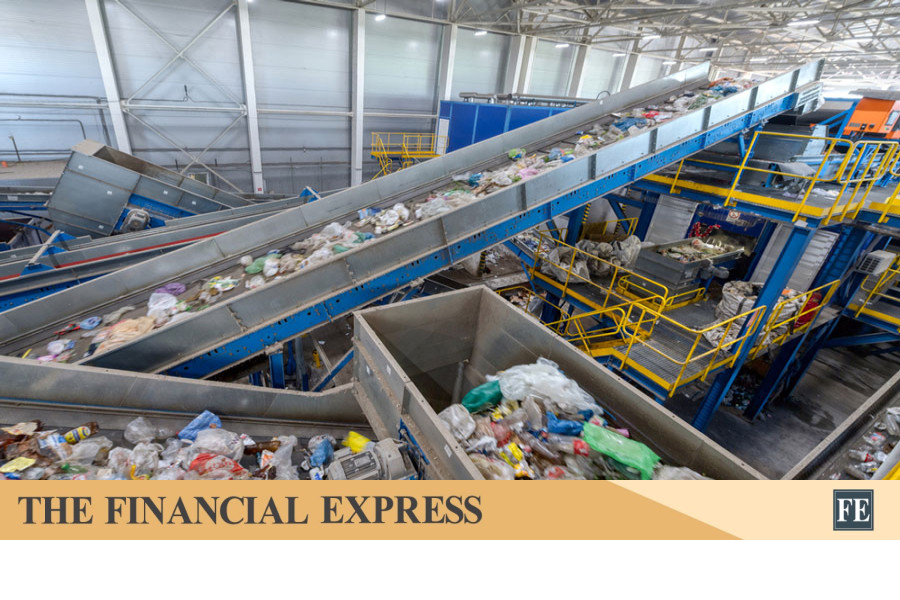
📊 Bangladesh generates more than 821,000 metric tonnes of plastic waste annually, according to a BUILD study, yet only about 36 per cent is recycled. Much of the recycling chain remains informal, fragmented and poorly financed. This means that a considerable volume of potentially valuable material is discarded, lost from the formal economy or processed under conditions that do not meet international standards.
📊 The paradox is difficult to ignore. Bangladesh’s garment industry imports substantial quantities of man-made fibres and other raw materials, while tonnes of recyclable plastic waste are generated within the country every year. A more organised recycling industry could therefore help bridge the two realities. Waste plastic, particularly PET (polyethylene terephthalate), can be processed into recycled fibres and eventually transformed into garments and other textile products.
💰 $4-5 Billion Additional Garment Export Potential
📊 The potential export gains are substantial. The BUILD study estimates that formalising and expanding plastic-to-textile recycling could generate an additional US$4-5 billion in garment exports. It could also:
- 💰 Reduce dependence on imported man-made fibres
- 🌏 Strengthen Bangladesh’s compliance with increasingly demanding environmental requirements in major export markets
- 🌿 Create new enterprises and jobs in recycling and circular economy sectors
- 📊 Reduce environmental burden of plastic waste accumulation
🌏 EU Market: Circularity Becoming Condition of Trade
📊 The European Union is particularly important in this regard. Bangladesh’s apparel exports are deeply dependent on access to European markets, and the EU is moving steadily towards a production and consumption model based on:
- 🔄 Circularity
- 🌿 Resource efficiency
- 🤝 Producer responsibility
📊 Compliance with these requirements will increasingly affect market access and competitiveness. For Bangladeshi exporters, therefore, green production cannot remain a matter of corporate image or voluntary commitment. It is becoming part of the basic economics of international trade.
🏛 BSTI Standards for Recycled PET (rPET)
📋 Standards are equally important. Without reliable quality standards, Bangladesh’s recycled materials may struggle to gain acceptance in sophisticated international supply chains. The proposal to approach the Bangladesh Standards and Testing Institution (BSTI) for developing standards for recycled polyethylene terephthalate (rPET) is therefore timely.
✅ A transparent certification and traceability system would give both domestic manufacturers and international buyers greater confidence in recycled inputs.
⚠ The issue of plastics labelled biodegradable also deserves careful consideration. Officials noted that BSTI currently lacks standards for such products because they are not covered by mandatory standardisation requirements. Experts suggest that Bangladesh should promote compostable plastics instead, warning that some biodegradable plastics could contribute to microplastic pollution.
🎑 Research conducted by the Bangladesh University of Engineering and Technology (BUET) may help identify appropriate alternatives. The larger lesson is that environmental claims must be supported by scientific evidence rather than marketing terminology.
👥 Formalising Waste Collectors
📊 Yet policy and standards alone will not create a circular economy. The weakest link may be the waste collection system. Waste collectors, who currently operate largely within the informal economy, need to be brought into a regulated system. Mandatory trade licences could help formalise the sector, improve working conditions and, more importantly, ensure a dependable supply of recyclable materials to recycling plants.
💰 Blended Financing Needed
💰 Finance is another major constraint. Recycling facilities, sorting systems, collection networks and advanced processing technologies require substantial investment. The call for blended financing and greater foreign direct investment is therefore justified.
📊 Public policy can create the regulatory environment, but the private sector must ultimately provide much of the capital, technology and managerial expertise needed to build a commercially viable recycling industry.
🏛 National Circular Economy Policy and Council Proposed
🤝 What Bangladesh needs now is a coordinated national strategy rather than a collection of isolated initiatives. The BUILD study’s recommendations for a National Circular Economy Policy and a Circular Economy Council are worth serious consideration.
📊 Such an institutional framework could bring together:
- 🏛 Ministry of Environment, Forest and Climate Change
- 🏭 Ministry of Industries
- 🤝 Ministry of Commerce
- 👕 Ministry of Textiles and Jute
- 🏙 Local government bodies
- 👥 Manufacturers, exporters, recyclers
- 💰 Financial institutions and development partners
🔄 From Linear to Circular: Strategic Imperative
📊 A circular economy is fundamentally about changing the way an economy thinks about resources. The conventional model of take-make-use-discard is becoming increasingly expensive and environmentally unsustainable. The circular model seeks to retain the value of materials for as long as possible through reuse, repair, recycling and recovery.
📊 For Bangladesh, the opportunity is particularly compelling:
- 🏭 Large manufacturing base — ready to absorb recycled inputs
- 👕 Globally integrated garment industry — demand for sustainable inputs
- 👥 Large labour force — available for recycling sector jobs
- 📊 Heavy dependence on imported raw materials — can be reduced through domestic recycling
⚠ The challenge, however, is to ensure that circularity does not remain confined to policy papers and conference rooms. It must become embedded in industrial practice, investment decisions and everyday waste management.
✅ If Bangladesh succeeds in doing so, plastic waste could cease to be merely an environmental burden and become part of a new green industrial economy. In a world where sustainability is increasingly becoming a condition of trade, that transformation may prove not only environmentally desirable but essential to Bangladesh’s future export competitiveness — particularly as the country prepares for LDC graduation and the potential loss of duty-free access to EU markets.
🌏 For Bangladeshi garment exporters facing the EU’s Circular Economy Action Plan, Ecodesign for Sustainable Products Regulation, and upcoming Digital Product Passport requirements, the BUILD study offers a strategic roadmap: turn domestic waste into a competitive advantage rather than a liability. The coming years will determine whether Bangladesh can execute this transition fast enough to retain its position in the global apparel supply chain — and capture the additional $4-5 billion in exports that the circular plastic-to-textile economy promises.
This news was originally published by The Financial Express. For the full original report, please visit: https://thefinancialexpress.com.bd/columns/circular-economy-vital-for-green-export-growth-1
Related on BangladeshExport
📬 Get Bangladesh Trade News in your inbox
Weekly digest of export industry news, policy updates, and market analysis.
📰 Related Stories