BRICS Delhi Summit 2026: Expectations and Reality for Bangladesh Trade
18th BRICS summit in New Delhi on 12-13 September comes amid Russia-Ukraine war, Iran Middle East conflict, and US-China rivalry. BRICS has the numbers to challenge old world order but wars, rivalries and conflicting interests may leave it more as a

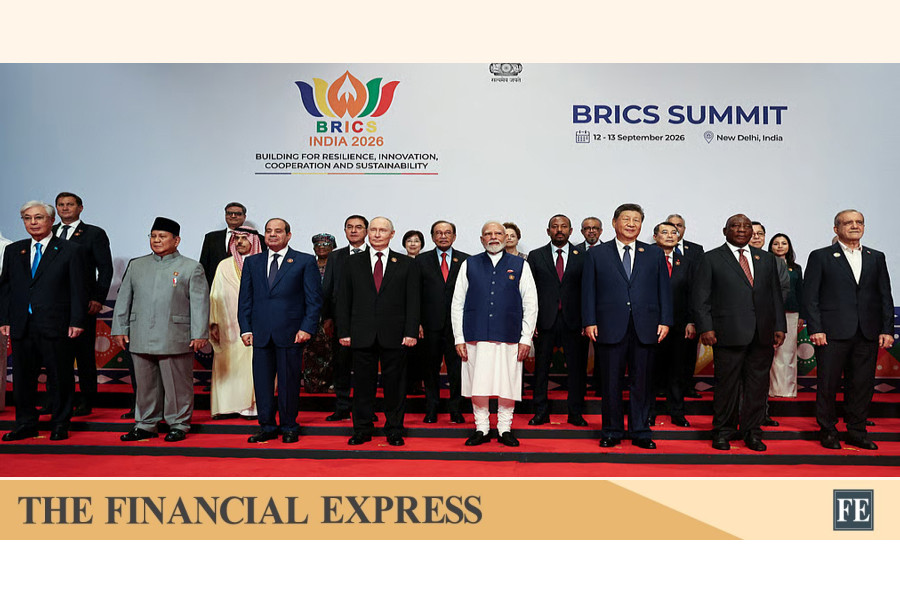
🌏 Dhaka, Bangladesh — The 18th BRICS summit, scheduled for 12 and 13 September 2026 in New Delhi, comes at a moment when the international order is being reshaped — with Russia’s war in Ukraine challenging European security, Iran drawn into a major Middle Eastern conflict, and US-China rivalry spilling into trade, technology and strategic competition.
📊 The expanded BRICS grouping has the numbers to challenge the old world order. But wars, rivalries and conflicting interests may leave it more as a strategic forum than a coherent power bloc. For Bangladesh, the summit’s outcomes could have significant implications for trade diversification, energy security and diplomatic positioning.
🌏 BRICS: Economic Weight Without Political Coherence
📊 There is something almost paradoxical about the BRICS summit opening in New Delhi. Here is a grouping that, on paper, looks increasingly like the outline of a new global power:
- 👥 Brings together some of the world’s largest populations
- 📈 Includes fastest-growing economies
- 🛢 Contains biggest energy producers
- 🌏 Members stretch across Asia, Africa, the Middle East and Latin America
- 💰 Economic weight is substantial and political reach is expanding
⚠ Yet two of its members, Russia and Iran, are caught up in wars that expose precisely how difficult it is for BRICS to act as a coherent geopolitical force.
📊 Global Context: Tariffs, Sanctions, Competing Supply Chains
📊 The summit comes at a moment when:
- 🌏 Russia’s war in Ukraine continues to challenge European security
- 🌏 Iran has been drawn into a major Middle Eastern conflict
- 🇺🇸 US-China rivalry is spilling into trade, technology and strategic competition
- 📋 Tariffs, sanctions and competing supply chains have made economic interdependence itself a matter of national security
💬 It is precisely the kind of world in which BRICS ought to thrive.
🏛 BRICS: Originally an Economic Grouping
📊 BRICS was originally conceived as an economic grouping seeking greater representation for emerging economies in institutions designed when Western powers dominated the global economy. That argument has become harder to dismiss:
- 📈 The economic centre of gravity has shifted towards Asia
- 🇨🇳 China has become an industrial giant
- 🇮🇳 India is increasingly central to global growth
- 🇦🇪 Gulf states command enormous financial and energy resources
- 🇧🇷 Brazil remains a major agricultural and commodity power
📊 The expansion of BRICS reflects this changing reality. But numbers alone do not make a power.
⚠ BRICS Is Not NATO
💬 The difficulty is that BRICS is not NATO. It has:
- ❌ No common military doctrine
- ❌ No mutual-defence obligation
- ❌ No ideological glue
- ❌ Not even a conventional economic union
📊 Its members frequently disagree on the most important questions of international politics:
- 🇮🇳🇨🇳 India and China are strategic competitors despite sitting at the same BRICS table
- 🇸🇦🇮🇷 Saudi Arabia and Iran have sharply divergent regional interests
- 🇦🇪 Gulf states maintain close security relationships with the United States while deepening economic ties with China and Russia
- 🇧🇷 Brazil has little interest in becoming an appendage of either Beijing or Moscow
- 🇮🇩 Indonesia has traditionally guarded its strategic autonomy
💬 Russia vs India: Anti-Western or Strategic Autonomy?
💬 Moscow would like BRICS to become part of a broader challenge to Western dominance. India, by contrast, has every reason to resist turning the organisation into an explicitly anti-Western alliance.
📊 New Delhi wants:
- 🤝 Stronger relations with Washington and Europe
- 🛢 Access to Russian energy
- 🤝 A stable relationship with China
💬 This is not a minor difference. It goes to the heart of what BRICS is supposed to become.
🌏 Iran War Tests BRICS Coherence
📊 The war involving Iran makes the problem even clearer. Tehran naturally expects political support from fellow BRICS members. But the grouping contains countries with very different interests in the Middle East. If BRICS cannot agree on a major conflict involving one of its own members, it will struggle to behave like a geopolitical alliance.
💬 Perhaps it should not try.
📊 BRICS as Strategic Platform
💬 There is another possibility: BRICS could become a strategic platform rather than a traditional bloc. A forum where major emerging economies coordinate on specific issues — trade, finance, technology, energy — without pretending to share a common worldview on everything.
🌏 Strategic Context for Bangladesh
📊 For Bangladesh, the BRICS summit outcomes matter across several dimensions:
- 🛢 Energy security — BRICS includes major energy producers (Russia, Iran, Saudi Arabia, UAE); Bangladesh’s LNG crisis could benefit from BRICS energy cooperation frameworks
- 💰 Trade diversification — BRICS membership or partnership could reduce Bangladesh’s dependence on Western markets post-LDC graduation
- 💰 Financial alternatives — New Development Bank (NDB) offers infrastructure financing outside Western-dominated institutions
- 🤝 Diplomatic positioning — Bangladesh FM Khalilur Rahman as UNGA President alongside BRICS engagement creates diplomatic leverage
- 📊 LDC graduation preparation — BRICS trade agreements could offset EU/US preference losses
💰 Implications for Bangladesh Export Community
📊 For Bangladesh’s export community, the BRICS summit has both direct and indirect implications:
- 👕 RMG market diversification — BRICS markets (China, India, Brazil, Russia, South Africa) represent growing consumer bases
- 💰 Investment attraction — BRICS members (China, UAE, India) are key FDI sources for Bangladesh
- 🛢 LNG supply diversification — Russia and Iran as potential LNG suppliers beyond Qatar
- 📊 Currency settlement — BRICS local currency settlement initiatives could reduce USD dependency
- 📋 Trade agreements — potential RCEP-BRICS nexus for Bangladesh post-LDC graduation
✅ For Bangladesh’s broader diplomatic strategy, the BRICS summit in Delhi offers an opportunity to engage with a grouping that represents a significant portion of the global economy and population. Whether Bangladesh formally joins BRICS or engages as a partner, the summit’s outcomes on trade facilitation, energy cooperation, and financial infrastructure development will shape the economic landscape that Bangladesh navigates in the coming years — particularly as the country prepares for LDC graduation and seeks to diversify its trade relationships beyond traditional Western markets.
🌏 The fundamental question facing BRICS is whether it can move beyond being a talking shop to becoming a meaningful actor in global economic governance. The Delhi summit may not answer that question definitively, but it will provide important signals about the grouping’s trajectory — and about the emerging multipolar order that Bangladesh must navigate as it seeks to maintain export competitiveness and economic sovereignty in an increasingly fragmented global system.
This news was originally published by The Financial Express. For the full original report, please visit: https://thefinancialexpress.com.bd/columns/brics-delhi-summit-expectations-and-reality
Related on BangladeshExport
📬 Get Bangladesh Trade News in your inbox
Weekly digest of export industry news, policy updates, and market analysis.
📰 Related Stories