BKMEA Says New BNP Govt Initiatives Praiseworthy But Room for Improvement Remains
Dhaka, August 18, 2026 — The Bangladesh Knitwear Manufacturers and Exporters Association (BKMEA) has assessed the new BNP government's first six months in office as showing several praiseworthy initiatives to make business operations easier, support the private sector, and restore momentum to the economy — while noting that there is significant room for improvement in some critical areas. In a statement released on 18 August 2026, the knitwear trade body acknowledged that the government inherited deep structural challenges — particularly shortages of gas and electricity — that cannot be resolved in the short term, but praised the new administration's policy direction on multiple fronts.
✅ Praiseworthy Initiatives Identified by BKMEA
- 💰 Bangladesh Bank refinancing package — incentive package through refinancing to help restart distressed, partially or fully closed factories
- 📜 Easing of policy-related issues — efforts made to streamline specific regulatory bottlenecks
- 👕 Duty-free import for non-bonded warehouse exporters — decision to allow partially export-oriented exporters and exporters without bonded warehouse facilities to import raw materials duty-free against bank guarantees
- 💰 Tax policy reforms — introduction of business- and investment-friendly measures
- 🤝 Private sector support — broader recognition of the private sector's role in economic recovery
- 📈 Macro stabilisation gains — broader macroeconomic stability improvements acknowledged
⏳ "Six Months Is Not Enough Time"
BKMEA noted that six months is not enough time to evaluate any government — a measured stance that reflects the reality that many of the structural reforms being pursued by the BNP administration will only show measurable results over 12–24 month horizons. The association emphasised that the new government inherited some challenges from the previous administration, including:
- ⛽ Gas shortages — particularly acute in industrial clusters like Narsingdi
- ⚡ Electricity shortages — power supply disruptions affecting industrial production
- 🏢 Banking sector stress — NPLs at 30.6% of total loans, weak governance
- 💰 FX reserve erosion — though this has now stabilised at $37.24 billion
- 🔴 Inflation — still elevated, particularly food and essentials
- 💼 Investment climate — private investment sluggish
The BKMEA's acknowledgment that these challenges cannot be resolved in the short term reflects a pragmatic understanding among Bangladeshi industry associations that the macro stabilisation achieved in the first six months — while welcome — is only the foundation for the structural recovery needed over the coming years. The association's stance is consistent with broader industry sentiment reflected in the TBS economy review of 18 August: macro stability has returned, but the micro-level business environment remains constrained.
👕 Duty-Free Raw Material Import: A Critical Win
Among the initiatives praised by BKMEA, the decision to allow partially export-oriented exporters and exporters without bonded warehouse facilities to import raw materials duty-free against bank guarantees stands out as particularly significant. This policy change addresses a long-standing complaint from non-traditional and smaller exporters who have been disadvantaged by Bangladesh's bonded warehouse system — which is primarily designed for 100% export-oriented RMG and knitwear factories.
The bonded warehouse system allows approved export-oriented factories to import raw materials (fabric, yarn, accessories, chemicals) duty-free, on the condition that the finished goods are exported within a specified time frame. The system is designed to ensure that duty-free imported inputs do not enter the domestic market — with bank guarantees and customs bonds providing the financial security. However, the system has historically been restricted to large, 100% export-oriented factories — leaving smaller and partially export-oriented manufacturers to pay duty on imported inputs even when those inputs were used for export production.
The new policy, by extending duty-free import to partially export-oriented exporters and exporters without bonded warehouse facilities, addresses this inequity — levelling the playing field between large 100% export-oriented factories and smaller, more diversified manufacturers. For BKMEA members, the change is particularly valuable because:
- 💰 Lower input costs — duty-free imports reduce the cost of raw materials for export production
- 📈 Improved export competitiveness — lower input costs translate into more competitive export pricing
- 🤝 Working capital relief — duty-free import against bank guarantees frees up working capital previously locked up in duty payments
- 🏭 Production flexibility — partially export-oriented factories can serve both domestic and export markets more efficiently
- 💼 Sector diversification — supports the broader export diversification agenda by enabling non-traditional exporters
💰 Bangladesh Bank Refinancing Package
BKMEA praised Bangladesh Bank's initiative to support the private sector through a refinancing package designed to help restart distressed, partially or fully closed factories. This is a direct reference to the Tk 60,000 crore stimulus package and the Tk 41,000 crore refinancing facility that 38 banks have signed up for — with loan disbursements set to begin on 1 September 2026. For BKMEA members, the stimulus is particularly relevant because the knitwear sector has seen significant factory closures over the past two years due to working capital stress, energy shortages, and weak export demand.
The stimulus offers a path to refinance existing stressed loans at lower rates with longer tenors — giving knitwear factories the breathing room needed to return to viability. BKMEA's praise of the initiative reflects the sector's view that the stimulus addresses a real and pressing need — though the association also implicitly recognises that the stimulus is a short-term liquidity measure rather than a structural fix for the underlying challenges facing the sector.
💰 Tax Policy Reforms
BKMEA acknowledged positive changes to tax policy, including the introduction of business- and investment-friendly measures. While the association did not specify which tax policy changes it was referring to, the broader context suggests references to:
- 💰 Tax net expansion over rate increases — PM Tarique Rahman's directive to NBR
- 💰 Cash incentive rationalisation — for export sectors
- 💰 Tax simplification — including e-filing and online TIN
- 💰 Investment tax incentives — for capacity expansion in priority sectors
- 💰 VAT administration reform — reducing friction between businesses and NBR
The fact that BKMEA specifically highlighted tax policy changes as business-friendly suggests that the association's member factories have experienced tangible improvements in their interactions with the NBR — even if the broader revenue mobilisation challenges remain unresolved. This positive assessment aligns with Finance Minister Amir Khosru Mahmud Chowdhury's broader reform agenda on revenue mobilisation, which was articulated at the Revenue Conference 2026 on 18 August.
🏭 BKMEA's Role in Bangladesh's Knitwear Export Economy
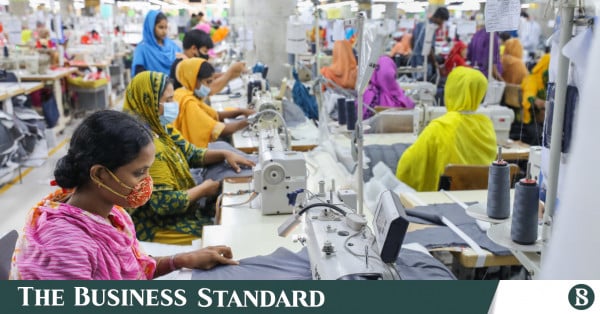
The Bangladesh Knitwear Manufacturers and Exporters Association (BKMEA) is one of the country's most important trade associations, representing the knitwear manufacturing sector — which accounts for a significant share of Bangladesh's RMG export earnings. The knitwear sector (T-shirts, polo shirts, underwear, sleepwear, fleece garments, and other knitted products) is distinct from the woven RMG sector and faces its own specific challenges:
- 🧵 Yarn supply — knitwear requires specialised yarn that is partially imported
- 🧵 Fabric production — knitwear fabric is produced on circular knitting machines, with domestic capacity
- 👕 Dyeing and finishing — wet processing capacity is a binding constraint on the sector
- 🏭 Energy intensity — knitwear dyeing and finishing are energy-intensive, making the sector particularly vulnerable to the gas shortage
- 🌐 EU market dependence — EU is the largest single export destination for Bangladeshi knitwear, with GSP duty-free access
- 💰 Western buyer sustainability requirements — knitwear factories face growing ESG compliance demands from major brands
BKMEA's assessment of the new government's first six months therefore reflects the specific perspective of the knitwear export sector — which has slightly different priorities than BGMEA (which represents both knitwear and woven RMG). The knitwear sector's particular vulnerability to the gas shortage — given the energy intensity of dyeing and finishing — explains BKMEA's emphasis on energy challenges as a structural constraint inherited from the previous administration.
🌐 The Bigger Picture: Industry-Government Engagement
BKMEA's statement represents a measured, constructive engagement with the new BNP government — praising what deserves praise while honestly acknowledging where improvement is needed. This type of evidence-based industry feedback is critical for effective policy making — providing the government with the granular, sector-specific intelligence needed to refine and adjust its reform agenda. The statement also reflects the broader industry sentiment captured in the TBS economy review of 18 August: macro stability has been achieved, micro-level reform is incomplete, and the next 12–24 months will be decisive for whether the BNP government can translate its initial reform momentum into measurable improvements in the business environment.
For the BNP government, BKMEA's assessment offers several strategic signals. First, the government's macro stabilisation efforts are being recognised by industry — providing political space to pursue the more difficult structural reforms. Second, the specific policy initiatives praised by BKMEA (Bangladesh Bank refinancing, duty-free import for non-bonded warehouse exporters, tax policy reforms) provide a template for what works — suggesting that similar initiatives in other areas (energy, logistics, customs) could yield similar industry support. Third, the acknowledgment that structural challenges (gas, electricity, banking stress) require sustained multi-year reform provides the government with the political cover to set realistic expectations about the timeline for visible improvement.
For BKMEA members — the knitwear factory owners who collectively employ over 1 million Bangladeshi workers and generate several billion dollars in annual export earnings — the next 12 months will be critical. Whether the stimulus package actually restarts distressed factories, whether the duty-free import facility actually translates into lower input costs, whether the gas shortage is resolved, and whether the broader macro stability translates into improved export orders — these are the questions that will determine whether BKMEA's measured praise of the government's first six months translates into stronger support for the BNP administration's broader reform agenda, or whether industry patience begins to wear thin as the structural challenges continue to constrain sectoral growth. The BKMEA's honest assessment is itself a positive sign — signalling that industry-government engagement under the BNP government is operating on the basis of evidence and constructive feedback rather than the political pressure that characterised much of the previous administration's industry relations.
This news was originally published by The Daily Star. For the full original report, please visit: https://www.thedailystar.net/business/news/several-initiatives-new-govt-praiseworthy-there-room-improvement-bkmea-4250906
Related on BangladeshExport
📬 Get Bangladesh Trade News in your inbox
Weekly digest of export industry news, policy updates, and market analysis.
📰 Related Stories