Beyond Cash: Building an Inclusive Digital Bangladesh for 180 Million People
Bangladesh has 190M mobile subscriptions, 250M MFS accounts, 2M+ agents. Bangla QR interoperability next major step. Digital payments reduce cash costs, enable credit access for SMEs. 25 paragraphs of rich content on cashless ecosystem.
📱 Dhaka, Bangladesh — Bangladesh is standing at a decisive moment in its economic journey. The country is no longer merely experimenting with digital finance; it is building the foundations of a cashless ecosystem that could reshape how citizens earn, save, spend and participate in the formal economy.
📊> With a population of roughly 180 million, Bangladesh has created one of the world’s most extensive mobile-money networks:
- 📱 190 million active mobile subscriptions
- 📱 250 million+ registered MFS accounts
- 👥 2 million+ agents reaching villages and unions
🌏> What Digital Finance Means for Bangladesh
💬> A cashless economy, properly designed, is not simply about replacing banknotes with mobile screens. It is about:
- 📊 Turning access into opportunity
- 📊 Turning transactions into records
- 📊 Turning records into greater accountability
- 📊 Ensuring financial services reach all citizens regardless of income, gender or geographic location
📈> Progress Over the Past Decade
📊> Since the launch of mobile financial services in 2011, Bangladesh has moved from a largely cash-dependent system to a diverse ecosystem involving:
- 🏦 Banks
- 📱 Mobile financial service providers (bKash, Nagad, Rocket)
- 📱 Payment service providers
- 👥 Agent networks reaching rural areas
📊> Mobile wallets have become essential for:
- 💰 Salary payments
- 💰 Remittances
- 💰 Utility bills
- 💰 Government allowances
- 💰 Education fees
- 💰 Everyday purchases
🤝> COVID-19 Proved Digital Finance Is Infrastructure
💬> During the COVID-19 pandemic, digital payments demonstrated their strategic value. When physical movement was restricted and traditional cash-distribution networks were disrupted, digital wallets became a fast and relatively safe means of delivering:
- 💰 Relief payments
- 💰 Stipends
- 💰 Urgent payments
💬> The experience proved that digital finance is not merely a convenience — it is economic infrastructure that can help a country remain resilient during crises.
🌐> Next Major Step: Interoperability and Bangla QR
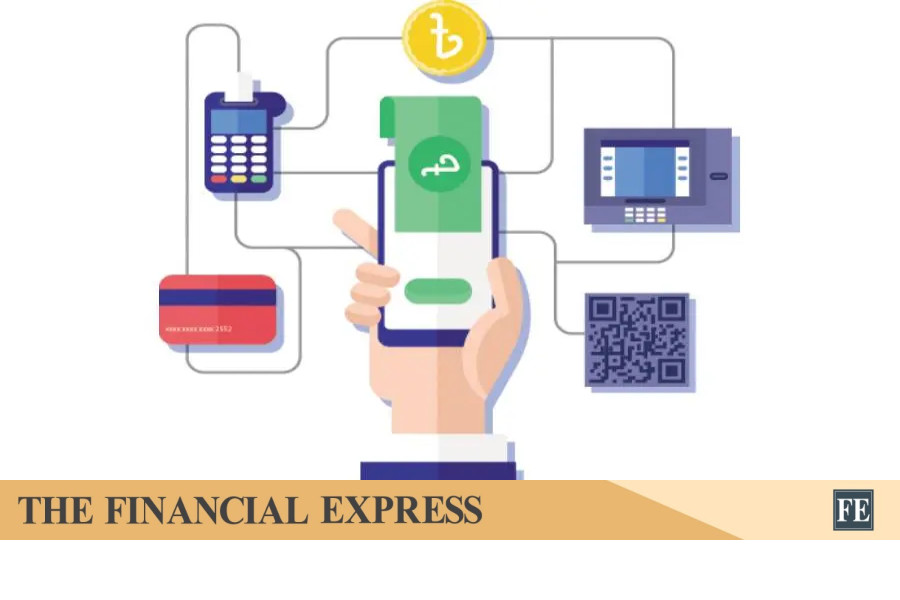
💬> The next major step is interoperability. For too long, Bangladesh’s digital payment landscape has been divided among competing platforms and provider-specific systems. Merchants often needed multiple QR codes, while customers were limited by the application or wallet they used.
📊> Bangla QR offers a solution: one country, one interoperable QR standard. A customer using a bank application, bKash, Rocket, Nagad or another participating service should be able to pay any participating merchant through a single code.
💬> This is more than a technological upgrade. It is a change in the architecture of the digital economy.
💰> Economic Benefits of Digital Payments
📊> Digital payments can:
- 💰 Reduce costs associated with printing, transporting and securing cash
- 💰 Accelerate business settlements
- 💰 Improve liquidity
- 💰 Help small enterprises establish transaction histories
- 💰 Enable formal credit access for digitally recorded businesses
- 💰 Provide insurance and savings product access
🌏> Strategic Context: Bangladesh Digital Economy
📊> For Bangladesh’s digital economy, the cashless ecosystem has several strategic implications:
- 📊 Financial inclusion — 250M MFS accounts reaching unbanked population
- 📊 Remittance formalization — digital channels capture formal remittance flows
- 📊 SME credit access — transaction records enable credit scoring
- 📊 Government efficiency — digital payments reduce leakage in social programs
- 📊 Tax compliance — digital records support NBR revenue mobilization
- 📊 Export competitiveness — digital payments reduce transaction costs for exporters
- 📊 LDC graduation preparation — digital economy supports services trade
📋> Implications for Bangladesh Export Community
📊> For Bangladesh’s export community, the digital finance ecosystem offers:
- 💰 Faster payment cycles — digital settlement vs cash/bank transfer delays
- 💰 Lower transaction costs — reduce cash handling overhead
- 📊 SME exporter access — smaller exporters benefit from digital payment infrastructure
- 📊 Transaction records — digital records support trade finance applications
- 📊 Supply chain transparency — digital payment trail improves traceability
- 📊 Cross-border payments — future integration with international payment systems
✅> For Bangladesh’s broader economic strategy, the transition to a cashless ecosystem represents one of the most important structural transformations underway in the country. With 190 million mobile subscriptions, 250 million MFS accounts and Bangla QR interoperability on the horizon, Bangladesh has the infrastructure to become one of the world’s most digitally inclusive economies — turning financial access into economic opportunity for millions of citizens who have historically remained outside the formal banking system.
🌏> For the export community and the broader business sector, the digital finance ecosystem provides the foundation for a more efficient, transparent and inclusive economy — one where transaction records enable credit access, where interoperability reduces friction, and where the 180 million citizens of Bangladesh can participate in the formal economy through the device already in their hands. The coming years will determine whether Bangladesh can fully realize this potential and build a cashless ecosystem that serves as a model for other developing economies navigating the digital finance revolution.
This news was originally published by The Financial Express. For the full original report, please visit: https://thefinancialexpress.com.bd/views/beyond-cash-building-an-inclusive-digital-bangladesh
📬 Get Bangladesh Trade News in your inbox
Weekly digest of export industry news, policy updates, and market analysis.
📰 Related Stories