Bangladesh's Trillion-Dollar Dream Versus Reality: IMF Projects 3% Growth As Governance Crisis Bites
IMF projects Bangladesh growth will slow to 3% by FY31, less than half government's 8.5% target; World Bank Worldwide Governance Indicators map depth of crisis constraining growth.
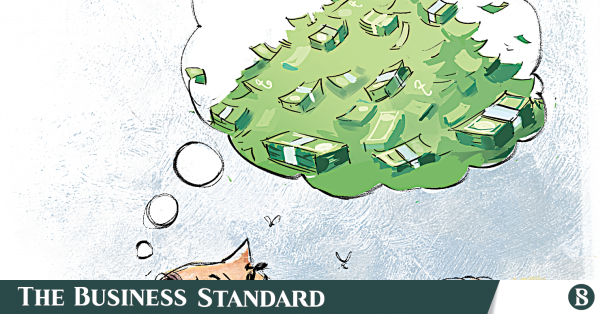
📉 The International Monetary Fund (IMF) has delivered a sobering economic forecast for Bangladesh, showing neither leniency nor ungrounded optimism. While the government continues to project robust economic expansion, expecting growth to accelerate to 8.5% by FY31 and turn Bangladesh into a $1 trillion economy by 2034 (doubling its current size), the IMF''s latest outlook presents a stark contrast. The IMF projects that Bangladesh''s growth will slow to merely 3% by FY31.
📊 Worse still, growth over the preceding three years is expected to remain below 3%, less than half the government''s target, leaving Bangladesh with the lowest growth rate in South Asia through FY31. The divergence between the government''s optimistic projections and the IMF''s cautious outlook reflects fundamentally different assessments of Bangladesh''s growth potential — and the role that governance and structural reform will play in determining the country''s economic trajectory.
🏛 The governance crisis diagnosis
What is driving this severe deceleration? The answer lies in two words: governance crisis. While this diagnosis is far from new, the depth of the crisis is clearly mapped out in the World Bank''s Worldwide Governance Indicators (WGI). Good governance is not an accidental byproduct of development; it is the essential foundation of any economy. It functions as the invisible infrastructure that converts potential into sustainable prosperity.
The World Bank''s WGI report assesses governance across six dimensions: voice and accountability, political stability and absence of violence, government effectiveness, regulatory quality, rule of law, and control of corruption. Bangladesh''s performance on these indicators has been weak — and in some cases deteriorating — which the IMF identifies as the binding constraint on the country''s growth potential.
👥 Why governance matters for growth
Governance matters for economic growth through multiple channels:
- 📊 Investment climate: Strong governance attracts domestic and foreign investment by providing predictability, protecting property rights, and ensuring a level playing field.
- 📊 Resource allocation: Good governance ensures that public resources are allocated to their most productive uses — supporting infrastructure, education, and healthcare rather than being diverted to unproductive or corrupt purposes.
- 📊 Financial sector stability: Strong regulatory governance is critical for banking sector stability — preventing the kind of non-performing loan accumulation (now at 33%) that has constrained Bangladesh''s financial sector.
- 📊 Contract enforcement: Effective rule of law supports economic activity by ensuring that contracts are enforced and disputes are resolved efficiently.
- 📊 Public service delivery: Strong governance improves the quality and efficiency of public service delivery — from education and healthcare to infrastructure and regulatory services.
💰 The $1 trillion economy aspiration
The government''s aspiration to become a $1 trillion economy by 2034 is a central element of Bangladesh''s long-term development vision. To achieve this goal, Bangladesh''s GDP would need to grow at roughly 8.5% per year from FY26 to FY34 — more than double the IMF''s projected growth rate of 3% by FY31.
The gap between aspiration and projection is stark. To bridge it, Bangladesh would need to deliver a dramatic improvement in governance — implementing the structural reforms needed to unlock higher investment, more efficient resource allocation, stronger financial sector performance, and better public service delivery. The IMF''s projection assumes that this governance improvement will not happen — or at least not fast enough to deliver the growth rates needed for the $1 trillion aspiration.
🌏 Looking ahead
For Bangladesh, the IMF''s sobering projection should serve as a wake-up call. The country has the potential to grow much faster than 3% — but only if it addresses the governance crisis that the IMF and World Bank have identified as the binding constraint on growth. This requires political will, institutional reform, and sustained implementation of structural changes that go beyond the surface-level adjustments that have characterised previous reform efforts.
The proposed IMF programme — with its emphasis on revenue mobilisation, banking sector reform, and macroeconomic stabilisation — could provide some momentum for governance improvement. But the deeper structural reforms needed to deliver sustained 6-8% growth will require domestic political commitment that goes beyond what any external programme can impose.
The coming years will show whether Bangladesh can close the gap between the government''s aspirations and the IMF''s projections — or whether the governance crisis will continue to constrain the country''s growth potential. The stakes are high: a Bangladesh that grows at 3% per year will look very different from a Bangladesh that grows at 8% per year, with implications for poverty reduction, employment creation, and the country''s broader development trajectory.
This news was originally published by The Business Standard. For the full original report, please visit: https://www.tbsnews.net/economy/bangladeshs-trillion-dollar-dream-versus-reality-can-band-aids-fix-governance-crisis-1574726
📬 Get Bangladesh Trade News in your inbox
Weekly digest of export industry news, policy updates, and market analysis.
📰 Related Stories