Bangladesh Macroeconomic Stability Returns Under BNP Government But Recovery Yet to Gain Pace
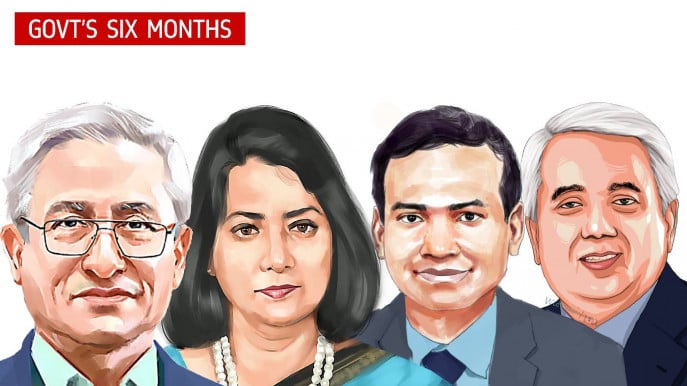
Dhaka, August 18, 2026 — Six months after the BNP government led by Prime Minister Tarique Rahman took office on 17 February 2026, Bangladesh has restored macroeconomic stability on key external indicators — foreign exchange reserves, remittance inflows and the foreign exchange market — but the real economy continues to struggle with elevated inflation, weak exports, rising import costs, banking sector fragility and energy shortages, according to a comprehensive TBS economic review published 18 August 2026 by columnist Abul Kashem.
📊 The Starting Point: An Economy in Deep Distress
The review opens with a stark reminder of the economic inheritance the new government faced. When the Sheikh Hasina regime was toppled in a mass uprising on 5 August 2024, Bangladesh's economy was already in deep distress:
- 🏢 Banks — struggling with depleted liquidity
- 📜 Non-performing loans (NPLs) — had piled up, exposing deep financial-sector weaknesses
- 🔴 Inflation — soaring
- 💰 Foreign exchange market — volatile
- 💲 Foreign exchange reserves — fallen to uncomfortable levels
🤝 The Interim Government: Promises, Limited Implementation
The interim government that took over promised to restore macroeconomic stability, recover money siphoned abroad and undertake long-awaited reforms in banking, revenue, trade and other key areas to revive the economy and encourage investment. It formed several commissions, taskforces and committees, producing a substantial body of recommendations and reports — but implementation remained limited during its 18-month tenure.
A climate of uncertainty persisted throughout the interim period. Mob violence and attacks on factories and businesses associated with the ousted political regime damaged investor confidence and added to concerns over law and order. The private sector largely held back, hoping that an elected government would bring greater political stability and a more predictable business environment. That election eventually came, and the BNP, led by Tarique Rahman, returned to power after nearly 20 years — taking office on 17 February 2026 against an increasingly difficult external backdrop.
🌐 External Shocks Compounding the Inheritance
The new BNP government took office amid a deteriorating global environment:
- 🚢 US-Israel war on Iran — roiled global oil markets and energy supply chains
- ⛽ Bangladesh energy crisis deepening — domestic gas production declining, LNG import dependency rising
- 💰 Higher import costs — energy commodity prices elevated, adding fiscal pressure
- 🌐 Uncertainty over energy supplies — LNG cargo procurement, FSRU disruptions, and gas rationing
✅ What Has Improved: External Indicators
The review credits the BNP government with stabilising several external indicators in its first six months:
- 💰 Foreign exchange reserves — rebuilt, gross reserves now $37.24 billion (BPM6 $32.43 billion) as of 18 August 2026
- 💵 Foreign exchange market — volatility reduced, taka stabilising against the dollar
- 📨 Remittance inflows — up 21.6% YoY in first 48 days of FY27, reaching $4.74 billion
- 📊 Current account — surplus generated on the back of higher exports and remittances
⚠ What Has NOT Improved: The Real Economy
Despite the external stabilisation, the review is clear that the real economy remains under stress:
- 🔴 Inflation — remains elevated, especially food and essentials
- 🚢 Exports — weak, with RMG orders softening from EU and US markets
- 💵 Import costs — rising, particularly for energy commodities (LNG, coal, refined petroleum)
- 🏢 Banking sector — still faces liquidity, governance and NPL problems
- ⛽ Energy shortages — gas rationing, LNG supply disruptions, power reliability issues
- 💲 High costs — energy, financing, and operational costs squeezing margins
- 🛡 Insecurity — law-and-order concerns still affecting business confidence
🏭 Energy Crisis: A Critical Drag
Energy shortages have emerged as one of the most damaging drags on the real economy. Domestic natural gas production continues to decline, forcing industries to either curtail operations or switch to more expensive alternative fuels. The gas shortage has hit textile factories in Narsingdi particularly hard — with many factories forced to halt production. LNG imports are rising to fill the gap, but at significant fiscal cost: 43 percent of the annual LNG subsidy was spent in just the first 1.5 months of the fiscal year, suggesting the subsidy budget will be exhausted well before year-end.
For export-oriented industries — especially RMG, textiles, pharmaceuticals, leather and agro-processing — the energy crisis translates directly into higher input costs, production disruptions, and missed shipment deadlines. The cumulative effect is a meaningful erosion of the cost competitiveness that has historically underpinned Bangladesh's export success. Capital machinery investment has also stalled partly because businesses are unwilling to commit to new capacity expansion when they cannot be assured of reliable power and gas supply for the 10–15 year life of the new investment.
🏢 Banking Sector: Stabilisation Without Reform
The review notes that some stability has returned to the banking sector — but the underlying problems of liquidity, governance and non-performing loans remain unresolved. The Tk 60,000 crore stimulus package and reduced lending rates have provided short-term relief to banks and their borrowers, but without genuine governance reform, the stimulus risks being absorbed by the same non-performing institutions that contributed to the crisis in the first place.
For the export economy, the banking sector's continued fragility has direct operational consequences. Banks face constraints in confirming back-to-back LCs for RMG exporters, in providing pre-shipment finance to non-RMG exporters, and in settling trade finance instruments with foreign correspondents. The 38 banks seeking Tk 28,000 crore in stimulus funds for struggling businesses — reported in the same TBS economy coverage — reflects the depth of the sector's stress. Without genuine governance reform, including accountability for the officials and owners responsible for the NPL build-up, the banking sector will remain a constraint on export growth for years to come.
📊 The Bigger Picture: Stabilisation vs Recovery
The fundamental message of the TBS review is that macroeconomic stabilisation and economic recovery are not the same thing. Stabilisation means halting the decline and restoring external balance — which the BNP government has largely achieved in six months. Recovery means restarting the productive engine of the economy — private investment, manufacturing expansion, employment generation, and productivity growth — which remains elusive.
For Bangladesh's export economy, this distinction is critical. The stabilisation gains have given the country breathing space: reserves at $37.24 billion provide import cover, the taka has stabilised, the current account is in surplus, and the macro signals are positive. But the real economy — the factories, the farms, the ports, the businesses — is still operating well below capacity. Capital machinery imports are not recovering. Inflation is eroding household purchasing power. Energy shortages are throttling industrial production. And the banking sector is not yet in a position to finance the export-led growth the country needs.
🤝 What the Next Six Months Must Deliver
The review implies several specific priorities for the BNP government's next six months:
- ⛽ Energy sector reform — ramp up gas production, stabilise LNG supply, rationalise energy pricing
- 📜 Banking sector governance — implement the five-year banking clean-up plan announced by the Finance Ministry
- 💲 Inflation control — particularly food and essential commodity prices through supply-side measures
- 🏢 Investment climate — operationalise BIDA, BEZA, BEPZA one-stop services; make National Single Window functional
- 📈 Export diversification — ratify South Korea CEPA, operationalise non-RMG export incentives
- 🤝 Implementation capacity — convert policy documents into measurable implementation milestones
For Bangladesh's export economy, the message is unambiguous: the stabilisation achieved in the first six months is a platform, not a destination. The country's exporters — RMG, leather, jute, pharmaceuticals, agro-processing, IT/ITeS — need the macro stability that has been restored, but they also need reliable energy, functional banking, predictable regulation, and a stable policy environment that supports long-term investment. Without these, the stabilisation gains will prove temporary, and the country will enter its post-LDC era in November 2026 with an economy that is stable on paper but struggling in practice — exactly the situation the BNP government inherited from its predecessors.
This news was originally published by The Business Standard. For the full original report, please visit: https://www.tbsnews.net/economy/macroeconomic-stability-returns-recovery-yet-gain-pace-1517971
Related on BangladeshExport
📬 Get Bangladesh Trade News in your inbox
Weekly digest of export industry news, policy updates, and market analysis.
📰 Related Stories