Bangladesh Government Borrows Tk 16,601 Crore From Banks In First Two Months Of FY27, Up From Tk 463 Crore Year-On-Year
Sharp 35x increase driven by weak revenue collection, higher spending and excess bank liquidity; reserve money growth hits 17.86% in August, raising inflation concerns.
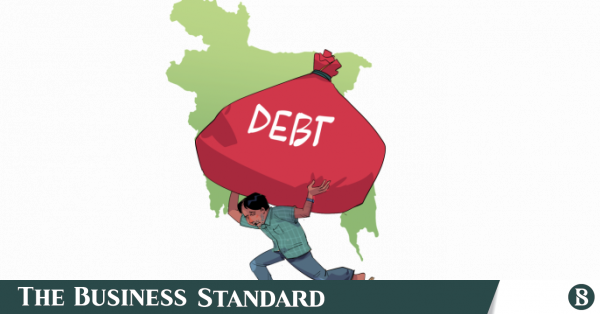
💰 The government of Bangladesh borrowed Tk 16,601 crore from scheduled banks in the first two months of the current fiscal year (FY27) to finance the budget deficit, compared with just Tk 463 crore borrowed during the same period last year, according to a monthly government borrowing report of Bangladesh Bank. The dramatic 35-fold increase in bank borrowing underscores the widening gap between government revenue collection and expenditure — a gap that is increasingly being filled by tapping the banking system.
📊 Economists attribute the sharp rise in borrowing at the start of FY27 to weaker revenue collection and higher government spending. The government has set a target to borrow Tk 1.12 lakh crore from the banking system in FY27. Of this, already Tk 16,601 crore has been borrowed — meaning the government has already consumed nearly 15% of its full-year bank borrowing target in just the first two months of the fiscal year.
👥 Net borrowing vs net repayment
The scale of the borrowing surge becomes even clearer when looking at net figures. The government''s net borrowing stood at around Tk 13,000 crore at the end of the first two months of FY27. In the same period of FY26, the government had instead made a net repayment of Tk 9,792 crore — meaning the swing in net borrowing between the two years was roughly Tk 22,800 crore. This represents a fundamental shift in the government''s fiscal posture, from actively reducing its bank debt to aggressively increasing it.
Economists said government revenue collection is usually low at the beginning of a fiscal year, while development and other public spending often rises during the period. At the same time, weak private-sector credit growth has left banks with excess liquidity, prompting them to increase investment in treasury bills and bonds. This has also helped push up government borrowing from banks, they said.
🏛 Drivers of the borrowing surge
Several factors have converged to drive the sharp increase in government bank borrowing in FY27:
- 📊 Weak revenue collection: Bangladesh''s revenue-to-GDP ratio remains one of the lowest in the world, and NBR collections have been disappointing in the first two months of FY27. VAT collection fell by around 20% in July and August compared with the same period last year, according to NBR data.
- 📊 Higher government spending: Implementation of the new pay scale has added to the government''s recurring expenditure commitments, while higher development spending at the start of the fiscal year has further increased financing needs.
- 📊 Higher fuel subsidies: Higher fuel costs have increased subsidy requirements for the Bangladesh Petroleum Corporation (BPC), which has incurred Tk 228.76 billion in losses between March and August 2026. These losses have eventually to be covered by the government.
- 📊 Excess bank liquidity: With private-sector credit growth stuck below 5% for six straight months, banks have excess liquidity that they are parking in treasury bills and bonds — making it easier for the government to borrow from the banking system.
💰 Outstanding borrowing stock
According to Bangladesh Bank data, the government''s outstanding borrowing stood at around Tk 7 lakh crore at the end of August 2026. Of this, Tk 6.08 lakh crore was owed to scheduled banks, while borrowing from the central bank was Tk 90,000 crore. The government also borrowed Tk 1,031 crore from non-bank sources, including non-bank financial institutions, insurance companies and individual depositors.
The Tk 7 lakh crore outstanding stock of government borrowing represents a significant burden on the banking system and the broader economy. Servicing this debt requires substantial interest payments, which crowd out other forms of public spending. And the high level of government borrowing from banks crowds out private-sector credit, contributing to the weak private-sector credit growth that has been a persistent drag on the economy.
Arief Hossain Khan, executive director of Bangladesh Bank, said borrowing from banks or the public to finance budget deficits was a normal process as the government needs funds to implement development activities. While this is technically true, the scale and pace of the borrowing in FY27 is far from normal — and reflects deeper structural issues with Bangladesh''s fiscal framework.
⚠ Reserve money growth raises inflation concerns
The rise in government borrowing comes alongside a sharp increase in reserve money, raising concerns over future inflationary pressure. Bangladesh Bank data shows reserve money growth was negative 0.12% in June 2025. It then rose to 2.52% in July 2025, 3.47% in September 2025, 9.23% in December 2025, before reaching 13.35% in February 2026, 14.39% in April 2026, 15.25% in June 2026 and 17.86% in August 2026.
This sustained acceleration in reserve money growth is concerning because reserve money — also known as high-powered money or the monetary base — is the foundation of broader money supply growth. Reserve money refers to cash circulating in the economy and commercial banks'' deposits with Bangladesh Bank. It can generate broader money growth through bank lending and deposit creation, meaning that sustained high reserve money growth typically translates into higher inflation with a lag of 6-12 months.
A central bank official said they were maintaining a contractionary monetary policy, including a high policy rate, but money was still entering the economy through various channels. Bangladesh Bank Executive Director Dr Md Ezazul Islam said the central bank had purchased more than $6 billion since 13 July 2025 to stabilise the exchange rate, injecting a significant amount of taka into the market. He said the impact on inflation had so far been limited because private-sector credit demand remained weak. However, stronger private-sector borrowing in the future could create greater inflationary pressure.
🌏 The crowding-out risk
One of the most concerning aspects of the surge in government bank borrowing is the crowding-out effect on private-sector credit. When the government borrows heavily from banks, it absorbs a larger share of the available loanable funds, leaving less for private businesses and consumers. This is particularly problematic in Bangladesh''s current environment, where private-sector credit growth is already stuck below 5% — well below the historical trend of 12-15%.
The crowding-out effect operates through multiple channels. First, direct competition for funds: when the government issues treasury bills and bonds, banks prefer to invest in these risk-free instruments rather than lend to private borrowers. Second, interest rate pressure: heavy government borrowing pushes up treasury yields, which in turn raises the cost of funds for banks and the lending rates they charge to private borrowers. Third, balance sheet pressure: when banks hold large volumes of government securities, their capacity to expand private-sector credit is constrained by capital adequacy and liquidity requirements.
🤝 What needs to happen
For Bangladesh to break out of this vicious cycle of weak revenue, high borrowing and crowding out of private credit, several things need to happen. First, the NBR needs to deliver on the revenue reform agenda that the IMF has been pressing for, including broadening the tax base, reducing exemptions, and improving tax administration. Without higher revenue collection, the government will continue to rely on bank borrowing to finance its deficit.
Second, the government needs to control its expenditure growth, particularly on recurrent items such as salaries, subsidies and interest payments. The implementation of the new pay scale has added significantly to the government''s recurring expenditure commitments, and the rising subsidy bill for fuel and power is putting further pressure on the budget.
Third, Bangladesh Bank needs to manage reserve money growth more carefully, particularly by limiting its purchases of foreign exchange that inject taka into the economy. While exchange rate stabilisation is important, the central bank needs to find ways to do so without fuelling inflationary pressures through excessive money creation.
Finally, the government needs to accelerate the development of non-bank financing channels, including a deeper and more liquid domestic bond market that can absorb government borrowing without crowding out private-sector credit. Without these structural reforms, Bangladesh risks getting stuck in a low-growth, high-borrowing equilibrium that would be difficult to escape.
This news was originally published by The Business Standard. For the full original report, please visit: https://www.tbsnews.net/economy/govt-borrows-tk16601cr-banks-first-two-months-fy27-1558011
📬 Get Bangladesh Trade News in your inbox
Weekly digest of export industry news, policy updates, and market analysis.
📰 Related Stories