Bangladesh Bank Monetary Policy: Tight Stance Harming Economic Recovery
MPC recommended 50bps rate cut to 9.5%; structural supply-side inflation persists; food supply disruptions, energy prices, market inefficiencies drive domestic inflation
Dhaka, August 6, 2026 — The Bangladesh Bank's Monetary Policy Committee (MPC) has formally acknowledged that the central bank's prolonged tight monetary policy stance is harming economic recovery — marking a significant pivot in the central bank's approach to inflation management as it tries to balance price stability against the urgent need to revive private investment, credit growth and industrial output.
📋 The July 30 Pivot
The MPC, meeting on July 30, recommended lowering the policy rate by 50 basis points to 9.5 percent. Bangladesh Bank acted on the recommendation the same day, bringing the rate down from the record high of 10 percent that had been maintained for nearly two years. "Inflation is still higher than the medium-term target, and low domestic demand, weak private investment, and worsening growth prospects indicate that keeping a very strict policy could impact economic recovery," the MPC minutes stated — a striking admission from an institution that until recently insisted that the war on inflation could not be relaxed.
📊 Why the Shift Now?
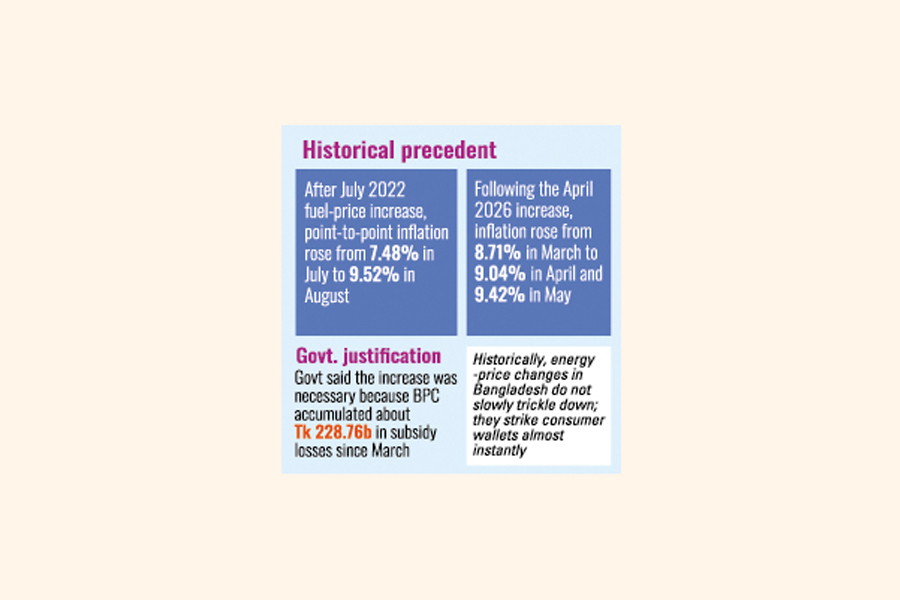
The reasoning marks a turn for a central bank that had held its rate at a record high for nearly two years to fight inflation, which has run above 8.5 percent on average since fiscal year 2022-23. Inflation eased to 9.16 percent in June 2026 from 9.42 percent in May, but remained above 9 percent. The MPC's minutes credit the tight policy since mid-2024 with helping bring inflation down, strengthening the external sector, stabilising the exchange rate under a market-based system, and improving the current account balance — gains the committee now fears could be undone if growth stalls further.
- 📉 Policy rate before cut: 10% (record high, held ~2 years)
- 📉 Policy rate after cut: 9.5% (effective July 30, 2026)
- 📉 June 2026 inflation: 9.16% (down from 9.42% in May)
- 📈 External sector: Strengthened by tight policy
- 📈 Exchange rate: Stabilised under market-based system
- 📈 Current account: Improved under restrictive stance
🌏 Global vs Domestic Inflation Drivers
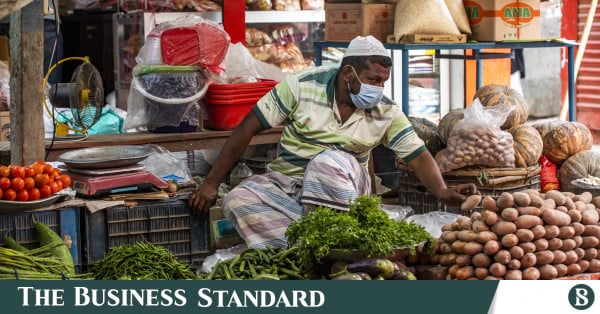
Global inflation has largely normalised, the panel noted, international commodity prices have stayed broadly stable, and the taka-dollar exchange rate has held steady — sharply reducing the imported inflation that had been a major driver of Bangladesh's price pressures throughout 2023 and 2024. "Persistent domestic inflation is now driven primarily by structural and supply-side factors, including food supply disruptions, administered energy prices, market inefficiencies, and distribution bottlenecks," the MPC noted.
This distinction between imported and domestic inflation is critical for policy design. If inflation is driven by supply-side factors rather than demand, then monetary tightening — which primarily affects demand through the credit channel — cannot effectively address it. Continuing to keep rates high in such an environment would primarily squeeze investment and working-capital finance without materially lowering inflation. The MPC's recognition of this distinction justifies the shift from a purely restrictive stance to a more balanced approach that acknowledges the limits of monetary policy in addressing structural inflation drivers.
⚠️ The Cost of Continued Tightness
The cost of the prolonged tight stance has become increasingly visible across the real economy. Private sector credit growth has collapsed to a 33-year low of 4.47 percent in June 2026 — well below the central bank's own target and far below the level needed to support the government's export growth ambitions. Working-capital loans to manufacturers, particularly in the gas-stricken RMG, textile and plastic sectors, have contracted even as factories report production disruptions. With private investment stagnant and the cost of borrowing at historically high real rates, the MPC clearly recognises that the marginal inflation-fighting benefit of another quarter of tightness is now outweighed by the marginal growth cost.
💰 Coordinated Policy Mix, Not a Solo Rate Cut
The MPC's shift does not come in isolation. It aligns with a broader macroeconomic policy package announced by Bangladesh Bank over the same week — including the new Tk 60,000 crore credit stimulus for the private sector scheduled for September, the repo rate cut itself, and the parallel 18-month NPL recovery action plan targeting the 36 percent bad-loan overhang. The coordinated design signals that the central bank now understands that monetary easing alone cannot revive credit if the banking pipeline is clogged with non-performing loans and if banks lack the deposit base and risk appetite to lend. The stimulus and the NPL plan are therefore pre-conditions for the rate cut to transmit into actual loan growth.
🏛️ Structural Inflation Requires Structural Fixes
The MPC's structural diagnosis also implicitly passes the baton to other arms of government. Food supply disruptions require agricultural logistics reform, cold-chain investment and market intelligence — none of which the central bank controls. Administered energy prices, including the recent gas tariff adjustments that have squeezed industrial margins, fall under the energy ministry and Petrobangla. Market inefficiencies and distribution bottlenecks need competition policy and enforcement against syndicates. The 9.5 percent policy rate, while still high by historical standards, represents a pragmatic compromise between inflation control and growth support — but its effectiveness will depend on whether these complementary structural reforms are executed in parallel.
✅ What This Means for Exporters and Investors
For Bangladesh's export economy — particularly the ready-made garment, textile, leather and agro-processing sectors that depend on pre-shipment and back-to-back finance — the rate cut is a necessary but insufficient signal. Working-capital costs should ease marginally as the policy rate transmits through the lending rate corridor, but the more meaningful relief will come from the September stimulus disbursement and from a successful NPL clean-up that frees up bank balance sheets. For foreign investors and the Bangladeshi diaspora, the MPC's transparent acknowledgment of growth risks — alongside its inflation-fighting credentials — removes some of the policy uncertainty that has weighed on sentiment. The next MPC meeting, expected in October 2026, will reveal whether the committee judges that another 25–50 basis point cut is warranted or whether structural inflation persistence forces a pause.
This news was originally published by The Daily Star. For the full original report, please visit: https://www.thedailystar.net/business/economy/news/tight-monetary-policy-harming-recovery-4241806
📬 Get Bangladesh Trade News in your inbox
Weekly digest of export industry news, policy updates, and market analysis.
📰 Related Stories