Bangladesh Bank To Unveil First-Ever Quarterly Monetary Policy Statement Replacing Six-Month Cycle
Central bank shifts to quarterly MPS framework to make monetary policy more responsive to volatile domestic and global economic conditions, with October-December 2026 statement scheduled for 3pm press conference.
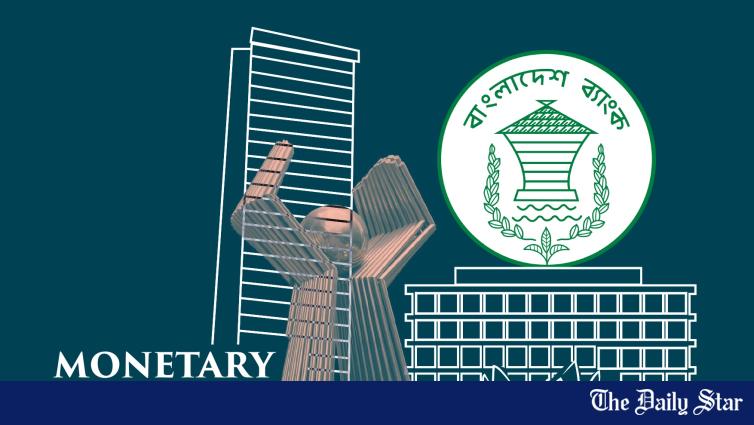
🏛 For the first time, Bangladesh Bank (BB) is set to announce its monetary policy on a quarterly basis, replacing the existing six-month cycle in a landmark shift that the central bank says will make monetary policy more responsive to volatile domestic and global economic conditions. The Monetary Policy Statement (MPS) for October-December 2026 was scheduled to be announced at a 3:00pm press conference at BB headquarters, with Deputy Governor Md Habibur Rahman as the chief guest, according to a press invitation issued by the central bank.
📊 The shift to a quarterly monetary policy framework is one of the most significant procedural changes at Bangladesh Bank in recent years, and reflects growing pressure from both domestic stakeholders and international partners including the International Monetary Fund (IMF) for a more agile approach to monetary management in a rapidly changing economic environment.
👥 Why the shift to quarterly MPS
The central bank has decided to move to quarterly statements to make monetary policy more responsive to volatile domestic and global economic conditions. The MPS was initially an annual exercise before being shifted to a half-yearly schedule, and the move to quarterly announcements represents the third major revision to Bangladesh''s monetary policy framework.
The International Monetary Fund (IMF) had recommended a quarterly framework more than a year ago, as part of its broader engagement with Bangladesh on macroeconomic stabilisation and financial sector reform. The IMF''s view was that a six-month cycle was too slow to respond to fast-moving global economic shocks, particularly given the volatility in commodity prices, exchange rates and capital flows that Bangladesh has faced over the past two years.
On July 26, 2026, NCP MP Hasnat Abdullah proposed announcing the MPS every three months instead of following the existing six-month cycle at the first meeting of the parliamentary standing committee on the Ministry of Finance. The parliamentary pressure added political weight to the push for a more frequent monetary policy cycle. Later that month, a BB policy panel also recommended shifting to quarterly monetary policy statements to improve the responsiveness, transparency and effectiveness of monetary policy in a rapidly changing environment.
💰 Policy rate context and inflation backdrop
The shift to a quarterly MPS comes at a delicate moment for Bangladesh''s monetary policy stance. The central bank had kept its policy rate at 10 percent since October 2024 — a tight stance aimed at curbing inflation that had been running at multi-year highs. However, in July 2026, BB cut its policy, or repo, rate to 9.5 percent from 10 percent, marking its first reduction in six years.
Although price pressures are easing, inflation remains high. Inflation fell for the third consecutive month to 8.26 percent in August 2026, its lowest level in 10 months, after peaking at 9.42 percent in May. The July MPS projected inflation to ease to 8.9 percent by December 2026 and 8.6 percent by June 2027, both above the government''s FY27 ceiling of 7.5 percent. This persistent gap between projected and target inflation is one of the key reasons why the central bank is moving to a more frequent monetary policy cycle — it allows for quicker course corrections if disinflation stalls or if new price shocks emerge.
📊 The economic case for quarterly MPS
The economic case for a quarterly monetary policy framework rests on several pillars. First, Bangladesh''s economy is now more integrated with global markets than ever before, with exports, remittances, foreign direct investment and external debt all subject to global economic and geopolitical shocks. A six-month cycle simply cannot keep pace with the speed at which external conditions change — as evidenced by the rapid commodity price shocks triggered by the US-Iran conflict, the closure of the Strait of Hormuz, and the broader Middle East crisis.
Second, a quarterly cycle allows the central bank to better coordinate monetary policy with fiscal policy, which operates on an annual budget cycle in Bangladesh. By aligning monetary policy more closely with quarterly economic data releases — including GDP, inflation, trade and balance of payments figures — the central bank can make more informed decisions about interest rates, reserve requirements and credit growth targets.
Third, a quarterly MPS framework improves transparency and accountability. By publishing four policy statements per year instead of two, the central bank gives markets, businesses and the public more regular insights into its thinking, its assessment of economic conditions, and its policy intentions. This reduces uncertainty and helps economic agents make better-informed decisions about investment, hiring, pricing and savings.
🌏 International best practice
The shift to a quarterly monetary policy framework aligns Bangladesh with international best practice. Most major central banks, including the US Federal Reserve, the European Central Bank, the Bank of England, the Bank of Japan and the Reserve Bank of India, publish monetary policy decisions on a roughly six-weekly or quarterly cycle. Even regional peers such as the State Bank of Pakistan and the Central Bank of Sri Lanka have moved to more frequent monetary policy announcements in recent years.
For Bangladesh, the move to quarterly MPS should help improve the country''s standing with international investors, credit rating agencies and multilateral lenders. The IMF, in particular, has been pressing Bangladesh to strengthen its monetary policy framework as part of its broader engagement with the country on macroeconomic stabilisation and structural reform. The quarterly MPS is expected to be one of several indicators that the IMF will monitor closely as part of its next credit programme for Bangladesh.
🤝 What to watch at the 30 September press conference
Several key issues will be in focus at the 30 September 2026 press conference where Deputy Governor Md Habibur Rahman will announce the October-December 2026 MPS. First, market participants will be watching for any change to the policy rate, with expectations divided between a hold at 9.5% (to confirm disinflation is on track) and a further cut (to support weak private credit growth).
Second, the central bank''s updated inflation projection for December 2026 and June 2027 will be closely scrutinised. The July MPS projected inflation to ease to 8.9% by December and 8.6% by June 2027 — both above the government''s FY27 ceiling of 7.5%. If the new projections show a faster disinflation path, that would give the central bank more room to ease policy; if disinflation is stalling, the central bank may need to hold or even tighten.
Third, the central bank''s stance on private sector credit growth will be critical. Private credit growth has stayed below 5% for six straight months through August 2026, well below the historical trend and the central bank''s own targets. The new MPS will need to address this weakness and signal how the central bank plans to support credit growth to the productive sector without reigniting inflation.
Finally, the central bank''s guidance on the exchange rate will be closely watched. The taka has been under sustained pressure against the US dollar, and the central bank''s foreign exchange reserves have been volatile. The new quarterly MPS gives the central bank an opportunity to provide clearer forward guidance on its exchange rate policy and its strategy for managing reserves in a more transparent manner.
The shift to a quarterly monetary policy framework is a structural reform that will outlast the immediate policy decisions of October-December 2026. By making monetary policy more responsive, transparent and accountable, Bangladesh Bank is laying the groundwork for a more effective macroeconomic management framework — one that should help the country navigate the complex challenges of LDC graduation, global commodity price volatility, and the broader structural transformation of its economy in the years ahead.
This news was originally published by The Daily Star. For the full original report, please visit: https://www.thedailystar.net/business/economy/news/bb-unveil-first-ever-quarterly-monetary-policy-today-4286286
📬 Get Bangladesh Trade News in your inbox
Weekly digest of export industry news, policy updates, and market analysis.
📰 Related Stories