Bangladesh Bank Launches 18-Month Action Plan to Tackle 36% NPL Crisis
BB Governor Md Mostaqur Rahman: 36% of total loans non-performing; 2 crore depositors affected by previous government irregularities; 18-month plan to stabilise banking sector
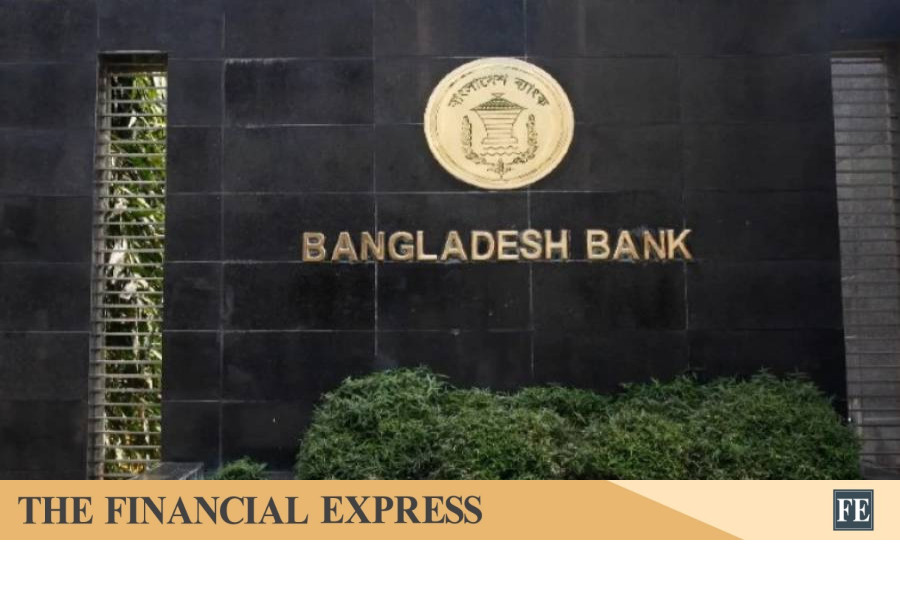
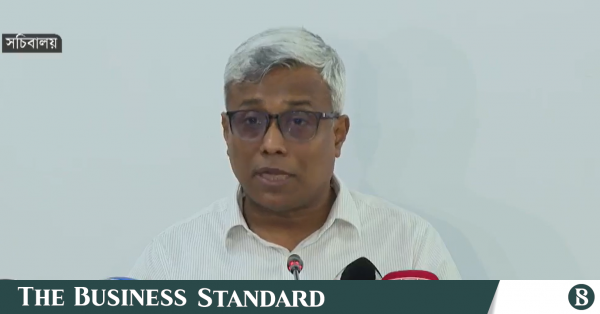
Dhaka, August 6, 2026 — Bangladesh Bank Governor Md Mostaqur Rahman disclosed on Thursday that around 36 percent of total loans in the country's banking sector are currently classified as non-performing, exposing the financial system to one of its most severe stress tests since independence and prompting the central bank to launch an 18-month special action plan to recover defaulted money and restore depositor confidence.
📊 The Scale of the Crisis
Speaking as chief guest at a seminar on Bangla QR Code organised at Dhaka University, the BB governor said the proportion of bad loans has crossed a critical threshold, with the figure now hovering at 36 percent of aggregate disbursed credit. This level is among the highest in South Asia and reflects the cumulative damage inflicted by years of weak underwriting, politically influenced lending and unchecked evergreening of corporate exposures. The disclosure also confirms what independent economists and rating agencies have been flagging for several quarters — that the reported NPL ratio, even after the recent switch to a 90-day delinquency norm, still understates the true stock of stressed assets in the banking pipeline.
⚠️ Two Crore Depositors Affected
The central bank chief stated that around 2 crore depositors were directly affected by various irregularities committed during the tenure of the previous government, ranging from the diversion of depositors' funds into affiliated businesses to forced lending to non-creditworthy entities. He emphasised that there is no alternative to taking strict measures to restore normal operations in the banking sector, signalling that the central bank is prepared to override vested interests in pursuit of recovery. The governor's remarks also signal that the Bangla QR Code campaign — designed to widen digital payments — cannot succeed unless the underlying banking system regains public trust.
🧑⚖️ Phased Recovery Architecture
Detailing the 18-month plan, the governor split the timeline into two clearly defined phases designed to give honest borrowers an exit window while applying legal force on wilful defaulters:
- ⏳ Phase 1 (Months 1–6): Borrowers will be offered an exit facility through the bullet payment method, allowing them to clear overdue obligations in a single negotiated settlement without immediately triggering classification escalation. This window is intended to separate genuine businesses hit by the post-uprising economic shock from chronic defaulters.
- ⚖️ Phase 2 (Months 7–18): The central bank will enforce recovery action under two legal instruments — the proposed Distressed Asset Management Act and the existing Artha Rin Adalat Act — giving recovery officers stronger powers to attach assets, auction collateral and pursue personal liability of guarantors.
- 💸 New Credit Package: A fresh Tk 60,000 crore credit line will be rolled out from September 2026 to accelerate loan flow to the private sector, particularly working-capital starved manufacturers and exporters.
- 👥 Entrepreneurship Drive: An initiative to create 5,000 new entrepreneurs in each upazila will be launched to rehabilitate and employ July fighters — the youth who participated in the 2024 mass uprising — channelling them into formal economic activity rather than leaving them economically adrift.
🏛️ Why the Numbers Matter for Trade and Export
A 36 percent NPL ratio is not merely a banking statistic — it has direct downstream consequences for Bangladesh's export economy. When a third of bank balance sheets are impaired, the cost of credit rises for everyone, including the ready-made garment (RMG), textile and agro-processing exporters who depend on back-to-back letters of credit and pre-shipment finance. Industry associations including BGMEA and BKMEA have repeatedly flagged that working-capital shortages, combined with the gas crisis, are squeezing operating margins and delaying shipment schedules. A successful NPL recovery programme would therefore free up loanable funds for productive sectors and ease the credit bottleneck that the central bank's own monetary policy committee recently described as a drag on economic recovery.
📈 Macro Context: From Crisis to Stabilisation
The 18-month horizon is significant. It spans the remainder of FY27 and aligns with the broader reform roadmap Bangladesh has committed to under its LDC graduation preparation. By sequencing a soft exit window before hard enforcement, Bangladesh Bank is mirroring the approach taken by India in its 2015–2016 asset quality review, where forced recognition of bad loans was paired with structured resolution mechanisms. However, the success of the plan will depend on three execution risks: (i) political will to pursue politically connected defaulters, (ii) judicial capacity in the Artha Rin Adalat system to handle a surge in recovery suits, and (iii) the operational readiness of banks to restructure viable loans rather than dump them into liquidation.
🌏 Investor and Depositor Signal
For foreign investors and the Bangladeshi diaspora considering fixed deposits or treasury bills, the governor's disclosure carries a mixed message. On one hand, transparent acknowledgement of the 36 percent NPL ratio — long suspected but rarely officially confirmed — removes a layer of uncertainty that has weighed on sovereign risk perception. On the other hand, the magnitude of the hole means that deposit growth, which has lagged credit demand for the past several quarters, will need sustained regulatory intervention to recover. The Tk 60,000 crore credit package from September is therefore as much a confidence booster for savers as it is a liquidity injection for borrowers.
✅ What Comes Next
Bangladesh Bank is expected to issue detailed operating circulars in the coming weeks, spelling out the eligibility criteria for the bullet-payment exit window, the timeline for the Distressed Asset Management Act to be tabled in parliament, and the disbursement modalities for the Tk 60,000 crore private sector credit package. The central bank will also need to coordinate with the Ministry of Finance, the Bangladesh Bank Tribunal and the Inspectorate of Audit to ensure that the recovery drive does not collapse into another wave of cosmetic evergreening. For the country's 2 crore affected depositors — and for the exporters, farmers and SMEs whose working capital depends on a functional banking system — the next 18 months will be a defining test of whether Bangladesh can convert a long-simmering financial crisis into a structural turnaround.
This news was originally published by The Financial Express. For the full original report, please visit: https://thefinancialexpress.com.bd/economy/bb-takes-18-month-action-plan-to-tackle-soaring-npls
📬 Get Bangladesh Trade News in your inbox
Weekly digest of export industry news, policy updates, and market analysis.
📰 Related Stories