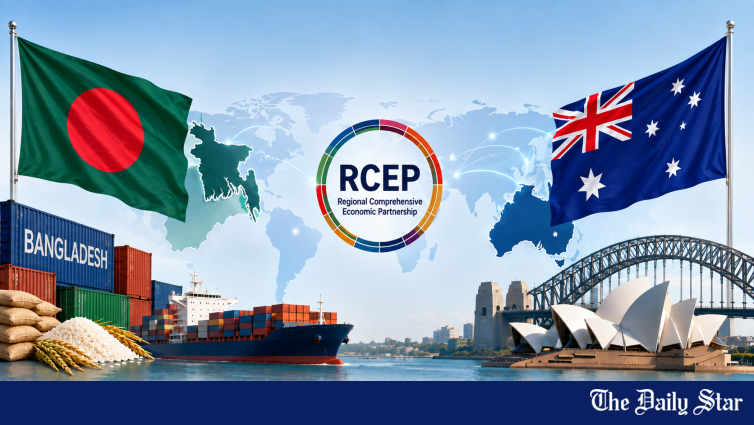
Bangladesh Seeks Australia and New Zealand Support for RCEP Accession and FTAs
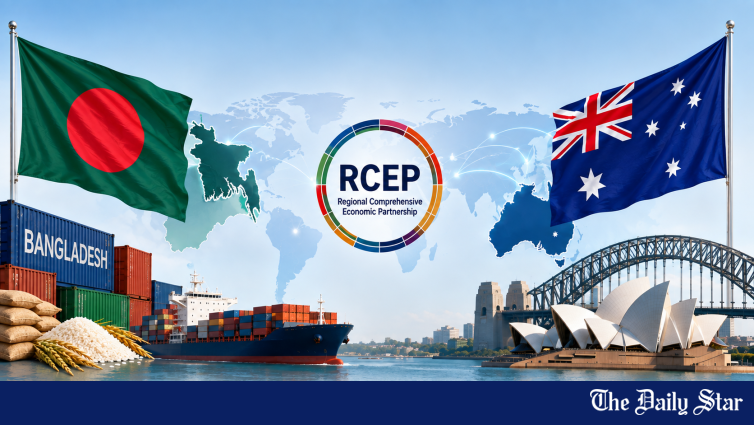
Dhaka, August 13, 2026 — Bangladesh has formally sought Australia's backing for its accession to the Regional Comprehensive Economic Partnership (RCEP) and proposed bilateral free trade agreements (FTAs) with both Australia and New Zealand, as the country accelerates trade diplomacy ahead of its graduation from least developed country (LDC) status. Commerce Secretary Md Ataur Rahman Khan led a high-level delegation to Canberra and Wellington this week to press Dhaka's case for deeper commercial integration with the Oceania bloc.
🇦🇺 The Canberra Pitch: RCEP Accession and FTA Proposal
In Canberra, the commerce secretary met Ravi Kewalram, First Assistant Secretary of the Australian Department of Foreign Affairs and Trade, and Sarah Storey, First Assistant Secretary of the South and Central Asia Division. The meetings focused on three strategic asks:
- 🤝 Australian support for Bangladesh's RCEP accession — Dhaka has formally submitted the RCEP accession questionnaire
- ⏳ Extension of LDC graduation transition period by three years — pushing the deadline to November 2029
- 📝 A bilateral FTA with Australia — Australia responded it would consult stakeholders and determine the appropriate course of action
- 🙏 Gratitude for continued duty-free, quota-free market access — Australia confirmed it will keep DFQF access for Bangladeshi products post-graduation
Bangladesh has already begun aligning its domestic laws on intellectual property, competition, and personal data protection with RCEP standards — signalling that the accession bid is more than symbolic. With a market of approximately 170 million people, Bangladesh's entry into RCEP would create a trade bridge between South Asia, East Asia, and the Association of Southeast Asian Nations (ASEAN).
🇳🇿 The Wellington Pitch: FTA, RCEP, and a Business Forum
In Wellington, the commerce secretary met representatives of New Zealand's Ministry for Primary Industries — a strategically significant counterpart given Bangladesh's growing agro-processing sector and New Zealand's expertise in dairy, kiwifruit, and premium food exports. The agenda included:
- 📝 Proposal for a bilateral FTA with New Zealand
- 🤝 New Zealand's support for Bangladesh's RCEP accession
- ⏳ Support for extending the LDC transition period by three years
- 👥 Establishment of a bilateral business forum
- 🔧 A technical working group among relevant agencies
- 📞 Designated focal points for regular communication and information exchange
- 🌾 Cooperation in agriculture, food security, technology exchange, and trade expansion
The breadth of the Wellington agenda signals that Dhaka is pursuing a multidimensional engagement with New Zealand — not just tariff reduction, but also capacity building, technology transfer, and people-to-people commercial linkages.
🌐 Why RCEP Matters for Bangladesh
RCEP is the world's largest free trade bloc by GDP, covering 15 Asia-Pacific economies including China, Japan, South Korea, Australia, New Zealand, and the 10 ASEAN members. For Bangladesh, accession would deliver several strategic benefits:
- 💰 Preferential tariffs — replacing the duty-free access Bangladesh will lose after LDC graduation
- 🏢 Supply chain integration — especially for RMG, where Bangladesh imports yarn and fabric from China and India
- 👥 FDI attraction — RCEP investors gain a Bangladeshi production base serving both South Asia and ASEAN
- 🧬 Rules harmonisation — IP, competition, and data protection alignment with global standards
- 🌏 Trade diplomacy — positions Bangladesh as a connector between South Asia, East Asia, and ASEAN
Bangladesh's RCEP accession would also help offset the export erosion expected from LDC graduation, which the World Bank estimates could cost the country up to $17.5 billion in lost exports over the medium term.
🏛️ Broader Trade Pact Momentum
The Australia and New Zealand push is the latest in a series of trade diplomacy moves by Dhaka. Bangladesh has already:
- 🇯🇵 Signed an Economic Partnership Agreement (EPA) with Japan — the country's first bilateral EPA
- 🇰🇷 Finalised a Comprehensive Economic Partnership Agreement (CEPA) with South Korea
- 🇦🇺 Proposed an FTA with Australia — pending Australian stakeholder consultation
- 🇳🇿 Proposed an FTA with New Zealand — pending Wellington's response
- 🌐 Formally submitted RCEP accession questionnaire — domestic laws being aligned
The trade pact sprint reflects a clear strategic recognition in Dhaka: with LDC graduation looming in November 2026 (or November 2029 if the UN grants the requested extension), the country must build a web of bilateral and regional trade agreements to replace the preferential access it will lose.
⏳ The LDC Transition Period Question
A central thread running through both the Canberra and Wellington meetings was Dhaka's request for a three-year extension of the LDC graduation transition period — pushing the deadline from November 2026 to November 2029. Bangladesh has formally applied to the United Nations for the extension, and the UN Committee for Development Policy (CDP) has already recommended approval. The UN General Assembly is expected to take a final decision in September 2026.
The extension would give Bangladesh three additional years of duty-free, quota-free access under various preferential schemes — critical breathing room to finalise trade agreements and prepare domestic industries for full competitive exposure.
📊 Trade Volume Context
While Bangladesh's trade with Australia and New Zealand is currently modest compared to its RMG-driven trade with the EU and US, both markets offer significant untapped potential:
- 🇦🇺 Australia — Bangladesh's exports include RMG, leather, and frozen foods; major imports include cotton, wool, and education services
- 🇳🇿 New Zealand — Bangladesh exports RMG and agro-products; imports dairy, kiwifruit, and machinery
- 💰 Bangladesh market size — 170 million people, with a fast-growing middle class attractive to Australian and New Zealand exporters
🌐 Strategic Context: A Calculated Pivot
The commerce secretary's dual-country visit reflects a calculated pivot in Bangladesh's trade diplomacy — moving beyond the traditional concentration on Western markets and China, and building commercial relationships with mid-sized developed economies that share Bangladesh's interest in a rules-based trading order. Australia and New Zealand, both RCEP members and CPTPP signatories, offer Dhaka a pathway into broader Indo-Pacific economic architecture.
For Bangladesh's export community, the diplomatic push opens new market frontiers at a moment when the country urgently needs to diversify beyond RMG and beyond its traditional buyers. Whether Canberra and Wellington reciprocate with FTA enthusiasm — or prefer to keep the relationship at the RCEP level — will be one of the more consequential trade-policy questions of the coming months.
This news was originally published by The Daily Star. For the full original report, please visit: https://www.thedailystar.net/business/economy/news/bangladesh-seeks-australia-nz-support-expand-trade-4247211
Related on BangladeshExport
📬 Get Bangladesh Trade News in your inbox
Weekly digest of export industry news, policy updates, and market analysis.
📰 Related Stories