Bangladesh Explores AirAsia Cooperation in Ground Handling and Civil Aviation Investment
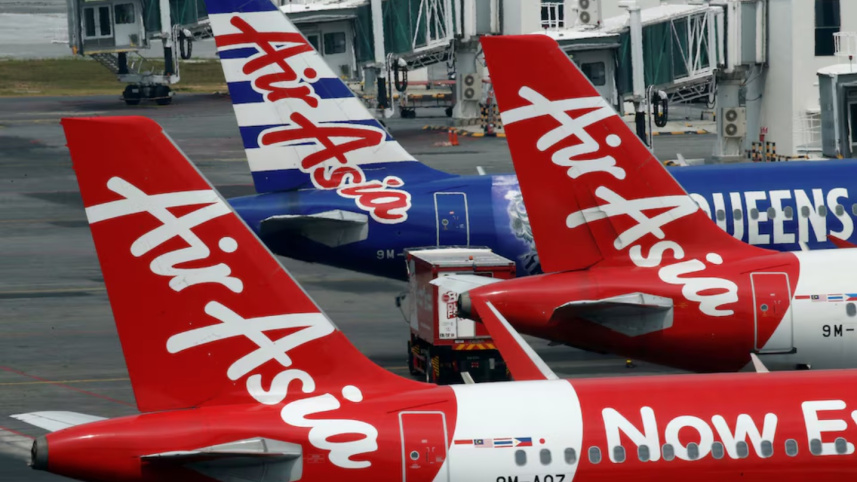
Dhaka/Kuala Lumpur, August 20, 2026 — Bangladesh is exploring possible cooperation with AirAsia in ground handling and airport management at the country's international airports, alongside potential investment in the broader civil aviation sector — following a high-level Bangladeshi delegation's visit to Malaysia on 17–18 August 2026. The Ministry of Civil Aviation and Tourism confirmed the development in a press release on 20 August 2026, marking the most concrete step yet toward involving a foreign low-cost carrier in Bangladesh's airport operations.
📊 Key Elements of the Engagement
- 📅 17–18 August 2026 — delegation visit to Malaysia
- 📍 Kuala Lumpur International Airport Terminal 2 — AirAsia headquarters and operational base
- 🤝 Tony Fernandes — Group CEO of Capital A (AirAsia parent company)
- 🤝 M Rashiduzzaman Millat — State Minister for Civil Aviation and Tourism
- 🤝 Chowdhury Ashik Mahmud Bin Harun — Executive Chairman, Bangladesh Investment Development Authority (BIDA)
- ✈ AirAsia GTR (Ground Team Red) — ground services operation visited by delegation
- 🚧 Cooperation scope — ground handling, airport management, related services
- 💰 Investment scope — broader civil aviation sector in Bangladesh
🤝 Why AirAsia? The Low-Cost Aviation Expertise
AirAsia is one of the world's leading low-cost carriers (LCCs) and the largest in Asia by passengers carried. Founded in 1993 and relaunched in 2001 under Tony Fernandes' leadership, AirAsia has built a global reputation for operational efficiency, low-cost model execution, and innovative ground handling practices — including the Ground Team Red (GTR) ground services subsidiary that the Bangladeshi delegation visited at KLIA Terminal 2. AirAsia's specific competencies relevant to Bangladesh include:
- ⏳ Fast aircraft turnaround — AirAsia's turnaround times are among the fastest in the industry, allowing more flights per aircraft per day
- 📱 Smart technology integration — mobile-first booking, automated check-in, biometric boarding
- 🛣 Integrated ground services — through GTR, AirAsia handles its own ground operations rather than depending on third-party handlers
- 💰 Cost discipline — benchmark LCC cost per available seat kilometre (CASK) performance
- 🌐 Asian aviation network — extensive connectivity across ASEAN, China, India, and Australia
- 💼 Ancillary revenue expertise — baggage, seat selection, in-flight services, and loyalty programme monetisation
For Bangladesh — where aviation infrastructure has historically been characterised by slow turnaround times, manual processes, and limited commercial discipline — AirAsia's operational model offers a template for transforming Hazrat Shahjalal International Airport (Dhaka), Shah Amanat International Airport (Chittagong), and Osmani International Airport (Sylhet) into more efficient, commercially viable hubs. The potential involvement of AirAsia in Bangladesh's ground handling also aligns with the broader government agenda of attracting FDI into infrastructure sectors.
🚧 Bangladesh's Ground Handling Context
Bangladesh's ground handling market is currently dominated by the state-owned Bangladesh Biman (Biman Bangladesh Airlines), which has exclusive ground handling rights at the country's international airports. This monopoly has been criticised for:
- ⏳ Slow turnaround times — aircraft turnaround at Dhaka's HSIA often exceeds 60 minutes, compared to 25–35 minute LCC benchmarks
- 💰 Higher costs — ground handling charges at HSIA are above regional averages
- 💼 Limited technology adoption — manual check-in, paper-based documentation, and limited automation
- 👥 Service quality issues — delayed baggage handling, ground service equipment availability constraints
- 🤝 Competitive constraint — foreign airlines have no alternative ground handler to choose
Opening ground handling to AirAsia (or other qualified foreign operators) would create competition for Bangladesh Biman — forcing the state-owned carrier to improve its own ground handling operations while giving foreign airlines a higher-quality alternative. The competition would also likely reduce overall ground handling costs at Bangladeshi airports, making Dhaka more attractive as a transit hub and as a destination for foreign airline route expansion.
🌐 Strategic Significance for Bangladesh's Aviation and Tourism Sectors
The AirAsia cooperation initiative carries strategic significance for both Bangladesh's aviation sector and its broader tourism and trade ambitions:
- 🚧 Airport efficiency improvement — AirAsia's operational model could significantly reduce turnaround times and improve passenger experience at HSIA
- 💰 FDI attraction — AirAsia investment would mark one of the first major foreign airline investments in Bangladesh's aviation sector
- 🌐 Network connectivity — AirAsia could expand routes between Bangladesh and ASEAN, India, China, and Australia
- 🧗 Tourism development — improved air connectivity is a precondition for Bangladesh's tourism ambitions, including the recently announced Malaysia tourism cooperation
- 💼 Job creation — ground handling and aviation services are labour-intensive, with high-skill employment opportunities
- 🚢 Trade facilitation — improved air cargo handling supports Bangladesh's export economy (RMG, pharmaceuticals, agro-processing)
- 🤝 Malaysia-Bangladesh bilateral ties — complements the recently announced Bangladesh-Malaysia tourism cooperation initiative
🤝 The Delegation: State Minister + BIDA Executive Chairman
The composition of the delegation — including both the State Minister for Civil Aviation and Tourism and the Executive Chairman of BIDA — signals a coordinated government effort to attract investment in civil aviation infrastructure, not just discuss operational cooperation. The BIDA Executive Chairman's presence specifically indicates that the discussions went beyond ground handling into potential investment opportunities — which could include:
- 💰 Equity investment — AirAsia taking equity stake in Bangladesh Biman or a new ground handling joint venture
- 🏢 Joint venture — AirAsia + local partner (or Bangladesh Biman) forming a new ground handling company
- 🚧 Management contract — AirAsia managing existing ground handling operations under a concession agreement
- 🏢 Aviation training academy — AirAsia establishing a training facility in Bangladesh for ground handling and aviation services
- 🚧 MRO facility — AirAsia investing in a maintenance, repair, and overhaul facility in Bangladesh
- 🌐 Aviation hub development — AirAsia selecting Dhaka as a regional hub for South Asia operations
🚢 Air Cargo and Trade Implications
For Bangladesh's export economy, improved ground handling at international airports has direct implications for air cargo capacity — which is critical for:
- 👕 RMG air freight — high-value, time-sensitive garment shipments that require air transport
- 💊 Pharmaceutical air cargo — temperature-sensitive medicine exports requiring reliable cold chain
- 🌾 Agro-processing exports — perishable food products requiring rapid air freight
- 🧴 Plastics and light engineering — sample shipments and time-sensitive export orders
- 🌐 IT/ITeS exports — equipment and software shipment needs
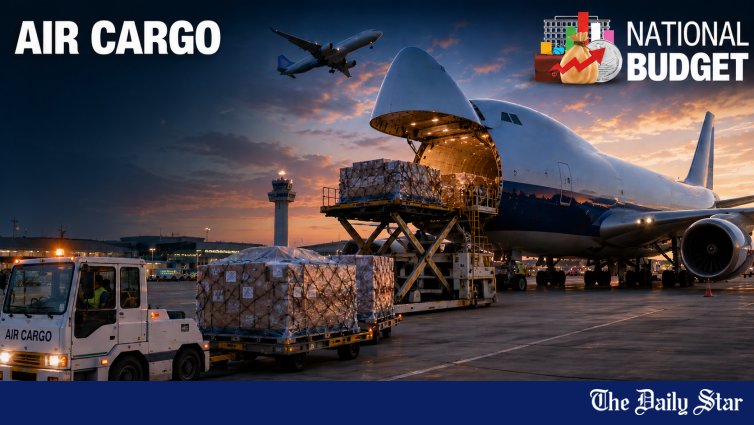
Bangladesh's current air cargo capacity is constrained by limited cargo terminal infrastructure at HSIA and limited freighter aircraft operations. AirAsia's involvement in ground handling could be extended to cargo operations — potentially including a dedicated cargo terminal at HSIA or the new Bangabandhu International Airport (when constructed). This would provide a structural boost to the country's high-value, time-sensitive export sectors that depend on air freight.
💰 The Invest Bangladesh Authority Connection
The delegation's inclusion of the BIDA Executive Chairman takes on added significance in light of the recently passed "Invest Bangladesh Bill, 2026" — which abolishes BIDA, BEZA, and the PPP Authority in favour of a unified Invest Bangladesh Authority. The new authority will inherit BIDA's mandate for investment promotion and will likely be the institutional counterpart for any AirAsia investment in Bangladesh's civil aviation sector. The fact that the BIDA Executive Chairman was part of the delegation suggests the government is already positioning the new authority to take forward investment discussions that BIDA has initiated — ensuring continuity of engagement through the institutional transition.
🌐 The Bigger Picture: Bangladesh's Aviation Modernisation
The AirAsia cooperation initiative is part of a broader Bangladesh aviation modernisation agenda that includes:
- 🚧 New Bangabandhu International Airport — planned greenfield airport to supplement HSIA capacity
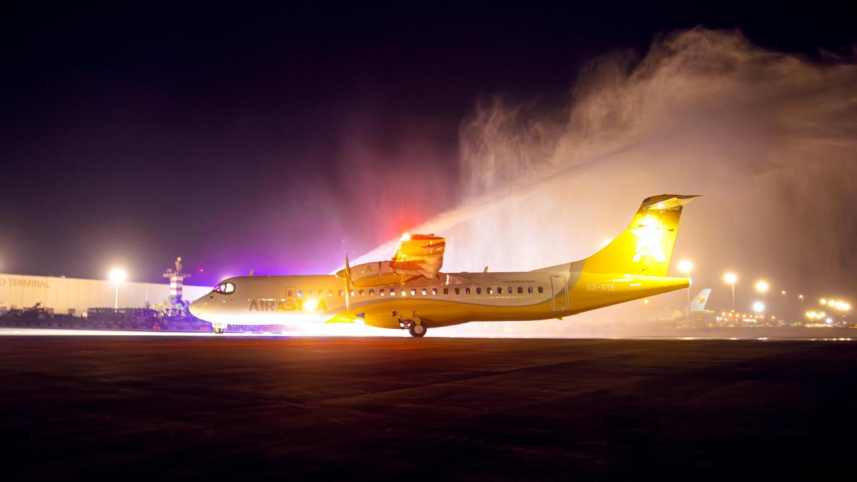
- ✈ Air Astra fleet expansion — Bangladeshi carrier adding ATR 72-600 turboprops for regional routes
- 💰 Bangladesh Biman fleet renewal — ongoing evaluation of new wide-body aircraft acquisition
- 🚧 HSIA Terminal 3 expansion — third terminal construction to expand capacity
- 🚧 Chittagong Shah Amanat expansion — capacity expansion to support Chittagong export growth
- 🤝 Open skies agreements — bilateral air service agreement renegotiations with key partners
- 💰 Aviation training capacity — building local pilot, cabin crew, and engineering training infrastructure
For Bangladesh's broader economic strategy, aviation modernisation is a critical enabler — supporting tourism, trade, investment, and the country's positioning as a regional connectivity hub. The AirAsia cooperation initiative represents a concrete step toward bringing international best practice and investment into this modernisation agenda. For State Minister M Rashiduzzaman Millat and BIDA Executive Chairman Chowdhury Ashik Mahmud Bin Harun, the delegation's visit to AirAsia's KLIA facilities has opened a negotiation track that could reshape Bangladesh's aviation landscape over the coming years — if it can be converted from "possible cooperation" to concrete investment and operational agreements. The next steps will be technical due diligence, commercial negotiations, and — if both sides remain interested — a formal cooperation agreement that brings AirAsia's operational expertise and capital into Bangladesh's aviation sector. For the millions of passengers who use Bangladeshi airports each year, and for the export industries that depend on air freight capacity, the stakes of this cooperation extend well beyond the airport apron — into the daily reality of business competitiveness and consumer experience.
This news was originally published by The Daily Star. For the full original report, please visit: https://www.thedailystar.net/business/news/bangladesh-explores-possible-cooperation-airasia-ground-handling-4252631
📬 Get Bangladesh Trade News in your inbox
Weekly digest of export industry news, policy updates, and market analysis.
📰 Related Stories