AmCham Bangladesh: Energy Roadmap Key to Attracting $5bn US Investment
American Chamber of Commerce President Syed Mohammad Kamal lays out 30-year investment journey and outlines roadmap for next $5 billion in US FDI over four to five years
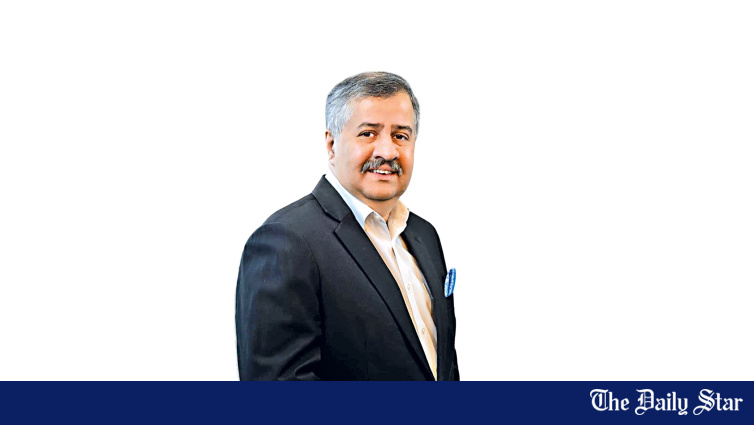
🌏 An energy security roadmap, an enabling investment climate and timely policies are among the major tasks for the government to attract more American investment in Bangladesh, said Syed Mohammad Kamal, president of the American Chamber of Commerce in Bangladesh (AmCham). Speaking on the chamber's 30th anniversary, Kamal laid out an ambitious agenda for scaling US-Bangladesh commercial ties over the next four to five years.
📊 Over its 30-year journey in Bangladesh, AmCham members have invested more than $5 billion in the country. In the next four to five years, the chamber aims to bring at least another $5 billion in US investment to Bangladesh, as there are opportunities here, Kamal told The Daily Star in an interview on the occasion of the chamber's 30th anniversary, which will be celebrated on September 12. The AmCham president's projection would effectively double cumulative US FDI into Bangladesh within a fraction of the time it took to build the initial $5 billion base.
📜 Bilateral Trade Trajectory: From $653 Million To $13.7 Billion
The AmCham's optimism is anchored in a remarkable bilateral trade trajectory. When the America-Bangladesh Economic Forum (ABEF) — AmCham's predecessor — started its journey 30 years ago in 1996, bilateral trade between Bangladesh and the US was below $1 billion, hovering around $653 million. In the last calendar year, bilateral trade in goods and services between the two countries reached $13.7 billion in 2025, up 10.3 percent, or $1.3 billion, from 2024, according to data from the US Trade Representative (USTR).
The trade expansion has been particularly strong on the Bangladesh export side. US goods imports from Bangladesh totalled $9.5 billion in 2025, up 13.4 percent, or $1.1 billion, from 2024. The US goods trade deficit with Bangladesh was $7.1 billion, a 16.3 percent increase, or $993.5 million, over 2024 — reflecting the structural asymmetry of the relationship, with Bangladesh exporting primarily ready-made garments (RMG) and importing American services, machinery and technology.
- 💰 Cumulative US FDI in Bangladesh: $5 billion (over 30 years)
- 💸 AmCham target for next 4-5 years: Additional $5 billion US FDI
- 📊 Bilateral trade 1996: $653 million
- 📊 Bilateral trade 2025: $13.7 billion (+10.3% YoY)
- 👕 US goods imports from Bangladesh 2025: $9.5 billion (+13.4%)
- 💵 US services exports to Bangladesh 2025: $1.4 billion (+7.6%)
- 🌏 US trade deficit with Bangladesh: $7.1 billion (+16.3% YoY)
US services exports to Bangladesh in 2025 were $1.4 billion, up 7.6 percent, or $102.0 million, from 2024. US services imports from Bangladesh were $362.0 million, down 14.6 percent, or $62.0 million, from 2024 — indicating that Bangladesh's services exports to the US, particularly in ICT and IT-enabled services, still have significant headroom for growth.
💰 Why Energy Roadmap Matters For US Investors
The AmCham president's central policy prescription is the publication of a credible energy security roadmap. In terms of attracting US investment to Bangladesh, if the government provides a good energy roadmap as per its plan, it is possible to bring in higher American investment. For instance, the government has announced that the energy situation will improve significantly in two years as it has been taking a lot of initiatives, he said.
Providing an energy roadmap will give American investors greater predictability and enable them to make the right investment decisions. The roadmap will also provide predictability regarding energy supply. The roadmap should clearly state what will be achieved in six months, 12 months, 18 months and 24 months.
For instance, if any project is undertaken to improve the energy situation and, after working for a few months, it is said that it will not be able to continue, then what will happen to local and foreign investors? So, the energy roadmap is very important for foreign investors, Kamal argued. The reference underscores the frustration US investors have felt over Bangladesh's stop-start energy infrastructure decisions — including cancelled LNG terminal projects and delayed coal plant expansions — which have eroded confidence in long-term capital deployment.
🔧 Sectors Identified For Future US Investment
The AmCham has identified several sectors with high potential for future US investment, including ICT, AI, energy, medical equipment, pharmaceuticals and cybersecurity. Cybersecurity is a major challenge for foreign investment, as data privacy has also become a challenge here, Kamal noted. The mention of cybersecurity and data privacy reflects growing concern among US technology firms considering Bangladesh operations, particularly after high-profile data breaches in the country's banking sector.
Another major challenge is the violation of intellectual property rights, as fake goods sometimes emerge as threats to original products because of violations of intellectual property rules. American investment in Bangladesh has remained underutilised, although there is a great opportunity to demonstrate its capabilities, the AmCham president observed — a candid acknowledgement that Bangladesh has yet to capture its full share of US FDI in Asia.
The AmCham chief also lauded the government's promise to deregulate rules and policies, which will ultimately facilitate and expedite the processes for attracting foreign investment if these are implemented as per the commitments. Bangladesh's interim government has been pushing a deregulation agenda aimed at reducing bureaucratic bottlenecks, simplifying business registration and streamlining regulatory approvals — reforms that AmCham members have long sought.
🤝 Defending The Reciprocal Trade Agreement
Regarding the signing of the Agreement on Reciprocal Trade (ART) between Bangladesh and the US, Kamal acknowledged that there has been a lot of criticism around the agreement. "I think the question of what we got and what we gave is one area to consider. But we also need to remember that if we look at our latest imports — we know that we import less than $2 billion from the United States, while we export $11-13 billion to them," he noted.
Advocating the ART, he said there are many positive sides of the agreement which also need to be explored for exporting, importing and more investment between the two countries. The agreement, which took effect in July 2025 alongside the US imposing a 10% reciprocal tariff on Bangladeshi apparel exports, has been politically contentious — but the AmCham president's framing as a structural platform for deeper commercial engagement signals the chamber's strategic view that the ART is more than a tariff mechanism.
💵 Cashless Bangladesh: A Strategic Digital Agenda
Turning to digital infrastructure, the AmCham president touched on the government's cashless economy agenda. The government is looking for a cashless economy, or a cashless Bangladesh. Going fully cashless is probably not that easy, as perhaps Bangladesh will start with less cash and eventually become cashless. Because until now, 28 percent of transactions are cashless and 72 percent are conducted in cash, he noted.
Here, all players need to be able to participate properly. We need to ensure that everyone can play in the areas where they have capabilities. For example, we have seen Bangla QR being promoted over time. But Bangla QR is just one tool. There are many other options: mobile financial services, cards like ours, and others, Kamal observed — a pointed reminder that Bangladesh's payments ecosystem needs open architecture rather than single-rail solutions to achieve true cashless penetration.
🌏 What Comes Next For US-Bangladesh Commercial Ties
Over the past 16-17 years, $5 billion has come in from the US as foreign direct investment. During the next four and a half years of their tenure, it is possible to bring another $5 billion in US investment here, the AmCham president projected — a doubling that, if realised, would fundamentally reshape the US-Bangladesh commercial relationship.
For Bangladesh's broader investment climate, the AmCham agenda signals both opportunity and pressure. The opportunity lies in the chamber's identified growth sectors — ICT, AI, energy, medical equipment, pharmaceuticals and cybersecurity — which align with Bangladesh's diversification ambitions ahead of LDC graduation in November 2026. The pressure lies in the explicit conditionality: US investors will commit incremental capital only if Bangladesh delivers on the energy roadmap, deregulation agenda, intellectual property protection and cybersecurity standards that AmCham has flagged as gating constraints.
The coming four to five years will reveal whether Bangladesh can convert its 30-year bilateral relationship with the US into a structural scaling of American FDI — or whether the constraints identified by AmCham continue to cap US investment below its potential despite the diplomatic momentum generated by the Agreement on Reciprocal Trade.
This news was originally published by The Daily Star. For the full original report, please visit: https://www.thedailystar.net/business/economy/news/energy-roadmap-key-attracting-more-us-investment-4269881
Related on BangladeshExport
📬 Get Bangladesh Trade News in your inbox
Weekly digest of export industry news, policy updates, and market analysis.
📰 Related Stories