AI Data Centre Boom Fuels $30 Billion Fuel Cell Market by 2030: Rystad
Grid connection queues of three to six years push hyperscalers toward on-site hydrogen-ready power as Bloom revenue surges 138 percent
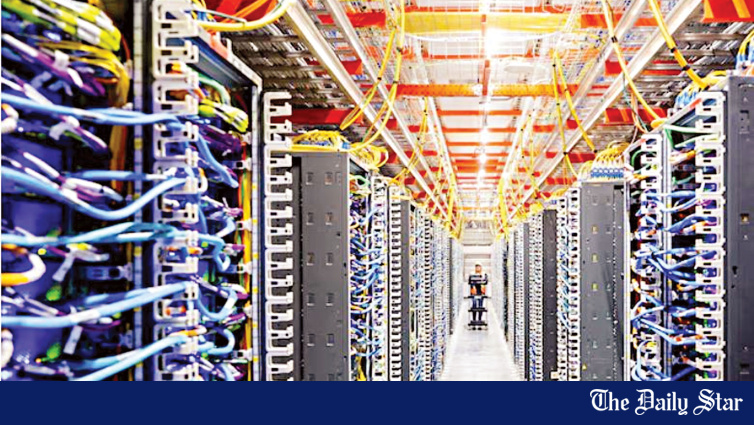
⚡ Fuel cells are gaining traction among US hyperscalers racing to build data centres for the AI boom but struggling with grid constraints to secure quick and reliable power. Energy research firm Rystad Energy projects investments in fuel cells for data centres to rise to about $30 billion by 2030 from $2.8 billion in 2025 — a more than tenfold expansion in five years driven not by climate policy but by sheer computational desperation.
🔌 The technology is straightforward in principle. A fuel cell generates electricity through a chemical reaction between a fuel — such as natural gas or hydrogen — and oxygen, converting the fuel's energy directly into electricity rather than burning it. Bloom Energy operates solid-oxide technology ready for 100 percent pure hydrogen, while FuelCell Energy uses molten carbonate technology capped at 40 percent hydrogen blends, even as both systems remain fuel-flexible. The appeal for data-centre operators is equally simple: computing equipment and cooling systems must run around the clock, and the grid cannot always promise to be there on the operator's timeline.
⏳ That timeline problem is the industry's bottleneck. Linking large electricity loads to the US grid can take three to six years, according to Rystad estimates, prodding developers to explore on-site power sources instead. We announced our first project with Oracle and delivered power to their Utah site in less than two months, Bloom CEO KR Sridhar said on a post-earnings call. We are achieving the same thing with Nebius in New Jersey — we were able to get planning board approvals for our fuel cells within three months of signing the contract. Rystad predicts that about 40 percent of projected US data-centre capacity in 2030 could pursue dedicated on-site power rather than rely entirely on the grid.
💰 The numbers behind the boom
📈 Bloom's third-quarter revenue surged 138 percent to $1.24 billion, and the company posted a net profit of $250.3 million — a striking reversal from a year-earlier loss of $23.1 million. It raised its 2026 revenue forecast to $4.4 billion to $4.6 billion. US cloud computing giant Oracle intends to procure up to 2.8 gigawatts of Bloom fuel-cell systems, of which 1.2 GW has been contracted. FuelCell Energy is also chasing the segment: CEO Jason Few told Reuters that time to power has really become as important as cost of power, and his company expects data centres and related business to account for 75-85 percent of its operations within two to three years, up from 25-30 percent currently.
📦 The order pipeline Rystad tracks now stands at roughly 9 GW, including framework agreements involving Oracle, AEP, Equinix and Brookfield — though the firm cautions that such agreements do not necessarily represent firm orders for the full stated capacity. On the supply side, annual fuel-cell manufacturing capacity is expected to rise to 4 GW by 2030 from about 1.8 GW currently.
🛧 Reality checks on the runway
🚧 The remaining friction is not the fuel cell itself. For 100 MW-plus projects, the biggest determinants of timeline are typically site readiness, permitting and supporting infrastructure, not the fuel-cell technology, Bloom Chief Commercial Officer Aman Joshi told Reuters. Projects still need gas connections, permits, transformers and switchgear, any of which can delay deployment. Fuel cells can complement grid power even as they compete with other on-site generation technologies, and growth ultimately depends on whether suppliers can deliver systems at competitive costs while developers build projects and secure fuel. On the environmental ledger, fuel cells produce lower local emissions than conventional gas-fired generation, since they avoid combustion within the stack.
🌏 What it signals for emerging tech economies
💻 The story carries a broader lesson for countries planning digital infrastructure of their own. The bottleneck of the AI era is not chips or capital; it is electricity, and the countries that solve power-to-data-centre quickly will host the workloads everyone else waits in line for. The hyperscaler playbook now under construction — modular on-site generation co-located with compute, with the grid as backup rather than foundation — is precisely the model energy-constrained emerging economies study, because it flips the conventional sequencing that says build the grid first, then attract the load.
🚀 For Bangladesh, where industrial power reliability shapes both foreign investment and domestic digitisation, the fuel-cell boom is a preview of options rather than an imminent reality. The country's ambitions in IT parks, data-centre hosting and ITES exports all rest on dependable electricity, and technologies that deliver industrial-scale power in months rather than years — whether fuel cells, batteries or hybrid systems — are strategically interesting precisely because Bangladesh's own grid-expansion timelines are long. Hydrogen-ready platforms also align with the longer-term decarbonisation direction that development financiers now attach to energy lending.
🔭 The near-term signal for investors is that the AI infrastructure chain keeps widening: chips, servers, cooling, land and now on-site generation have all become investable bottlenecks in their own right. Rystad's $30 billion forecast will be right or wrong depending on execution details — permitting, gas supply, manufacturing scale — but the direction is settled: whoever controls fast, clean, reliable power controls the pace of the AI build-out, and that market is now priced accordingly.
This news was originally published by The Daily Star. For the full original report, please visit: https://www.thedailystar.net/business/global-economy/news/why-ai-data-centres-are-powering-boom-fuel-cell-demand-4306551
📬 Get Bangladesh Trade News in your inbox
Weekly digest of export industry news, policy updates, and market analysis.
📰 Related Stories