US-Bangladesh Trade Deal: $15B Energy, Tariff Cut to 19%
Sweeping agreement binds Bangladesh to US defence, energy, and digital infrastructure commitments
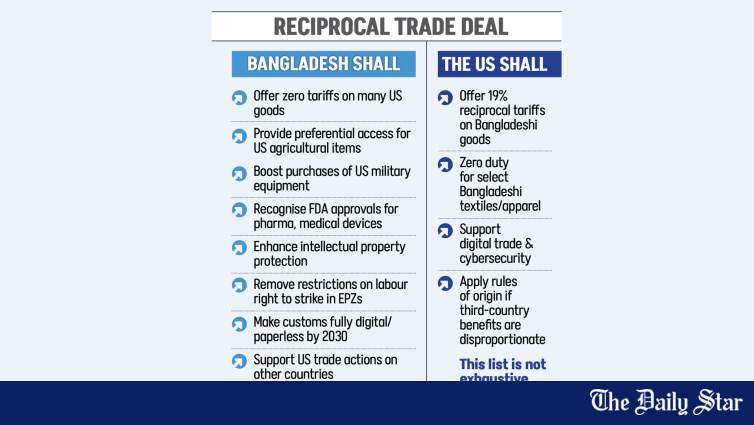
Dhaka, August 3, 2026 — Bangladesh has signed a sweeping Agreement on Reciprocal Trade with the United States, securing a marginal tariff reduction from 20% to 19% while committing to $15 billion in energy purchases and significant policy concessions across defence, labour, and digital infrastructure. The agreement, signed on February 9 and published by the USTR as a 32-page document, goes far beyond standard tariff negotiations, creating a binding framework that integrates Bangladesh's defence procurement, energy imports, trade policy, and digital infrastructure into the US strategic sphere.
The signing marks the first agreement of its kind in South Asia. US Trade Representative Jamieson Greer said it "marks a meaningful step forward in opening markets, addressing trade barriers, and creating new opportunities for American exporters."
📋 Deal Structure: What Bangladesh Gives, What It Gets
The US has cut its reciprocal tariff on Bangladeshi exports to 19 percent from 20 percent. The US will grant duty-free or preferential access to approximately 2,500 Bangladeshi products, while Dhaka will open its market to around 4,400 American goods on similar terms. The list includes US chemicals, medical devices, machinery, motor vehicles and parts, ICT equipment, beef, poultry, tree nuts, and fruit.
✅ What Bangladesh receives:
- Reciprocal tariff reduced from 20% to 19%
- Duty-free or preferential access for approximately 2,500 Bangladeshi products in the US market
- US commitment to "streamline and enhance defence trade" with Bangladesh
- Automatic acceptance of US FDA certifications for medical products (no more local testing delays)
⚠️ What Bangladesh commits to:
- Purchase $15 billion in US energy commodities (including LNG) over 15 years
- Import at least $3.5 billion in US agricultural products (wheat, soybean, cotton)
- Biman Bangladesh Airlines to purchase 14 Boeing aircraft, shifting away from Airbus
- Open market to approximately 4,400 American goods on preferential terms
- Zero duty on numerous US items, with 50% duty cuts on others phased over 5-10 years
- Accept US FDA certifications automatically — no more local testing for US medical products
🏛️ Defence and Geopolitical Constraints
The agreement mandates that Bangladesh "shall endeavour to increase purchases of US military equipment" while simultaneously limiting procurement from "certain countries" — a thinly veiled reference to Chinese suppliers. The deal prohibits Bangladesh from purchasing nuclear reactors, fuel rods, or enriched uranium from any country that "jeopardises essential US interests," effectively vetoing future nuclear cooperation with Russia or China.
Under Article 4.3, if Bangladesh enters into a free trade or preferential economic agreement with a "non-market country" (US regulatory term for China and Russia), the US can terminate the entire deal and reimpose punitive tariffs. The agreement also requires Bangladesh to adopt "complementary restrictive measures" if the US implements trade actions for national security, obliging Dhaka to automatically align with US sanctions and trade wars, removing its ability to remain neutral in great power conflicts.
👥 Labour Reforms and EPZ Integration
Bangladesh must remove restrictions on the right to strike, increase fines for anti-union discrimination, and within two years, bring its Export Processing Zones (EPZs) — vital to the garment industry — under the jurisdiction of general labour law, ending their special regulatory status. This requirement directly impacts the RMG sector, which relies heavily on EPZ manufacturing facilities that have operated under separate regulatory frameworks for decades.
🖥️ Digital Infrastructure and Data Sharing
Bangladesh is required to use "digital logistics platforms" for ports, terminals, and shipping that are cyber-secure and specifically designed to block "other foreign governments" from accessing data. The country must also establish measures to restrict unauthorised transfer of US-origin items subject to Export Administration Regulations (EAR) and "screen and share" customs transaction data with Washington, effectively granting the US oversight of Bangladesh's trade flows.
💰 Expert Reactions and Economic Implications
Mustafizur Rahman, distinguished fellow at the Centre for Policy Dialogue (CPD), described the agreement as "an imposed agreement done through the total weaponisation of trade," noting that the US had attached conditions to tariff reductions that were "originally imposed unjustly." He warned of "significant revenue implications" as Bangladesh must offer zero duty on numerous US items and slash duties on others.
"We are just two days away from the national election. My point is, why do they have to rush to sign an agreement that the elected government will have to implement? I don't understand the rationale," Mustafizur said. "Couldn't we request the US to wait for a couple of days so that a democratically elected government could review and finalise the deal?"
Selim Raihan, executive director of the South Asian Network on Economic Modeling and a Dhaka University professor, argued that the agreement is heavily skewed, imposing a far longer list of obligations on Bangladesh than on the US. He questioned the plan to purchase 14 Boeing jets: "Our national debt has already increased significantly. If we now have to take on additional debt to purchase Boeing aircraft and cannot reap corresponding commercial benefits, that will put further pressure on us."
Selim warned that the deal sets a risky geopolitical precedent: "I am concerned about the kind of pressure we will have to face as a result of the commitments we have made in this agreement." He questioned how the country would cope if other nations were to apply similar pressure to extract comparable benefits.
📊 Strategic Context
The trade deal represents the first agreement of its kind in South Asia. While it provides marginal tariff relief for Bangladesh's $47 billion garment export industry, the binding commitments on defence procurement, energy purchases, labour reform, and digital infrastructure create long-term constraints on Dhaka's economic sovereignty. The agreement takes effect immediately, with implementation deadlines ranging from 50% duty cuts on day one to full EPZ labour law integration within two years. The incoming elected government will inherit these obligations with limited room for renegotiation.
This news was originally published by The Daily Star. For the full original report, please visit: https://www.thedailystar.net/business/news/us-tariff-cut-comes-steep-cost-4103381
📬 Get Bangladesh Trade News in your inbox
Weekly digest of export industry news, policy updates, and market analysis.
📰 Related Stories