Restoring Bangladesh's Export Edge: Strategic Path Forward
RMG industry must innovate, diversify, and address structural challenges to regain competitive advantage

Dhaka, July 27, 2026 — The RMG industry remains the backbone of Bangladesh exports, accounting for around 84-85 percent of export earnings and employing more than four million people, most of them women. It has transformed Bangladesh into the world's second largest apparel exporter after China, helping reduce poverty, generate foreign exchange, and drive industrialisation. Yet this reliance on a single sector has created a structural weakness that is becoming increasingly apparent.
📊 The Export Slowdown: Global and Domestic Pressures
As global competition intensifies and consumer demand shifts, Bangladesh has become increasingly exposed to external shocks. The recent export slowdown reflects both global and domestic pressures:
- 🌏 Weak consumer demand in the United States and Europe, driven by high inflation, rising interest rates, and slower economic growth
- ⛽ Power and gas shortages at home, eroding production capacity
- 💲 Rising production and transport costs reducing competitiveness
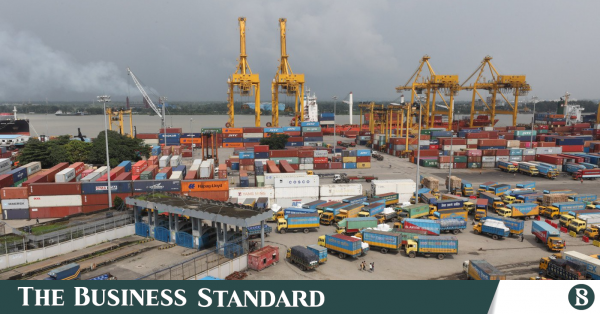
- 🚢 Port congestion and customs delays slowing export shipments
- 🏛️ LDC graduation will gradually reduce preferential market access
- 👕 Higher ESG standards demanded by global buyers
🔧 Limited Progress in Export Diversification
Bangladesh has also made limited progress in diversifying exports. Pharmaceuticals, leather goods, agro-processing, information technology, and light engineering have shown promise but still account for only a small share of exports. The country remains heavily dependent on RMG, which creates vulnerability to sector-specific shocks and limits overall export growth potential.
📊 Regional Competitors: A Striking Contrast
The contrast with regional competitors is striking:
- 🇻🇳 Vietnam: Expanded exports from $14.5 billion in 2000 to more than $429 billion in 2024 by building strengths in electronics, machinery, and agricultural products alongside garments. Receives around $38 billion in annual FDI, supported by efficient infrastructure and strong global supply chains. Has concluded more than 15 major free trade agreements.
- 🇮🇳 India: Diversified into engineering goods, pharmaceuticals, chemicals, automobiles, electronics, and digital services.
- 🇮🇩 Indonesia: Built competitive value-added industries around minerals and manufacturing.
- 🇰🇭 Cambodia: Steadily expanded exports of garments, footwear, and travel goods.
Bangladesh, by comparison, has attracted relatively little export-oriented investment beyond garments. Trade policy has widened the gap further, as Bangladesh still depends largely on trade preferences linked to LDC status rather than proactive FTA negotiations. Weak logistics, high transport costs, and unreliable energy supplies also continue to undermine competitiveness.
🔧 Strategic Priorities for Restoration
Reviving export growth requires a comprehensive strategy across multiple dimensions:
👕 1. Export Diversification as National Priority
Greater support for pharmaceuticals, electronics, medical devices, agro-processing, shipbuilding, and light engineering through better access to finance, research, and innovation. The target should be increasing non-RMG export share from current 15-20% to 35-40% within 5 years.
🛢️ 2. Infrastructure Modernisation
Modernising Chattogram and Mongla ports, improving transport networks, ensuring reliable electricity and gas supplies, and digitising customs would lower costs and improve efficiency. These are foundational requirements for any export growth strategy.
💻 3. Skills, Technology, and Innovation
Greater investment in technical education, automation, and advanced manufacturing would help Bangladesh compete through productivity and innovation rather than low labour costs alone. The global apparel industry is moving toward Industry 4.0, and Bangladesh must keep pace.
🌏 4. Proactive Economic Diplomacy
Bangladesh should pursue comprehensive trade agreements with the European Union, the United Kingdom, China, Japan, ASEAN, and the Gulf Cooperation Council while expanding exports to Africa, Latin America, and the Middle East. A more predictable business environment and policies that attract export-oriented foreign investment are essential.
📋 The Path Forward
Bangladesh has reached a pivotal stage in its economic development. Diversification, better infrastructure, investment in skills and innovation, and stronger trade diplomacy are now essential. With its young workforce, manufacturing experience, and strategic location, Bangladesh has the potential to regain momentum and build a more resilient, competitive, and diversified export economy.
The writer is Vice Chairman of Newage Group of Industries, reflecting on the strategic challenges and opportunities facing Bangladesh's export sector at this critical juncture in the country's economic development.
💰 Investment Climate and Foreign Direct Investment
Attracting export-oriented foreign direct investment is critical for technology transfer, market access, and skills development. Vietnam's success in attracting $38 billion in annual FDI demonstrates what is possible with the right policy environment. Bangladesh must streamline investment approval processes, provide one-stop services for foreign investors, ensure consistent policy implementation, and create special economic zones with world-class infrastructure to attract manufacturers beyond the garment sector.
The government's Economic Zone development programme, overseen by BEZA, aims to establish 100 economic zones across the country. However, progress has been slower than anticipated, and many zones lack the infrastructure and utility connections needed to attract premium investors. Accelerating zone development, particularly in sectors like electronics, pharmaceuticals, and light engineering, could help Bangladesh replicate Vietnam's success in diversifying its export base.
Furthermore, Bangladesh must address its energy security challenge as a foundational requirement. Without reliable gas and electricity supply, no amount of trade policy reform or infrastructure investment will be sufficient to restore export competitiveness. The government must prioritise both short-term measures (LNG imports, rental power plants) and long-term solutions (domestic gas exploration, renewable energy, regional energy cooperation) to ensure that export industries can operate at full capacity.
The window for action is narrowing. With LDC graduation approaching and global competition intensifying, Bangladesh cannot afford to maintain the status quo. The time for strategic transformation is now — not through incremental adjustments, but through bold, coordinated action across government, industry, and development partners.
This news was originally published by The Daily Star. For the full original report, please visit: https://www.thedailystar.net/business/column/news/restoring-bangladeshs-export-edge-4233211
Related on BangladeshExport
📬 Get Bangladesh Trade News in your inbox
Weekly digest of export industry news, policy updates, and market analysis.
📰 Related Stories