PM Tarique Targets Semiconductor as Bangladesh's Next Growth Engine After RMG
National Semiconductor Symposium and BEAR Summit 2026 brings global chipmakers, policymakers, and Bangladeshi diaspora experts to Dhaka
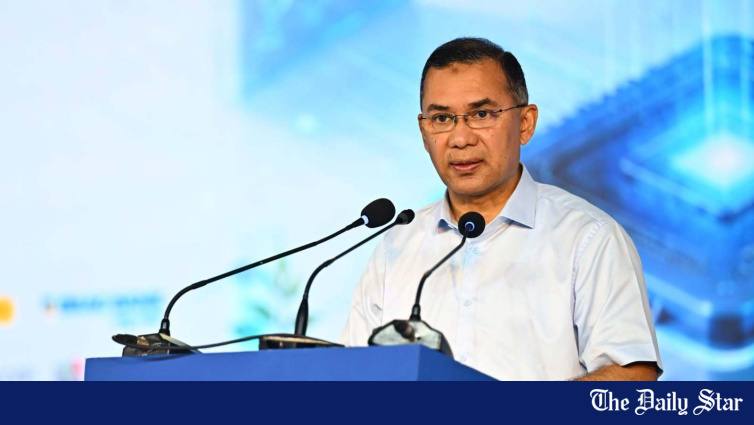
Dhaka, July 25, 2026 — Prime Minister Tarique Rahman on Saturday inaugurated the two-day National Semiconductor Symposium and BEAR Summit 2026 at the Bangabandhu Sheikh Mujibur Rahman Novo Theatre in Dhaka, declaring the semiconductor industry as Bangladesh's next major economic growth engine after readymade garments (RMG). 🚀
💡 The high-profile summit, jointly organised by the Bangladesh Semiconductor Industry Association (BSIA), the Ministry of Science and Technology, and the Silicon River Bangladesh programme, has brought together global chipmakers, policymakers, researchers, and Bangladeshi expatriate technologists under one roof — a first-of-its-kind gathering aimed at positioning the country on the global deep-tech map.
🏗️ PM's Vision: Semiconductors as the Next RMG
Speaking at the inaugural ceremony, the Prime Minister framed the semiconductor push as a strategic economic pivot, pointing to the growing global chip market and Bangladesh's need to diversify beyond apparel exports.
📉 Key statements from the Prime Minister's address:
- 🔧 "Next promising economic sector after RMG" — The government has begun implementing comprehensive plans to build a business-friendly ecosystem for semiconductor design, testing, and packaging.
- 💰 Tax and duty waivers — All taxes and duties on raw materials for the semiconductor industry have been withdrawn in the current budget.
- 💵 Export cash incentives — Steps have been taken to introduce cash incentives on export earnings from semiconductor design services.
- 🎯 Startup grants — For the first time, the government has allocated Tk 5 crore annually as startup grants to support new innovations in deep tech.
- 🏭 Bonded facility access — Tax-free bonded facilities and specialised infrastructure are being lined up to attract local and foreign investment.
- 🌐 New biotech park — A new biotech park will be established alongside the modernisation of existing high-tech parks.
🌍 $1 Trillion Global Market Opportunity
📊 The Prime Minister highlighted that the global semiconductor market is projected to reach nearly $1 trillion by 2026, and Bangladesh is positioning itself to capture a meaningful slice of that opportunity. He described semiconductors as the "foundation of modern civilisation" in the era of the Fourth and Fifth Industrial Revolutions, with chips now embedded in artificial intelligence, robotics, data centres, renewable energy systems, medical equipment, mobile phones, and satellites.
🤝 The summit's theme — "Building Bangladesh's Semiconductor Future Through Global Partnerships" — signals Dhaka's intent to leverage international collaboration rather than go it alone. The PM stressed that building a competitive semiconductor industry requires the combined effort of government, universities, research institutions, entrepreneurs, industrialists, and expatriate Bangladeshi experts working at global tech firms.
📅 Two-Day Summit Structure
The summit, held on July 25-26, 2026, features a packed agenda spanning plenary sessions, seven strategic panel discussions, and a research symposium on the second day.
📋 Day 1 highlights:
- 🏛️ Inaugural session — Addresses by Posts, Telecommunications and IT Minister Faqir Mahbub Anam, PM's ICT Adviser Rehan Asif Asad, BSIA President M A Jabbar, and Science and Technology Secretary M Anwar Hossain.
- 🎓 Keynote address — Delivered by Dr Muhammad Mustafa Hussain, Professor of Electrical and Computer Engineering at Purdue University and chief architect of the Silicon River Bangladesh programme.
- 🎤 Plenary sessions — Featuring Dr Ahmed Bahai, Chief Technology Officer of Texas Instruments, and Prof Dimitrios Peroulis, Senior Vice President of Purdue University.
- 🤝 Global players present — Representatives from GlobalFoundries, NXP, Applied Materials, SanDisk, Credo, and the Vietnam Semiconductor Alliance and Partnership are participating.
📋 Day 2 — CREST Fellows Research Symposium:
- 🔬 Themed "Bangladesh's Deep-Tech Future", showcasing research by emerging Bangladeshi semiconductor researchers.
- 📚 Designed as a knowledge-exchange platform between academia and industry.
- 💡 Seven strategic panel discussions cover workforce development, ecosystem strengthening, global partnerships, research and innovation, manufacturing capabilities, commercialisation, and emerging deep-tech technologies.
📄 Eight Strategic Documents to Be Unveiled
One of the most consequential outcomes of the summit is the planned release of eight strategic national documents during the closing ceremony on July 26. These are intended to provide a long-term implementation framework for government policymaking, industrial investment, workforce development, research, commercialisation, and international partnerships.
📚 The eight documents are:
- 📘 National Semiconductor Symposium 2026 Recommendations
- 👥 Bangladesh Semiconductor Talent Roadmap 2030
- 🔗 Bangladesh Semiconductor Ecosystem Roadmap
- 🌐 Bangladesh International Partnership Framework
- 🎯 Bangladesh Deep-Tech Priority Sectors
- 💼 Bangladesh Deep-Tech Commercialisation Framework
- 🧠 BrainGain 2.0 Framework
- 🔬 CREST Research Development Framework
🏭 Innovation Expo 2026 — Showcasing Student and Startup Talent
Alongside the symposium, the Prime Minister also inaugurated Innovation Expo 2026, an exhibition of innovations in semiconductors, artificial intelligence, robotics, healthcare technology, intelligent systems, and other deep-tech sectors developed by students and startup entrepreneurs. 🎯
The PM toured the exhibition booths, interacted with innovators, and joined a photo session with local and foreign delegates — a gesture that BSIA leaders said would send a strong signal to young technologists that the highest level of government is backing their work.
🏭 Existing Semiconductor Foundation
Bangladesh's semiconductor journey is not starting from zero. Domestic firms such as Neural Semiconductor, launched by DBL Group in 2017, have grown from 20 engineers to more than 200, with plans to double the engineering workforce again. The company primarily focuses on physical design, analogue design, layout, and RF engineering, serving mainly American and Taiwanese clients.
📈 Several other home-grown design houses have emerged in recent years, and Bangladeshi engineers are already working at global semiconductor leaders including Intel, AMD, NVIDIA, and Qualcomm. The summit aims to channel this diaspora expertise back into the domestic ecosystem.
⚠️ Challenges Acknowledged
The Prime Minister was candid about the road ahead, acknowledging skill shortages and intense global competition in the semiconductor space. However, he expressed confidence that Bangladesh's young, talented workforce and innovative capacity would help the country achieve its ambitions.
🎯 The government's approach combines:
- 📚 Talent development through university partnerships and the CREST Fellows programme
- 🏗️ Infrastructure investment in high-tech parks and bonded facilities
- 💵 Financial incentives including tax waivers, cash incentives, and startup grants
- 🌐 International partnerships with global semiconductor leaders and academic institutions
- 🧠 Diaspora engagement through the BrainGain 2.0 framework
🔍 Why This Matters for Bangladesh's Export Economy
Bangladesh's export basket is heavily concentrated in RMG, which accounts for more than 80% of merchandise shipments. This concentration has long been flagged as a vulnerability by economists and trade bodies. The semiconductor push represents the most serious diversification attempt in decades.
📦 If even a fraction of the $1 trillion global semiconductor market can be captured, it would:
- 📈 Reduce dependence on a single export sector
- 💼 Create high-skilled, high-paying jobs for Bangladeshi engineers
- 🎓 Reverse the brain drain by attracting diaspora talent back home
- 🔬 Spur ancillary industries in electronics manufacturing, AI, and robotics
- 💰 Boost forex earnings from services exports (not just goods)
The summit concludes on July 26 with the formal unveiling of the eight strategic documents, which will then guide Bangladesh's semiconductor policy roadmap through 2030 and beyond.
This news was originally published by The Daily Star. For the full original report, please visit: https://www.thedailystar.net/news/bangladesh/news/semiconductor-industry-can-be-bangladeshs-next-growth-engine-after-rmg-pm-4231996
Related on BangladeshExport
📬 Get Bangladesh Trade News in your inbox
Weekly digest of export industry news, policy updates, and market analysis.
📰 Related Stories