FM Khosru: Revenue Reforms to Help Bangladesh Fund Development From Domestic Resources
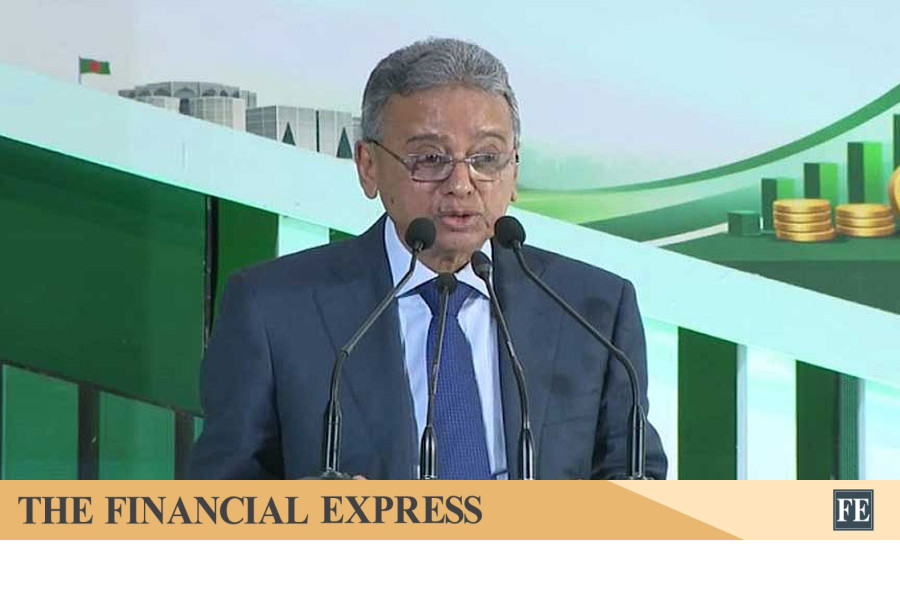
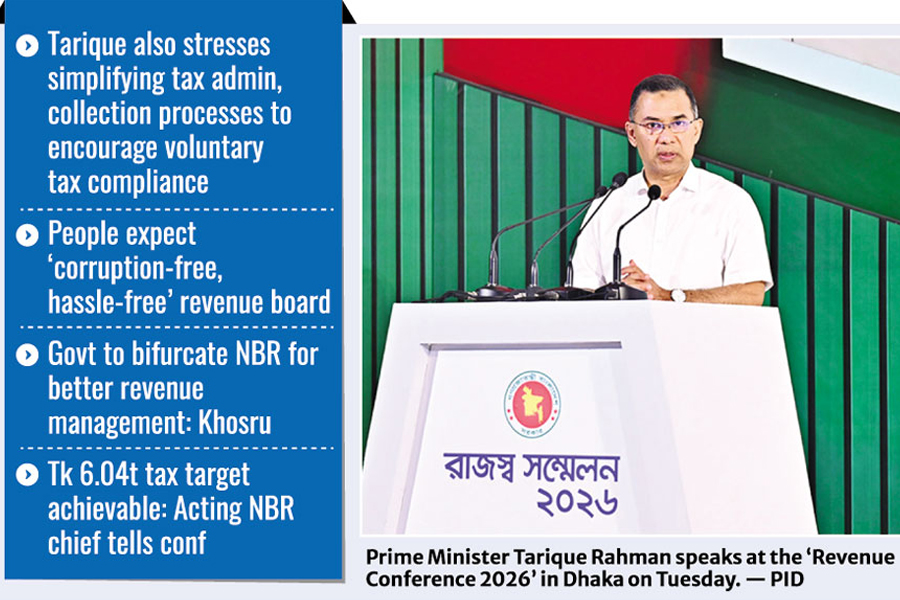
Dhaka, August 18, 2026 — Finance and Planning Minister Amir Khosru Mahmud Chowdhury on Tuesday declared that Bangladesh is moving towards financing its development with its own resources instead of relying on loans — inaugurating the Revenue Conference 2026 at the Bangladesh-China Friendship Conference Centre in Dhaka alongside Prime Minister Tarique Rahman. Bold revenue reforms are being pursued under the PM's leadership, laying the foundation for a modern, cashless, and contact-free revenue system that the minister said would enable Bangladesh to build a trillion-dollar economy by 2034.
📊 Key Targets Announced
- 💰 Tk 6 trillion — FY27 revenue collection target (government's most important task)
- 🌐 Middle-income country — by 2029 (graduation challenge to be overcome)
- 💰 $1 trillion economy — target by 2034
- 💻 Modern, cashless, contact-free revenue system — vision for the NBR
- 🤝 "Sacred duty" — elected government's obligation to fulfil people's aspirations
🏛 "Bangladesh Will No Longer Remain a Country Dependent on Loans"
Khosru's declaration that "Bangladesh will no longer remain a country dependent on loans. God willing, it is now moving towards development through its own financing" marks a significant rhetorical shift in Bangladesh's economic policy stance. For decades, the country has relied heavily on external development financing — including concessional loans from the World Bank, ADB, JICA, AIIB, and bilateral development partners — to fund its Annual Development Programme (ADP). The minister's statement signals the government's intention to reverse this dependency through domestic revenue mobilisation, even as it continues to engage development partners on specific projects.
The shift is ambitious. Bangladesh's current tax-to-GDP ratio is roughly 7–8 percent — one of the lowest in the lower-middle-income country group. To finance the country's infrastructure, education, healthcare, and social protection needs from domestic resources, the tax-to-GDP ratio would need to rise to at least 15–18 percent over the medium term — requiring sustained revenue mobilisation growth of 12–15 percent annually for several years. The Tk 6 trillion FY27 target represents a meaningful step in this direction, but it is only the beginning of what would need to be a multi-year, multi-decade revenue mobilisation strategy.
💻 Modern, Cashless, Contact-Free Revenue System
The minister's vision for a "modern, cashless, and contact-free revenue system" reflects the government's commitment to digital transformation of tax administration. This vision has several components:
- 📱 Cashless transactions — shifting tax payments to digital channels (mobile financial services, electronic fund transfers, real-time gross settlement)
- 💻 Contact-free administration — minimising face-to-face interactions between taxpayers and tax officials to reduce corruption and harassment
- 🧵 Digital audit and assessment — using data analytics to identify discrepancies and target enforcement
- 📊 Data-driven tax net expansion — leveraging bank transaction data, property records, vehicle registrations, and other digital footprints to identify non-filers
- 🤝 Integrated tax information system — connecting income tax, VAT, and customs data for comprehensive taxpayer profiling
- 🌐 Online taxpayer services — e-filing, e-payment, online registration, and digital TIN
For Bangladesh's business community, a cashless, contact-free revenue system would represent a meaningful improvement in the ease of doing business — reducing the time, cost, and uncertainty associated with tax compliance. The challenge will be implementation: building the digital infrastructure, training NBR officials to use data analytics effectively, ensuring data security and privacy, and convincing taxpayers that the new system is genuinely contact-free rather than just a new channel for the same enforcement practices.
💰 The Tk 6 Trillion Revenue Target
Khosru described achieving the Tk 6 trillion revenue collection target as the government's most important task — saying it would help build the "prosperous Bangladesh" envisioned by Prime Minister Tarique Rahman. The target, also referenced by Acting NBR Chairman Ahsan Habib at the same conference, represents a meaningful step up from FY26's actual collection (which grew 12 percent YoY). Achieving it will require:
- 👥 Tax net expansion — bringing eligible non-filers into the formal tax system
- 📜 Compliance simplification — reducing the burden on existing compliant taxpayers
- 💰 VAT efficiency — improving VAT collection without creating business obstacles
- 📈 Digital transformation — deploying data analytics and AI for enforcement
- 🤝 Anti-evasion measures — targeting persistent tax evaders while protecting honest taxpayers
🌐 Bangladesh's Post-LDC Vision: Middle-Income by 2029, Trillion-Dollar by 2034
Finance Minister Khosru expressed confidence that Bangladesh would overcome the challenge of graduating to a middle-income country by 2029 and build a trillion-dollar economy by 2034. These milestones align with the country's broader development trajectory:
- 📅 November 2026 — LDC graduation
- 📅 2029 — middle-income country graduation
- 📅 2031 — GED five-year plan target of 8.5 percent GDP growth
- 📅 2034 — trillion-dollar economy target
For perspective, Bangladesh's current GDP is roughly $450 billion (FY26 estimate). Achieving a trillion-dollar economy by 2034 would require roughly doubling GDP in eight years — implying sustained annual growth of 9–10 percent in nominal USD terms. With inflation running at 8–10 percent and the taka having depreciated against the dollar in recent years, this is an ambitious target that will require sustained real GDP growth of 7–8 percent, stable inflation, and a stable exchange rate.
🤝 Call to Businesses: Pay Taxes and VAT on Time
Addressing the business community, Khosru described businesses as the "driving force of the economy" — saying development is impossible without investment and job creation. He pledged continued government support while urging businesses to help meet the revenue target by paying taxes and VAT on time. The call is significant: it acknowledges that revenue mobilisation cannot be achieved by enforcement alone — it requires voluntary compliance from the business community, supported by a tax administration that is fair, predictable, and respectful of compliant taxpayers.
While acknowledging business complaints over administrative complexity and officials' behaviour, Khosru said measures are being taken to address them. But he called for strict enforcement against persistent tax evaders to protect honest taxpayers and ensure a level playing field — a critical message that the government will not tolerate continued evasion by those who refuse to comply even after being given opportunities to do so.
📜 Accountability Among Revenue Officials
Khosru stressed accountability among revenue officials, saying taxpayers must be treated impartially and respectfully. His most pointed comment was: "Harassing an honest taxpayer and giving undue benefits to a dishonest taxpayer are equally unacceptable." This dual accountability message — against both tax evasion and official harassment — is critical for building trust in the tax administration. For too long, the perception of the NBR has been shaped by stories of corrupt officials harassing honest taxpayers while giving preferential treatment to politically connected evaders. Khosru's comments signal that the government intends to address both sides of this problem.
The conference was jointly organised by the Finance Ministry's Internal Resources Division and the National Board of Revenue — a structural detail that takes on added significance given the government's announced plan to separate the NBR into two divisions (policy and administration). The joint organisation of the conference by IRD and NBR suggests the two are already working closely together in preparation for the eventual separation.
🌐 Strategic Significance for Bangladesh's Economy
For Bangladesh's broader economy, Finance Minister Khosru's remarks at the Revenue Conference 2026 set out an ambitious medium-term fiscal reform agenda with significant implications for the country's economic trajectory:
- 💰 Fiscal independence — reduced reliance on external financing for development
- 🤝 Investor confidence — predictable, broad-based tax system more attractive to investors
- 💼 Business environment — reduced compliance burden and harassment for businesses
- 🌐 Post-LDC readiness — domestic revenue mobilisation critical as LDC-specific flexibilities phase out
- 📊 Macroeconomic stability — higher revenue reduces fiscal deficits and borrowing requirements
- 💰 Investment capacity — more fiscal space for trade-enabling infrastructure investment
For the BNP government's broader reform agenda, Khosru's remarks at the Revenue Conference represent a coherent integration of fiscal, monetary, banking sector, and trade-policy reforms — anchored in the PM's directive on tax net expansion (separately announced at the same conference) and supported by the planned NBR separation into two divisions. The government's vision is ambitious: transform Bangladesh from a low-revenue, loan-dependent economy into a self-financing middle-income country by 2029 with a trillion-dollar economy by 2034. Achieving this vision will require sustained implementation discipline across multiple reform tracks — capital machinery investment recovery, energy sector stabilisation, banking sector clean-up, export diversification, and (centrally) revenue mobilisation. The Tk 6 trillion FY27 target is the first concrete test of whether the government can translate this ambition into measurable fiscal outcomes — and the next 12 months will reveal whether the BNP government's first year in office can deliver the foundation for the multi-decade transformation Khosru has articulated.
This news was originally published by The Financial Express. For the full original report, please visit: https://thefinancialexpress.com.bd/economy/revenue-reforms-to-help-bangladesh-fund-development-from-domestic-resources-says-khosru
Related on BangladeshExport
📬 Get Bangladesh Trade News in your inbox
Weekly digest of export industry news, policy updates, and market analysis.
📰 Related Stories