BKMEA and Swaniti Initiative Explore Regional Alliance to Decarbonize South Asian Apparel
Bangladesh knitwear body discusses Indo-Bangla Textile Decarbonization Platform with Indian sustainability NGO to scale cross-border green industry collaboration
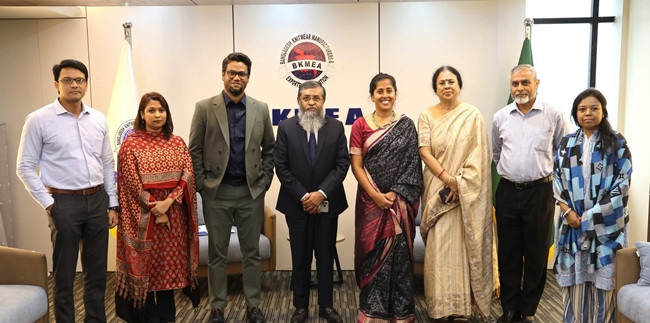
The Bangladesh Knitwear Manufacturers and Exporters Association (BKMEA) has held a strategic meeting with India's Swaniti Initiative to discuss a proposed Indo-Bangla Textile Decarbonization Platform aimed at accelerating apparel sector decarbonization across South Asia.
A South Asian Decarbonization Platform
The Bangladesh Knitwear Manufacturers and Exporters Association (BKMEA) held a strategic meeting with the Swaniti Initiative — an Indian sustainability and public policy NGO — to discuss advancing sustainability and decarbonization across South Asia's apparel sector. The discussion explored the proposed establishment of a South Asia-focused regional platform, tentatively titled the Indo-Bangla Textile Decarbonization Platform, which would bring together industry associations, technology providers, and policymakers from both countries.
Knowledge Exchange and Bankable Green Projects
The proposed alliance would facilitate peer-to-peer knowledge exchange among industry associations, support the development of bankable green projects, and create a regional framework for tracking and verifying emissions reductions. By sharing best practices in renewable energy adoption, energy-efficient machinery, water recycling, and sustainable fibre sourcing, the platform aims to accelerate decarbonization at a pace that no single country could achieve alone.
Leadership and Participation
The meeting was led by Mohammad Hatem, President of BKMEA, with Minhazul Haque, Director of BKMEA, and senior representatives from the BKMEA Secretariat in attendance. Representing the Swaniti Initiative were Rwitwika Bhanna, CEO, and Uma Bhattacharya, Trustee. The presence of senior leadership from both organisations signalled a serious intent to move beyond dialogue toward concrete collaborative action.
Why Regional Collaboration Matters
Bangladesh and India together account for a substantial share of global apparel production, and both countries face similar decarbonization challenges — fossil-fuel-dependent grids, ageing machinery in SME factories, fragmented supply chains, and limited access to green finance. A regional platform could unlock economies of scale in technology procurement, harmonise sustainability reporting standards, and create a larger pool of bankable green projects attractive to international climate finance providers.
Strategic Context
The initiative comes at a critical moment. The EU's Carbon Border Adjustment Mechanism (CBAM) is expected to extend to apparel imports in the coming years, imposing a carbon price on Bangladesh's exports to its largest market. A regional decarbonization platform could help Bangladesh and India jointly develop the MRV (measurement, reporting, and verification) infrastructure needed to demonstrate compliance — and to access the lower-carbon premium that EU buyers are increasingly willing to pay.
Looking Forward
Participants reaffirmed their shared commitment to building a more sustainable, resilient, and globally competitive apparel industry through regional cooperation. The next steps include a joint feasibility study, the formation of a working group with representatives from both sides, and the development of a pilot project that could demonstrate the platform's value to potential funders and industry stakeholders.
This news was originally published by Textile Today. For the full original report, please visit: https://textiletoday.com.bd/bkmea-swaniti-initiative-discuss-regional-alliance-to-accelerate-apparel-decarbonization
Related on BangladeshExport
📬 Get Bangladesh Trade News in your inbox
Weekly digest of export industry news, policy updates, and market analysis.
📰 Related Stories