Bangladesh's Spinning Industry at Crossroads: Policy Decisions Today Will Shape Future
Editorial analysis warns temporary profitability boost from Indian yarn demand is not a recovery; Vietnam's Central Bonded Fibre Warehouse and US cotton financing give competitors a 65% sourcing edge
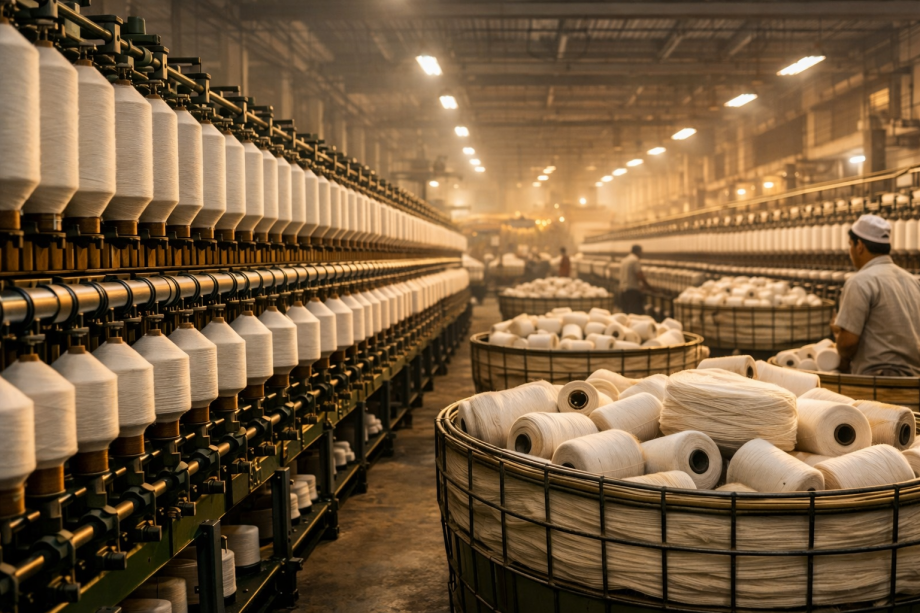
Dhaka, July 24, 2026 — Bangladesh's spinning industry, the backbone of the country's export-oriented textile and apparel sector, has witnessed a slight improvement in profitability over the past few months. However, industry analysts are sounding a clear warning: this temporary relief should not be mistaken for long-term recovery. The current market situation is largely driven by external factors rather than improvements in the competitiveness of local spinning mills. 🧵
⚠️ Without timely policy interventions and strategic investments, many spinning mills may continue to struggle for survival, according to a detailed editorial published in Textile Today by industry expert Sanjoy Kumar Saha.
📊 Why Profitability Has Improved — And Why It Won't Last
The recent improvement in yarn prices is primarily the result of increased domestic demand in India and stronger yarn consumption from China. Furthermore, India's expanding trade relationships with Europe have diverted a significant portion of its yarn production to its own textile industry and export markets. 🇮🇳
📋 Consequence for Bangladesh:
- 📉 Bangladeshi knitwear manufacturers found it difficult to import lower-priced Indian yarn
- 📈 Local spinning mills saw increased demand and better prices
- ⏳ But this situation is unlikely to remain unchanged — India could redirect yarn back to export markets at any time
💬 The editorial stresses that the current boost is a temporary windfall, not a structural improvement. Once India's domestic demand normalises or its trade flows shift again, Bangladeshi mills could find themselves back in a competitive squeeze.
🌐 Lessons from Regional Competitors — Vietnam's Strategic Advantage
Bangladesh's major competitors — India and Vietnam — continue to strengthen their textile supply chains through supportive government policies. Vietnam, in particular, enjoys significant advantages that Bangladesh has yet to replicate:
🏭 Vietnam's Central Bonded Fibre Warehouse
Vietnam operates a Central Bonded Fibre Warehouse that enables spinning mills to source raw materials more efficiently. This single piece of infrastructure gives Vietnamese mills a major competitive edge in raw material procurement, inventory management, and working capital optimisation.
🇺🇸 Vietnam's US Cotton Advantage
Even more striking is Vietnam's cotton sourcing strategy:
- 📦 Vietnam imports over 65% of its cotton from the United States
- 💰 Financing arrangements: Approximately one-year deferred payments at interest rates as low as 0.5%
- 📉 Result: Significantly reduced fibre costs and improved cash flow
- ⚙️ Operational benefits: Higher spinning productivity, lower wastage, improved efficiency throughout the downstream processing chain
🚨 Unfortunately, Bangladesh has yet to conduct comprehensive comparative studies on the productivity and cost advantages of U.S. cotton over other cotton origins. Such research is essential for making informed sourcing decisions and improving industry competitiveness.
🏦 Financial Distress in the Spinning Sector
The financial condition of many spinning mills remains alarming. The editorial paints a grim picture:
- 🏭 Numerous mills have already ceased operations
- 💸 Many others continue to operate under severe financial stress
- 📈 High commercial lending rates: Currently around 15%, substantially increasing production costs
- 💰 Working capital constraints: Limiting ability to purchase raw materials at competitive prices
📋 Policy Recommendations — What the Government Should Do
The editorial outlines a comprehensive set of policy interventions needed to ensure the long-term sustainability of Bangladesh's spinning industry:
🏛️ Immediate Financial Relief
- 💰 Interest support of 2-3% — To reduce the burden of borrowing at 15% commercial rates
- 📈 Export incentives for local yarn usage: Increase to 5-7% (note: government has already raised this to 5% as of July 12)
- 🏭 Prioritise operational spinning mills when distributing industry funds — ensure viable businesses receive the assistance they need
🏗️ Strategic Infrastructure
- 🏭 Activate a Central Bonded Fibre Warehouse — Should become a national priority, mirroring Vietnam's successful model
- 📚 Comparative studies on U.S. cotton — Research productivity and cost advantages over other cotton origins
⚡ Energy Efficiency and Green Transition
The next phase of support should focus on reducing energy costs through technology upgradation:
- 💚 Dedicated green financing for renewable energy installations
- ☀️ Solar potential: A modern 50,000-spindle spinning mill typically requires around 3.5 MW of electricity, and nearly one-third of this demand can be generated through solar or other renewable energy systems
- 📅 Payback period: Only 2.5 to 3 years for solar investments
- 📉 Result: Significantly reduced production costs while advancing sustainability goals
🔧 Generator Modernisation
- 🔄 Replace first-generation gas generators with fourth-generation high-efficiency generators — Major energy cost savings
- ⛽ Reduce gas consumption — Critical given ongoing gas supply constraints
🎯 Why This Matters for Bangladesh's Export Economy
Bangladesh's spinning industry is not just another manufacturing sector — it is the critical backward linkage for the country's USD 47 billion RMG export industry. The numbers tell the story:
- 🏭 527 spinning mills in operation (per BTMA)
- 🧶 80% of knitwear yarn supplied locally
- 👕 Nearly 40% of woven garment yarn supplied locally
- 💰 USD 23 billion in total sector investment
📦 If the spinning sector collapses, Bangladesh's RMG industry would become entirely dependent on imported yarn — primarily from India and China. This would:
- 💸 Erode export margins — Higher raw material costs
- 📅 Create supply chain vulnerability — Dependent on foreign yarn supply
- 🌍 Reduce competitive advantage — Against Vietnam, which has built a fully integrated supply chain
- 💼 Risk hundreds of thousands of jobs — Across spinning mills and their supply chains
🔍 The Way Forward — A Call to Action
The editorial concludes with a clear message: Bangladesh's spinning industry stands at a crossroads. The temporary profitability boost from external factors provides a window of opportunity — but only if the government uses this time to implement structural reforms.
🎯 Priority actions:
- 🏛️ Establish Central Bonded Fibre Warehouse — National priority, mirroring Vietnam
- 💰 Reduce interest rates for spinning mills — 2-3% interest support
- 📈 Maintain and expand export incentives — 5-7% for local yarn usage
- ☀️ Green financing for solar — 2.5-3 year payback makes this a no-brainer
- 🔧 Generator modernisation — Replace old gas generators with high-efficiency models
- 📚 Research U.S. cotton advantages — Inform sourcing decisions with data
- 📊 Prioritise operational mills for support — Don't waste funds on non-viable units
The window for action is narrow. With LDC graduation approaching, regional competitors pulling ahead, and global buyers demanding more sustainable supply chains, Bangladesh's spinning industry cannot afford another decade of policy drift. The decisions made today will determine whether the sector thrives, survives, or slowly fades into irrelevance. 🚀
This news was originally published by Textile Today. For the full original report, please visit: https://textiletoday.com.bd/future-of-bangladeshs-spinning-industry-depends-on-todays-policy-decisions
Related on BangladeshExport
📬 Get Bangladesh Trade News in your inbox
Weekly digest of export industry news, policy updates, and market analysis.
📰 Related Stories