Bangladesh Proposes Free Trade Agreement with New Zealand to Boost Bilateral Trade
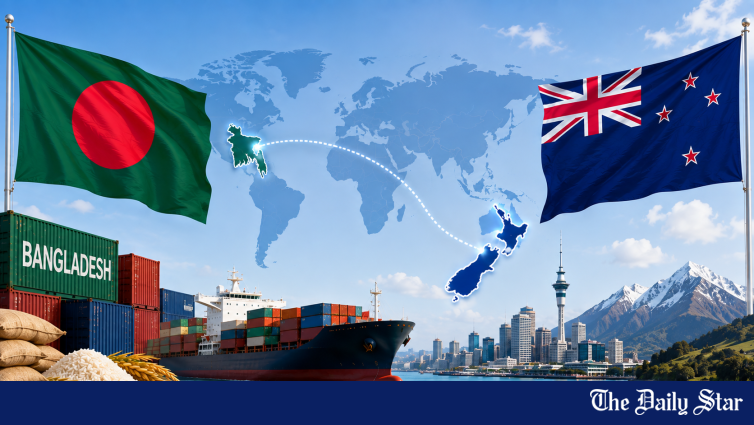
Wellington, August 12, 2026 — Bangladesh has formally proposed a bilateral free trade agreement (FTA) with New Zealand during a high-level meeting in Wellington, opening a new front in Dhaka's accelerating trade diplomacy ahead of LDC graduation. Commerce Secretary Md Ataur Rahman Khan, leading a Bangladeshi delegation on an Australia-New Zealand tour, tabled the proposal during talks with representatives of New Zealand's Ministry for Primary Industries on August 12.
🇳🇿 The FTA Pitch and Four Supporting Proposals
The Wellington meeting went well beyond a single FTA ask. The commerce secretary advanced a comprehensive package of cooperative proposals designed to deepen commercial ties between the two countries:
- 📝 Bilateral Free Trade Agreement (FTA) — the headline proposal to formalise preferential tariff access
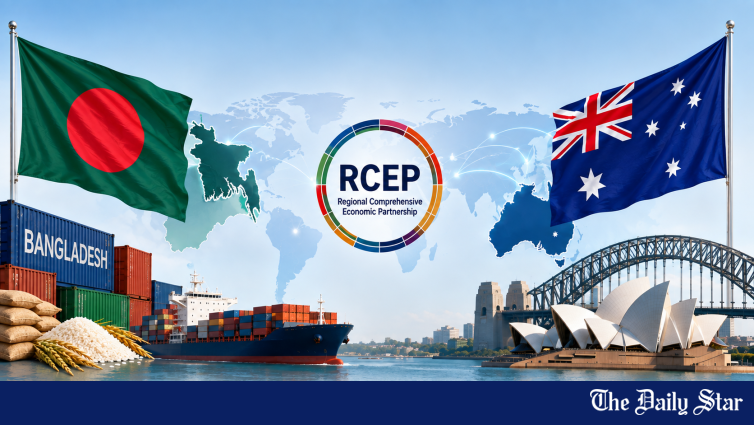
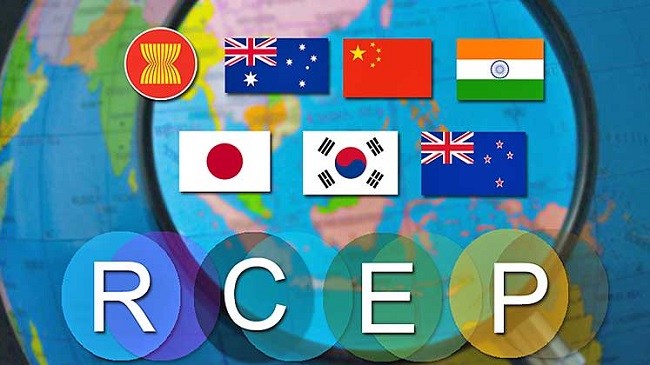
- 🤝 New Zealand's support for Bangladesh's RCEP accession — aligning with the broader regional trade push
- ⏳ Three-year extension of the LDC transition period — pushing graduation to November 2029
- 👥 Bilateral business forum — institutionalising private-sector dialogue
- 🔧 Technical working group — among relevant agencies for technical cooperation
- 📞 Dedicated focal points — for streamlined communication and information exchange
The commerce ministry said in a statement that the proposals aim to strengthen bilateral relations in agriculture, food processing, and trade while creating new opportunities for mutual economic development.
🌾 Agriculture: The Strategic Heart of the Engagement
The choice to engage New Zealand's Ministry for Primary Industries — rather than its foreign affairs or trade ministry — signals Dhaka's strategic intent. New Zealand is a global powerhouse in primary industry exports, particularly dairy, kiwifruit, meat, and seafood. Bangladesh, with a population of 170 million and a fast-growing middle class, represents a substantial underpenetrated market for New Zealand's premium food exports.
The meeting covered specific cooperation areas:
- 🐄 Dairy industry investment — New Zealand's expertise in dairy farming and processing
- 📡 Agricultural technology — joint investment in agri-tech solutions
- ❄️ Cold-chain management — critical for both perishable exports and domestic food security
- 🍚 Agro-based processing industries — value-added food processing for export markets
- 📦 Market access for Bangladeshi agricultural products — fresh fruits, processed foods to New Zealand
- 🧵 Food security cooperation — leveraging New Zealand's biosecurity and food-safety systems
Bangladesh explicitly praised New Zealand's advanced biosecurity system, its food-safety measures, and its export management of agricultural products in international markets. In return, Dhaka highlighted its food-security needs, agricultural development priorities, and growing consumer market — positioning the relationship as complementary rather than competitive.
🏢 Investment Invitation: Special Economic Zones on Offer
Bangladesh invited New Zealand's agricultural and food-technology companies to invest in the country, taking advantage of Bangladesh's large consumer market and special economic zones (SEZs). The Bangladeshi government has been actively developing 97 SEZs across the country, offering tax holidays, customs-duty exemptions, and one-stop services to foreign investors.
For New Zealand's agri-tech and food-processing companies, the pitch offers:
- 💰 Tax holidays — up to 10 years for qualifying investments
- 🌏 170 million consumer market — one of South Asia's fastest-growing middle classes
- 🚢 Strategic location — gateway to South Asia, ASEAN, and the broader Indo-Pacific
- 📦 Export platform — preferential access to EU, Canada, Australia, and other developed markets
- 🏢 Ready infrastructure — developed SEZs with utility connections and logistics support
🌐 RCEP Accession and LDC Transition: A Coordinated Diplomatic Push
The Wellington meeting reinforced Bangladesh's coordinated push on two parallel tracks: RCEP accession and extension of the LDC graduation transition period. Both are critical to managing the country's post-LDC trade exposure:
- 🌐 RCEP accession — would give Bangladesh preferential access to the world's largest free trade bloc (China, Japan, South Korea, Australia, New Zealand, ASEAN)
- ⏳ LDC transition extension — three additional years of duty-free, quota-free access under various preferential schemes, buying time to negotiate bilateral FTAs
Bangladesh has already formally submitted the RCEP accession questionnaire and started aligning its domestic laws on intellectual property, competition, and personal data protection with RCEP standards. The UN Committee for Development Policy (CDP) has recommended the LDC transition extension, with the UN General Assembly expected to make a final decision in September 2026.
📊 Bangladesh-New Zealand Trade Snapshot
While bilateral trade between Bangladesh and New Zealand is currently modest, both sides see significant untapped potential:
- 🇧🇩 Bangladesh exports to NZ — RMG, leather goods, frozen foods, jute products, agro-processed items
- 🇳🇿 NZ exports to Bangladesh — dairy (milk powder, butter), kiwifruit, apples, machinery, wool
- 👥 Market size — Bangladesh's 170M population vs New Zealand's 5.2M
- 📈 Growth potential — Bangladesh's middle class expanding rapidly, driving demand for premium food imports
An FTA would create a framework to systematically reduce tariffs, harmonise standards, and unlock investment flows — converting latent potential into measurable trade growth.
🏛️ Broader Context: Bangladesh's Trade Pact Sprint
The New Zealand FTA proposal is the latest in a series of trade diplomacy moves by Dhaka. Bangladesh has already signed an Economic Partnership Agreement (EPA) with Japan, finalised a Comprehensive Economic Partnership Agreement (CEPA) with South Korea, and proposed an FTA with Australia during the same delegation tour. The country is also pursuing a CEPA with the Gulf Cooperation Council (GCC), exploring an FTA with the United States, and negotiating a Comprehensive Economic Partnership Agreement with the European Union.
For Bangladesh's export community — particularly agro-processors, leather goods manufacturers, and RMG exporters seeking diversification — the New Zealand push opens another market frontier at a moment of urgent need. With LDC graduation eroding preferential access in developed markets, every new bilateral trade agreement becomes a critical piece of the post-LDC survival strategy.
The Wellington meeting may not produce an FTA overnight — trade negotiations typically take years — but it signals that Bangladesh is no longer willing to leave its trade destiny to multilateral arrangements alone. The country is actively building a web of bilateral and regional agreements designed to secure its export future in a rapidly restructuring global trade order.
This news was originally published by The Daily Star. For the full original report, please visit: https://www.thedailystar.net/business/news/bangladesh-proposes-signing-fta-new-zealand-4247046
Related on BangladeshExport
📬 Get Bangladesh Trade News in your inbox
Weekly digest of export industry news, policy updates, and market analysis.
📰 Related Stories