Bangladesh Middle Class Gutted by Inflation as Energy and Food Prices Surge
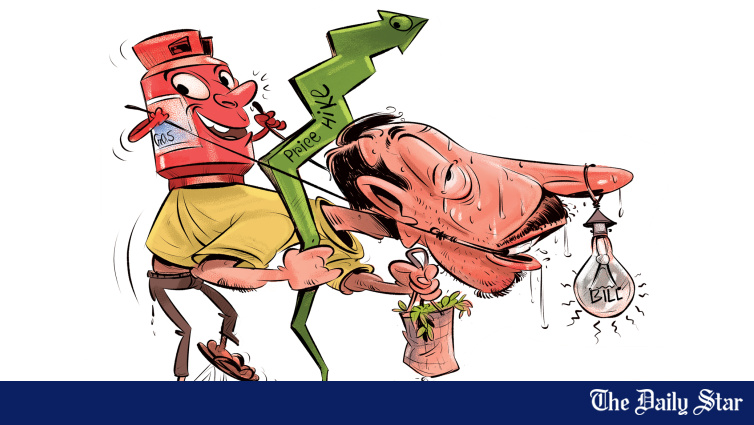
Dhaka, August 15, 2026 — Bangladesh's middle class is being gutted by sustained inflation, with rising energy bills, food prices, and fuel costs eroding household purchasing power faster than wage growth can keep pace. The squeeze, intensified by the Iran war fallout and successive rounds of fuel price increases, has left millions of middle-income families struggling to make ends meet — even as the broader economy shows signs of stabilisation.
💰 The Middle-Class Squeeze
The middle class often finds itself caught between two extremes — with too much income to qualify for government support but too little financial room to absorb repeated price shocks. As one observer noted: for the rich, the question is “can I afford it?” For the middle class, it is “how can I afford it without giving up something else or dipping into my savings?”
Years of rising prices have steadily eroded the family savings buffer. For Rezwana — a Dhaka resident whose story illustrates the broader trend — the monthly maths is no longer adding up. In May, when temperatures soared and a fortnight-long gas outage forced her to run both the air conditioner and the induction stove almost non-stop, her electricity bill came to Tk 2,000. When the bill rose by a third in July despite her using far less electricity, she found it difficult to make sense of it. Her landlord's dismissive response — “lodge a formal complaint” — captured the helplessness many feel.
⚡ Energy Inflation: The Main Driver
Following the Iran war that began in February 2026, the government raised the prices of fuel, power, and liquefied petroleum gas (LPG). The impact was immediate for already struggling middle-income households. The squeeze came from every direction:
- ⚡ Higher electricity bills — tariffs raised multiple times in 2026
- 🚗 More expensive commutes — retail petroleum prices increased
- 🍚 Pricier food — transport costs rose from farms to city markets
- 🍲 Higher cooking costs — LPG cylinder prices surged
- 🚧 Piped gas shortage — urban kitchens lack pressure for basic cooking
Economists, think-tanks, and civil society groups had warned the government about these pressures beforehand. Following two earlier rounds of fuel price increases, the Centre for Policy Dialogue (CPD) cautioned in June that higher power tariffs would worsen an already severe inflationary environment.
📊 Bangladesh Bank Confirms: Energy Driving Inflation
CPD's fears have now materialised. In its quarterly Inflation Dynamics in Bangladesh report for the fourth quarter (April-June) of fiscal year 2025-26, the Bangladesh Bank identified energy inflation as the main driver of average headline inflation, which rose to 9.21 percent. The energy-driven inflation is particularly regressive because:
- 🏠 Energy is non-discretionary — households cannot reduce consumption easily
- 💰 Fixed costs rising — electricity, cooking gas, transport are essential
- 📈 Compounding effect — energy costs feed into food and service prices
- 🚧 Gas shortage forces alternatives — electric burners and LPG cylinders are costly
🍲 The Cooking Crisis
The pressure is compounded by a widespread shortage of piped gas, leaving many urban kitchens with too little pressure for basic cooking such as rice or daal. Families are increasingly being forced to turn to electric burners or LPG cylinders — both costly alternatives. Frequent power cuts make the switch even harder.
“Cooking becomes almost impossible on weekends or national holidays,” said Mahmuda Kamal, a resident of Pallabi area in Dhaka. “On those days, we have no choice but to rely on electrical appliances like rice cookers or air fryers.” Mahmuda, a private sector employee, considered buying an induction cooker to get around the gas shortages but shelved the idea because she feared her electricity bill would skyrocket.
Lalantika Piasi, a resident of Faridpur city, said her expenditure on LPG cylinders has gone up significantly. “I have had to trim other household spending just to manage,” she said.
🍚 Food Bills Keep Climbing
The strain extends well beyond energy bills. As food inflation continues to rise and the prices of basic goods fluctuate, routine trips to the market have become an exercise in deciding what a family can afford to leave out. Bangladesh Bank statistics show food inflation rising through the second quarter of 2026:
- 📉 March 2026 — food inflation at 8.24 percent
- 📈 December 2025 — food inflation at 7.71 percent
- 📈 June 2026 — food inflation accelerated to 8.7 percent
- 🍖 Drivers — steep rises in meat, fish, fruit, vegetables, and spices
“Whenever I go shopping for essentials, I find the price of yet another item has gone up,” said Rezwana.
🚗 Fuel Price Impact on Commuters
The government also raised retail petroleum prices. Raqibul Hasan, a resident of Dhaka's Basila area who commutes to work by motorcycle, has felt the impact directly. “The price of octane increased quite a bit, leaving a good dent in my monthly budget,” the private sector worker said.
Raqib said he had recently received a salary increase, allowing him to absorb some of the higher costs. But wage growth in general has failed to keep pace with inflation. In June, CPD Executive Director Dr Fahmida Khatun said wage growth continued to lag behind inflation, eroding household purchasing power, particularly among low and fixed-income groups.
📊 The Wage-Price Gap
The gap between wage growth and inflation is the structural driver of the middle-class squeeze. While headline inflation has averaged 8-9 percent through 2026, nominal wage growth has been significantly lower:
- 📈 Headline inflation — 9.21 percent (Q4 FY2025-26)
- 📉 Food inflation — 8.7 percent (June 2026)
- 💰 Energy inflation — main driver of headline inflation
- 🚧 Wage growth lagging — real wages declining
- 👥 Fixed-income groups hit hardest — salaries not indexed to inflation
🌐 Strategic Context: Why Middle-Class Squeeze Matters
Bangladesh's middle class is the engine of domestic consumption — the demand side that supports the country's export-oriented manufacturing base. When the middle class is squeezed, the effects ripple across the economy:
- 💰 Reduced consumer spending — hits domestic manufacturing and retail
- 🏢 Lower demand for services — restaurants, transport, education, healthcare
- 📈 Savings erosion — reduces capital available for investment
- 💼 Talent retention risk — skilled professionals may emigrate for better pay
- 🏛️ Political pressure — middle-class dissatisfaction can destabilise governments
For an economy preparing for LDC graduation and seeking to diversify beyond RMG exports, a thriving middle class is essential — it drives the domestic demand that supports diversification into pharmaceuticals, agro-processing, IT services, and other higher-value sectors. The current inflation squeeze threatens that diversification trajectory by weakening the consumer base that would absorb new products and services.
The Bangladesh Bank's identification of energy inflation as the main driver suggests that fiscal policy — particularly energy pricing — will be the critical lever for restoring middle-class purchasing power. Until energy prices stabilise and wage growth catches up with inflation, the squeeze is likely to continue — with significant implications for both household welfare and broader economic competitiveness.
This news was originally published by The Daily Star. For the full original report, please visit: https://www.thedailystar.net/business/news/the-middle-class-gutted-inflation-4247766
Related on BangladeshExport
📬 Get Bangladesh Trade News in your inbox
Weekly digest of export industry news, policy updates, and market analysis.
📰 Related Stories