Bangladesh Leases 3 Closed Jute Mills to PRAN-RFL and HAMCO for Tk 619cr Revival
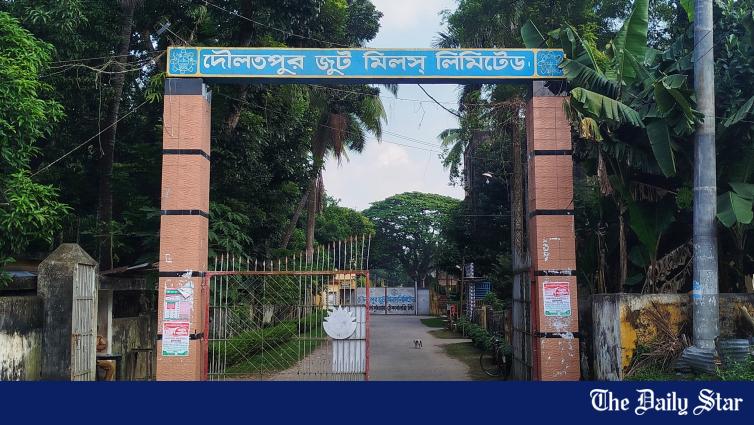
Dhaka, August 11, 2026 — The Bangladesh government has signed lease agreements with two private conglomerates to reopen three long-closed state-owned jute mills, mobilising Tk 619 crore in fresh investment and creating potential employment for at least 11,629 workers. The agreements, signed between Bangladesh Jute Mills Corporation (BJMC) and PRAN-RFL Group plus HAMCO Group, were finalised in the presence of Prime Minister Tarique Rahman at the Secretariat on Monday.
🧵 The Three Mills and Their New Operators
Under the lease arrangements, PRAN-RFL Group takes over two mills while HAMCO Group assumes control of the third:
- 🏭 National Jute Mills Ltd — located in Raipur, Sirajganj; leased to PRAN-RFL Group with planned investment of Tk 157 crore
- 🏭 Star Jute Mills Ltd — located in Digholia, Khulna; leased to PRAN-RFL Group with planned investment of Tk 250 crore
- 🏭 Platinum Jubilee Jute Mills Ltd — located in Khalishpur, Khulna; leased to HAMCO Group with planned investment of Tk 212 crore
BJMC Chairman Brig Gen Md Kabir Uddin Sikder signed on behalf of the state-owned corporation, while Aminur Rahman represented PRAN-RFL Group as group company director. The ceremony was attended by Commerce, Industries and Textiles & Jute Minister Khandakar Abdul Muktadir, State Minister for Textiles and Jute Md Shariful Alam, and Textiles and Jute Secretary Sharf Uddin Ahmed Choudhury.
📊 The Bigger Picture: 20 of 25 Mills Being Revived
The three leases are the latest instalment in a much larger restructuring of Bangladesh's state-owned jute sector. The government has decided to reopen 20 of the 25 BJMC mills that remained closed, all under a lease-based private management system designed to shift operational risk from the public exchequer to private operators.
So far, leases for 14 mills have been completed and possession handed over, with production already resumed at nine of them. The latest three agreements push that count to 17, with three more mills slated for lease in the coming months — effectively closing the chapter on one of the most protracted and politically sensitive industrial restructuring efforts in Bangladesh's history.
💰 Why Jute Matters for Bangladesh's Export Basket
Although jute's share of national exports has shrunk dramatically from its 1970s peak, the fibre remains a strategically important export commodity — and a globally relevant one as the world searches for sustainable packaging alternatives to plastic. Bangladesh remains the world's second-largest producer and largest exporter of raw jute and jute goods, with key markets in the European Union, the United States, the Middle East, and increasingly Turkey.
The sector supports millions of farmers across the southwest and northwestern deltas, and the mill ecosystem in Khulna and Sirajganj has historically anchored regional economies. The closures of the past decade — driven by losses, obsolete machinery, and political mismanagement — dealt a heavy blow to those local economies, with knock-on effects on rural consumption and migration patterns.
🏭 Why PRAN-RFL and HAMCO?
The selection of PRAN-RFL Group is strategically significant. As Bangladesh's largest agro-processor and a vertically integrated food and plastics conglomerate, PRAN-RFL brings deep experience in mass production, supply chain management, and export market development. The group already exports to more than 145 countries and operates some of the country's most modern manufacturing facilities. Its entry into jute processing suggests a potential pivot toward higher-value jute-based products — including biodegradable packaging, technical textiles, and composite materials — rather than traditional low-margin yarn and hessian.
HAMCO Group, taking on Platinum Jubilee Jute Mills, brings additional private capital and management discipline to a sector that has long suffered from governance deficits. The leasing model — under which the government retains ownership of the underlying assets while private operators bear operational responsibility — is designed to extract the best of both worlds: public asset preservation with private-sector efficiency.
👥 Employment and Local Economic Impact
The 11,629 jobs to be created across the three mills represent a meaningful injection of formal employment in regions that have seen significant industrial decline. For Khulna in particular — once the heartland of Bangladesh's jute industry — the reopening of Star Jute Mills and Platinum Jubilee Jute Mills offers a chance to revive the local manufacturing ecosystem and absorb displaced workers.
Each direct job in a jute mill typically supports an additional 3–4 indirect jobs in upstream farming, transport, and downstream trade. The three mills could therefore generate total employment impact in the range of 35,000–46,000 workers once production ramps up — a non-trivial boost for regional economies.
🌐 Strategic Context: LDC Graduation and Export Diversification
The jute revival comes at a strategically important moment for Bangladesh's export economy. With LDC graduation scheduled for November 2026 and the impending loss of duty-free access in several developed markets, the country urgently needs to diversify its export basket beyond ready-made garments. Jute — with its strong sustainability narrative, established global demand, and Bangladeshi production dominance — offers a natural diversification lever.
The global jute market is projected to grow at 5–7 percent annually through 2030, driven by single-use plastic bans in the EU, India, and several US states. If Bangladesh can capture even a modestly larger share of this growth — particularly in premium segments like geo-textiles, fashion accessories, and biodegradable packaging — the sector could re-emerge as a meaningful export earner alongside RMG, pharmaceuticals, and leather.
For a government that has staked its credibility on reviving sick industries and broadening the country's productive base, the lease signing at the Secretariat on Monday was more than a routine commercial transaction. It was a tangible signal that the long, painful restructuring of Bangladesh's jute sector may finally be entering its productive phase — with private capital, modern management, and export market opportunity aligned in a way they have not been for decades.
This news was originally published by The Daily Star. For the full original report, please visit: https://www.thedailystar.net/business/economy/news/govt-leases-3-jute-mills-tk-619cr-investment-4245476
Related on BangladeshExport
📬 Get Bangladesh Trade News in your inbox
Weekly digest of export industry news, policy updates, and market analysis.