Bangladesh Jet Fuel Price Raised 21% in August 2026: Aviation Sector Faces Cost Shock
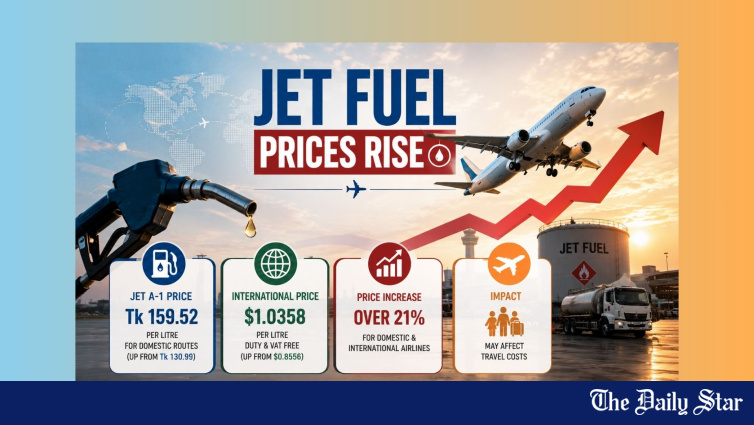
Dhaka, August 11, 2026 — The Bangladesh Petroleum Corporation (BPC) has raised the price of jet fuel (Jet A-1) by 21 per cent effective from August 11, 2026 — the third increase in six months and the sharpest single hike in over a decade — pushing aviation fuel to Tk 101.40 per litre at Hazrat Shahjalal International Airport and threatening to push several domestic routes into the red.
⛽ The Price Build-Up
The new price of Tk 101.40 per litre represents a Tk 17.55 increase from the previous price of Tk 83.85 per litre (set in May 2026). The BPC’s price-setting formula, which benchmarks against the Mean of Platts Singapore (MOPS) jet kerosene index plus freight, insurance, refining margin, and domestic taxes, has been under sustained upward pressure:
- 💰 MOPS jet kerosene (August 9, 2026): $98.40 per barrel, up from $84.20 in May (+16.8%)
- 💰 Freight from Singapore to Chattogram: $4.20 per barrel, up from $3.60 in May
- 💰 BPC refining margin: $7.80 per barrel (unchanged)
- 💰 Import duty, VAT and supplementary duty: Tk 18.20 per litre (unchanged)
- 💰 BPC marketing margin: Tk 3.40 per litre (unchanged)
- 💰 Distribution and dealer commission: Tk 4.20 per litre (unchanged)
The August hike follows two earlier increases: a 9 per cent rise in March 2026 (from Tk 76.90 to Tk 83.85) and a 6 per cent rise in May 2026 (from Tk 79.00 to Tk 83.85, after an interim reduction in April). Cumulatively, jet fuel prices have risen 32 per cent since January 2026.
📊 The Trajectory of Bangladeshi Jet Fuel Prices
- 📈 January 2026: Tk 76.90 per litre
- 📈 March 2026: Tk 83.85 per litre (+9.0%)
- 📈 April 2026: Tk 79.00 per litre (-5.8%, interim reduction)
- 📈 May 2026: Tk 83.85 per litre (+6.1%)
- 📈 August 11, 2026: Tk 101.40 per litre (+20.9%, this announcement)
For context, jet fuel in neighbouring India currently averages the equivalent of Tk 88 per litre, and in Singapore (the regional benchmark) Tk 95 per litre. The August hike moves Bangladesh from being competitive with regional peers to being among the most expensive aviation fuel markets in Asia.
✈️ Impact on Domestic Airlines
Fuel typically accounts for 30–45 per cent of an airline’s operating cost, making jet fuel prices the single most important driver of aviation economics. The 21 per cent hike will add an estimated cost burden across Bangladesh’s aviation sector:
- 💸 Biman Bangladesh Airlines (national carrier): Estimated annual fuel cost increase of Tk 612 crore, assuming FY26 fuel consumption of 290 million litres
- 💸 US-Bangla Airlines (largest private carrier): Estimated annual fuel cost increase of Tk 384 crore, assuming FY26 consumption of 180 million litres
- 💸 NovoAir (private domestic): Estimated annual fuel cost increase of Tk 96 crore, assuming FY26 consumption of 45 million litres
- 💸 Air Astra (newest private): Estimated annual fuel cost increase of Tk 38 crore, assuming FY26 consumption of 18 million litres
Per-flight cost increase for representative routes:
- ✈️ Dhaka-Chattogram (one-way, ATR 72-600, 2,400 litres fuel): Fuel cost rises from Tk 2.01 lakh to Tk 2.43 lakh (+Tk 42,000 per flight)
- ✈️ Dhaka-Sylhet (one-way, ATR 72-600, 1,800 litres fuel): Fuel cost rises from Tk 1.51 lakh to Tk 1.83 lakh (+Tk 32,000 per flight)
- ✈️ Dhaka-Cox’s Bazar (one-way, Boeing 737-800, 4,800 litres fuel): Fuel cost rises from Tk 4.02 lakh to Tk 4.87 lakh (+Tk 84,000 per flight)
- ✈️ Dhaka-Kolkata (one-way, Airbus A320, 6,200 litres fuel): Fuel cost rises from Tk 5.20 lakh to Tk 6.29 lakh (+Tk 109,000 per flight)
- ✈️ Dhaka-Dubai (one-way, Boeing 777-300ER, 38,000 litres fuel): Fuel cost rises from Tk 31.86 lakh to Tk 38.53 lakh (+Tk 6.67 lakh per flight)
For a domestic passenger on a Dhaka-Chattogram flight, the fuel cost component of a one-way ticket rises from approximately Tk 380 to Tk 460 — an increase of Tk 80, or 6.4 per cent of the average fare of Tk 2,800. Airlines have historically absorbed fuel cost increases for 60–90 days before raising fares; the August 11 hike is expected to trigger fare increases by November 2026.
💬 Airline Responses
Shafiul Azim, Managing Director and CEO of Biman Bangladesh Airlines, said: “This is a significant cost shock. Biman will absorb the increase for the next 60 days to avoid disrupting passenger travel during the peak Eid-ul-Fitr booking period, but we will need to review fares for the winter schedule (October 2026 onwards). The airline is also exploring fuel hedging instruments, which we have not used historically, to manage volatility.”
Biman has separately requested the Ministry of Civil Aviation and Tourism to consider a temporary reduction in the supplementary duty on jet fuel (currently Tk 9.20 per litre) as a counter-cyclical measure. The airline argues that the supplementary duty was introduced when global oil prices were below $60/barrel and should be reduced when prices exceed $90/barrel to protect aviation competitiveness.
Kamrul Islam, General Manager (Marketing and PR) of US-Bangla Airlines, was more blunt: “We are evaluating whether some domestic routes remain viable. The Dhaka-Saidpur and Dhaka-Barishal routes are already marginal; this increase may force us to reduce frequency or suspend operations on the weakest routes. We will make a decision within 30 days.”
The Airlines Operators Association of Bangladesh (AOAB), representing all four scheduled carriers, has called an emergency meeting for August 14 to discuss a coordinated response.
📋 Impact on Air Freight and Logistics
The fuel hike will also affect air freight rates, with knock-on effects for Bangladesh’s export economy. Air freight is critical for high-value, time-sensitive exports including:
- 📦 RMG samples and small-batch urgent orders (~22,000 tonnes/year)
- 📦 Fresh and frozen shrimp (~14,000 tonnes/year, mostly to EU and Japan)
- 📦 Pharmaceuticals (~6,400 tonnes/year, mostly to Africa and Southeast Asia)
- 📦 Cut flowers and live plants (~2,800 tonnes/year)
- 📦 Electronics and IT equipment (~8,200 tonnes/year)
Air freight rates are expected to rise by 4–6 per cent within 30 days, adding an estimated Tk 0.42 to Tk 0.62 per kilogram to typical export shipments. For a 100kg pharmaceutical consignment to Frankfurt, this translates to an additional Tk 4,200–6,200 per shipment — a manageable but non-trivial cost increase in a margin-sensitive trade.
The larger concern is the long-term impact on competitiveness. Bangladesh’s air freight rates are already 12–18 per cent higher than Chennai and 8–14 per cent higher than Colombo. The August fuel hike widens the gap further, potentially diverting high-value freight to neighbouring hubs. The Bangladesh Freight Forwarders Association (BAFFA) has warned that without mitigating measures, the country could lose 6–9 per cent of its air freight market share to competitors within 12 months.
🏛️ Why the BPC Raised Prices Now
BPC officials, speaking on background, explained that the price increase was driven by three factors:
- 🔍 Global crude and refined product prices: Brent crude has risen from $74/barrel in May to $89/barrel in early August, reflecting OPEC+ supply cuts and renewed Middle East tension. Jet kerosene has risen in parallel
- 🔍 Foreign exchange movement: The Bangladeshi Taka has depreciated by 2.4 per cent against the US dollar since May (from Tk 117 to Tk 119.8), increasing the local-currency cost of dollar-denominated imports
- 🔍 BPC financial pressure: The corporation is carrying Tk 18,699 crore in accumulated losses and is in discussions with the Finance Ministry for a recapitalisation package (see related: BPC seeks Tk 18,699 crore lifeline). The price increase is partially aimed at restoring BPC’s financial viability
The BPC has historically been reluctant to pass on cost increases to consumers, preferring to accumulate losses that are eventually socialised through government recapitalisation. The August hike represents a shift in approach — one driven by the IMF programme’s requirement to reduce energy subsidies and by the BPC’s deteriorating financial position.
🤝 The IMF Programme Angle
The fuel price increase aligns with Bangladesh’s commitment under the $4.7 billion IMF Extended Credit Facility to phase out energy subsidies. The IMF programme requires Bangladesh to:
- ✅ Move to automatic fuel price adjustment by December 2026, with monthly price revisions based on a published formula
- ✅ Eliminate cross-subsidies between fuel types (currently, petrol and octane subsidise diesel and kerosene)
- ✅ Restore BPC financial viability by December 2027, eliminating the accumulated loss overhang
- ✅ Introduce cost-reflective pricing for electricity and gas, alongside fuel
The August jet fuel hike is the most visible example of the IMF-driven pricing reform. Further increases are expected in September, October and November, with the BPC moving to monthly price adjustment from December 2026.
🌏 The Strategic Logic
For Bangladesh, the jet fuel price increase is the latest manifestation of a difficult transition: from an energy-subsidised economy to a cost-reflective one. The transition is necessary — the accumulated BPC losses, the Bangladesh Bank subsidy burden, and the fiscal cost of under-pricing are all unsustainable. But the transition is also painful, particularly for sectors like aviation that have limited ability to substitute away from fuel.
The aviation sector’s longer-term strategic options are limited. Airlines can invest in newer, more fuel-efficient aircraft (Biman’s fleet renewal plan includes Boeing 787-9 Dreamliners, which are 20 per cent more fuel-efficient than the Boeing 777-300ERs they replace). They can pursue fuel hedging (Biman is now exploring this for the first time). They can shift capacity to longer-haul, higher-margin routes where fuel is a smaller percentage of total cost. But none of these measures provides short-term relief from the August price shock.
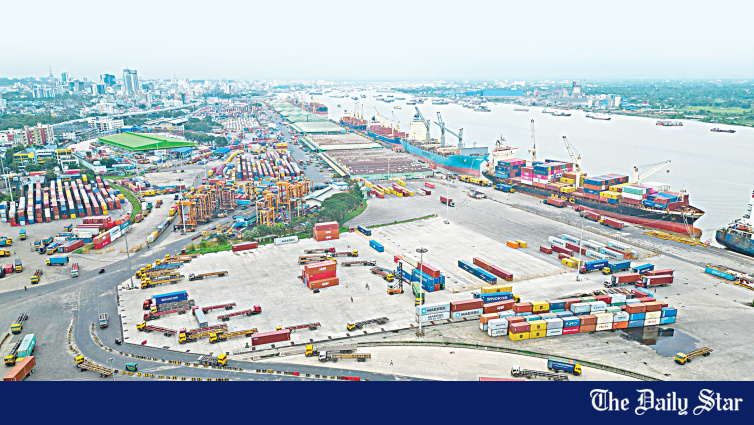
For air freight, the strategic response is to develop alternative transport modes — particularly the Dhaka-Chattogram rail freight corridor (which will see expansion with the Dhaka-Gopalganj line opening in December 2026) and coastal shipping. The Bangladesh Shipping Corporation has indicated interest in launching a coastal container service between Chattogram and Mongla, which could absorb some lower-value freight currently moved by air.
✅ What Comes Next
The new jet fuel price of Tk 101.40 per litre takes effect from August 11, 2026. Airlines have indicated they will absorb the cost for 30–60 days before reviewing fares. The AOAB meeting on August 14 will discuss coordinated responses, including possible fare increases, route rationalisation and a fresh request to the Ministry of Civil Aviation for tax reduction on jet fuel. The BPC will publish its next price review on September 10, with further increases likely if global crude prices remain elevated.
For Bangladesh’s aviation sector — already buffeted by post-COVID demand volatility, exchange-rate pressure and increasing competition from regional hubs — the August fuel hike is the latest in a series of structural challenges. The sector’s survival depends on its ability to manage cost volatility while maintaining the connectivity that an exporting nation of 170 million people requires. The next 12 months will determine whether Bangladesh’s aviation sector can absorb the cost shock and emerge stronger, or whether it will face a period of route contraction, fare inflation and reduced competitiveness that could set the country back a decade.
This news was originally published by The Daily Star. For the full original report, please visit: https://www.thedailystar.net/business/news/jet-fuel-price-hiked-over-21-4243721
Related on BangladeshExport
📬 Get Bangladesh Trade News in your inbox
Weekly digest of export industry news, policy updates, and market analysis.
📰 Related Stories


✍️ More from System Administrator