Bangladesh Government Debt Outpacing Revenue Growth, Bangladesh Bank Warns
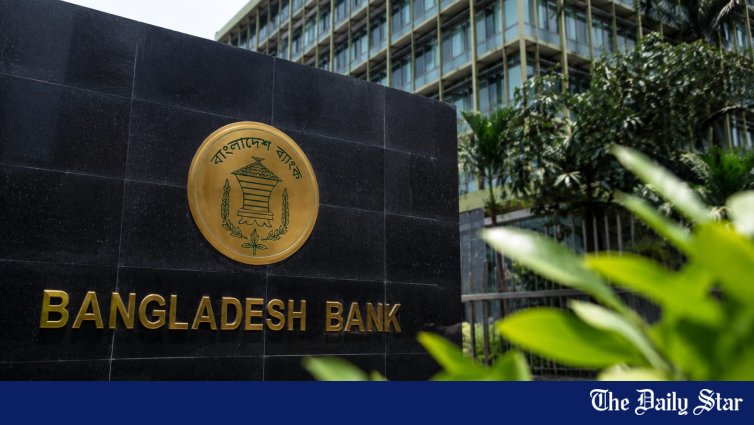
Dhaka, August 13, 2026 — The Bangladesh government's debt is growing faster than its revenue base, widening the gap between accumulated debt and the state's annual resource mobilisation capacity, according to Bangladesh Bank's latest Bangladesh Systemic Risk Report for July-December 2025. The findings echo warnings from the International Monetary Fund (IMF) and signal a structural fiscal vulnerability that could constrain the country's policy options as it prepares for LDC graduation.
📊 The Headline Numbers
The Bangladesh Bank report quantifies the deteriorating debt-revenue balance in stark terms:
- 📈 Debt-to-revenue ratio — rose from 3.3x in FY21 to 4.5x in FY25
- 💰 Tk 330 → Tk 450 — for every Tk 100 in revenue, debt grew from Tk 330 (FY21) to Tk 450 (FY25)
- 📉 Debt-to-GDP ratio — increased from 32.7% in FY21 to 35.3% in FY25
- 📈 Tax revenue decline — fell from 7.4% of GDP in FY24 to 6.8% in FY25
- 📜 Coverage period — Bangladesh Systemic Risk Report H2 2025
The Bangladesh Bank's diagnosis was unambiguous: “The government debt-to-GDP ratio increased modestly, while the government debt-to-revenue ratio rose further, mainly due to higher accumulation of debt relative to revenue generation.”
🚧 Why the Debt-to-Revenue Ratio Matters
The debt-to-revenue ratio is a critical fiscal health indicator — arguably more meaningful than the headline debt-to-GDP ratio for assessing a government's actual debt-servicing capacity. The ratio measures how many years of revenue collection it would take to fully repay the government's accumulated debt:
- 📈 3.3x (FY21) — manageable: debt could theoretically be repaid in ~3.3 years of total revenue
- 📈 4.5x (FY25) — concerning: debt now equals 4.5 years of revenue
- 🚧 Trend — ratio has risen by 1.2x in just four years
- 💰 Interest burden — higher ratio means more revenue consumed by interest payments
- 🏛️ Fiscal flexibility — less room for counter-cyclical spending in crises
Aggregate debt, which includes both domestic and external debt, remained higher than government revenue throughout the FY21-FY25 period — indicating a persistent structural gap between the government's borrowing appetite and its revenue generation capacity.
💰 The Root Cause: Persistently Weak Revenue Mobilisation
The widening gap is not primarily a story of excessive borrowing — it is fundamentally a story of revenue underperformance. The IMF's latest debt sustainability analysis also identified low revenue mobilisation and rising domestic debt as key vulnerabilities for Bangladesh's debt-servicing capacity.
The IMF data paints a troubling picture of revenue decline:
- 📉 Tax revenue fell to 6.8% of GDP in FY25 — down from 7.4% in FY24
- 📈 0.6 percentage point decline — in a single fiscal year
- 🌏 Regional comparison — Bangladesh's tax-to-GDP ratio remains among the lowest in Asia
- 🚧 Structural causes — narrow tax base, low compliance, tax administration inefficiencies
The IMF attributed the weak performance to structural problems — including a narrow tax base, low compliance, and inefficiencies in tax administration. These are long-recognised issues that have resisted multiple reform attempts over the past decade.
📜 Bangladesh Systemic Risk Report: What It Is
The Bangladesh Systemic Risk Report is a semi-annual publication by Bangladesh Bank that assesses risks to the country's financial stability. The H2 2025 edition (July-December 2025) covers:
- 🏢 Government finances — debt, deficit, revenue performance
- 💼 Banking sector — NPLs, capital adequacy, profitability
- 💰 External sector — forex reserves, current account, capital flows
- 🏛️ Corporate sector — leverage, profitability, investment
- 🏠 Household sector — credit, savings, financial inclusion
- 🌐 Real estate — prices, construction activity, mortgage market
The report serves as Bangladesh Bank's primary mechanism for early warning of financial sector risks — providing policymakers, market participants, and the public with a comprehensive assessment of macro-financial vulnerabilities.
🚧 Why This Matters for Bangladesh's Export Economy
While fiscal policy may seem distant from export competitiveness, the debt-revenue imbalance carries several indirect but significant implications for Bangladesh's export community:
- 💰 Interest burden crowding out investment — more revenue consumed by debt service means less for infrastructure, skills, export promotion
- 🚧 Tax pressure on exporters — government may raise taxes on profitable export sectors to boost revenue
- 💵 Exchange rate pressure — external debt servicing strains forex reserves
- 📈 Sovereign rating risk — deteriorating debt metrics could trigger rating downgrades
- 💰 Borrowing costs — higher perceived risk raises borrowing costs for both government and private sector
- 🏛️ Policy flexibility — less fiscal space for counter-cyclical support during export downturns
🌐 IMF Warnings: Structural Vulnerabilities
The IMF's debt sustainability analysis aligns with the Bangladesh Bank findings — identifying two specific structural vulnerabilities:
- 📉 Low revenue mobilisation — tax-to-GDP ratio well below comparator countries
- 📈 Rising domestic debt — growing reliance on domestic bank borrowing crowds out private sector credit
Both vulnerabilities are linked. As revenue underperformance forces the government to borrow more domestically, it absorbs bank liquidity that would otherwise be available for private sector lending — including to export-oriented industries. The result is a vicious cycle: weak revenue → more domestic borrowing → less private credit → slower investment → slower economic growth → weaker revenue.
🏛️ The Reform Imperative
The Bangladesh Bank report, while diagnostic rather than prescriptive, underscores the urgency of sustained revenue mobilisation reforms. Several reform tracks are already under way:
- 📜 NBR modernisation — digitisation of tax administration, e-filing, risk-based audits
- 💰 Tax base expansion — bringing more businesses and individuals into the tax net
- 📈 VAT automation — reducing evasion and improving collection efficiency
- 👥 Compliance enforcement — stronger action against tax evasion
- 💼 Tax-to-GDP ratio target — government aims to raise ratio toward 10% over medium term
For Bangladesh, the path to fiscal sustainability is clear: revenue mobilisation must accelerate faster than debt accumulation. The alternative — continued widening of the debt-revenue gap — would progressively constrain the government's ability to invest in the infrastructure, education, and trade promotion needed to sustain export competitiveness in the post-LDC era.
The Bangladesh Bank's candid assessment is a welcome act of institutional transparency — providing the analytical foundation for the difficult fiscal policy choices that lie ahead. Whether the political system can convert diagnostic clarity into reform momentum will be one of the defining questions of the coming fiscal year.
This news was originally published by The Daily Star. For the full original report, please visit: https://www.thedailystar.net/business/economy/news/govts-debt-outpacing-revenue-growth-bb-4247231
📬 Get Bangladesh Trade News in your inbox
Weekly digest of export industry news, policy updates, and market analysis.
📰 Related Stories