Bangladesh Gross Forex Reserves Rise to $37.11 Billion, BPM6 at $32.31 Billion
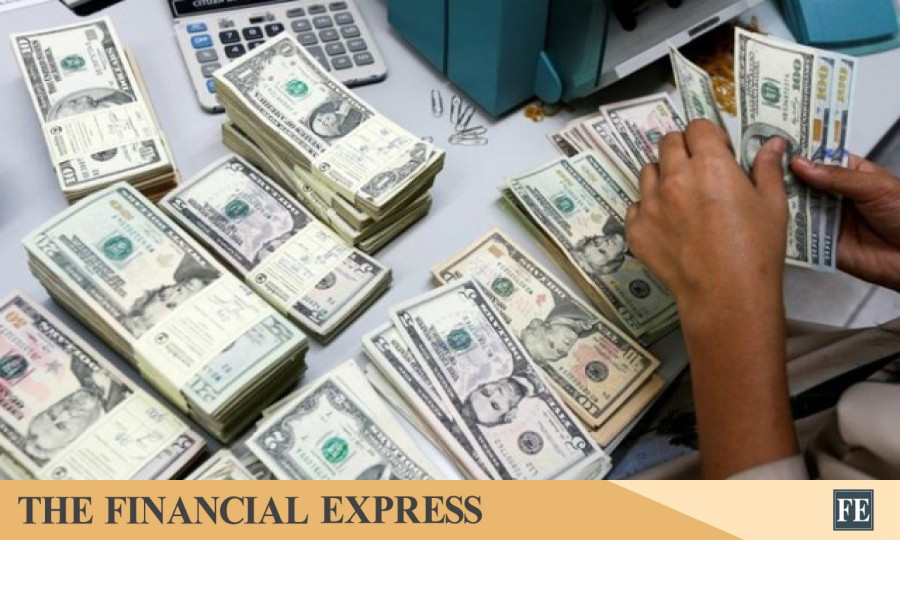
Dhaka, August 13, 2026 — Bangladesh's gross foreign exchange reserves stood at $37.11 billion as of August 13, 2026, according to the latest data released by Bangladesh Bank today. The figure represents a continued recovery from the reserves trough of late 2024 and provides the central bank with enhanced capacity to manage exchange rate stability, support import payments, and defend the taka against external shocks.
📊 The Two Reserves Numbers Explained
Bangladesh Bank now reports reserves under two methodologies — a critical distinction for analysts and policymakers:
- 💰 $37.11 billion (gross reserves) — the headline figure including all foreign currency assets
- 💰 $32.31 billion (BPM6 reserves) — the IMF Balance of Payments Manual 6th edition methodology
- 📉 $4.80 billion difference — primarily reflects reserves held in non-reserve accounts (AD accounts, SBP, etc.)
The BPM6 methodology is the international standard for reporting forex reserves — providing a more conservative and comparable measure across countries. The IMF, rating agencies, and international investors focus on the BPM6 number when assessing Bangladesh's external vulnerability. The gross figure includes broader foreign currency assets that may not be immediately available for balance of payments support.
📈 Reserves Recovery Trajectory
The $37.11 billion gross reserves figure represents a meaningful recovery from the reserves crisis that gripped Bangladesh in 2023-2024. The trajectory shows sustained rebuilding:
- 📉 2023 trough — reserves fell below $20 billion at the height of the dollar crisis
- 📈 2024 stabilisation — reserves rebuilt to mid-$20 billion range with IMF programme support
- 📈 2025 growth — steady accumulation through remittance growth and export earnings
- 📈 August 2026 — $37.11 billion gross / $32.31 billion BPM6
- 📈 Previous TBS report — $32.15 billion BPM6 on August 10 (3-day gain)
The reserves rebuild has been supported by several factors: robust remittance inflows ($3+ billion monthly), export earnings recovery ($4+ billion monthly), import compression (tighter LC opening), IMF programme disbursements ($4.7 billion committed), and Bangladesh Bank's dollar purchases from banks.
🚧 Why Reserves Matter for the Export Economy
Forex reserves are not just a macroeconomic statistic — they directly affect the operating environment for Bangladesh's export community:
- 💵 Exchange rate stability — higher reserves give BB capacity to defend taka volatility
- 📦 Import payment capacity — ensures LC confirmations for raw material imports
- 💰 Investor confidence — higher reserves reduce sovereign risk premium
- 📈 Lower borrowing costs — better reserves support credit ratings and trade finance pricing
- 🤝 Trade finance access — international banks more willing to confirm Bangladeshi LCs
- 🌐 Sovereign credit rating — reserves are key input for Moody's, S&P, Fitch assessments
For export-oriented industries — particularly RMG, pharmaceuticals, and leather — the reserves recovery translates directly into smoother trade finance operations, lower LC confirmation costs, and reduced exchange rate risk on import payments for raw materials.
💵 The Taka-Dollar Dynamics
The reserves recovery has implications for the taka-dollar exchange rate — a critical variable for export competitiveness:
- 📈 Taka depreciation slowed — BB has more capacity to smooth volatility
- 💰 Market-based rate — BB has committed to a unified, market-determined exchange rate
- 💵 42% depreciation since 2022 — taka has fallen from ~85 to ~121 per USD over four years
- 📉 Export competitiveness gain — weaker taka makes exports cheaper in USD terms
- 🚧 Import cost inflation — but raises input costs for import-dependent exporters
The central bank's challenge is balancing exchange rate stability (which supports investor confidence and import cost predictability) with the export competitiveness benefits of a competitive taka. The current reserves level gives BB more policy space to manage this trade-off.
💼 Bangladesh Bank's Reserves Management Strategy
The reserves rebuild reflects a deliberate BB strategy combining multiple levers:
- 💰 Dollar purchases from banks — BB buys USD from interbank market to accumulate reserves
- 💵 Export earnings conversion — exporters required to repatriate and convert FX proceeds
- 💸 Remittance channelling — formal banking channels capture more of $3B+ monthly remittances
- 🚧 Import compression — tighter LC approval for non-essential imports
- 🤝 IMF programme compliance — reforms unlock programme disbursements
- 🌐 External financing — multilateral and bilateral budget support
The strategy has delivered results — reserves have recovered by roughly $15+ billion from the 2023 trough — but challenges remain. The current account deficit of $1.6 billion in FY26 and continued import bill pressure mean the reserves build is fragile and reversible if external conditions deteriorate.
🌏 International Context: Regional Comparison
Bangladesh's $37.11 billion gross reserves compare favourably within South Asia:
- 🇵🇰 Pakistan — ~$13-15 billion (under IMF programme)
- 🇱🇰 Sri Lanka — recovering from 2022 default, ~$5-7 billion
- 🇳🇵 Nepal — ~$14-15 billion (gross, smaller economy)
- 🇧🇩 Bangladesh — $37.11 billion gross / $32.31 billion BPM6
- 🇮🇳 India — $650+ billion (different scale economy)
Within South Asia's emerging markets, Bangladesh's reserves position is among the strongest — supporting its relative attractiveness to international investors and trade finance providers.
🌐 Strategic Context: LDC Graduation and External Vulnerability
The reserves recovery arrives at a strategically important moment. Bangladesh is preparing for LDC graduation in November 2026 (potentially extended to November 2029), which will trigger the eventual loss of certain preferential financing and trade arrangements. A robust reserves position is critical for managing the post-graduation transition:
- 💰 Trade finance confidence — international banks maintain LC confirmation willingness
- 📈 Investor confidence — FDI flows supported by perceived external stability
- 🚧 Crisis buffer — reserves provide cushion against external shocks
- 💵 Currency stability — supports orderly taka management during transition
- 🏛️ Sovereign rating — reserves support credit rating and borrowing costs
For an export economy that imported $60+ billion in goods and services in FY2024-25, the $37.11 billion gross reserves provide approximately 6-7 months of import cover — comfortably above the IMF's 3-month adequacy benchmark. This buffer will be increasingly important as Bangladesh navigates the post-LDC commercial environment and seeks to defend its position as a reliable, competitive sourcing destination for global buyers.
This news was originally published by The Financial Express. For the full original report, please visit: https://thefinancialexpress.com.bd/economy/gross-forex-reserves-rise-to-3711b
Related on BangladeshExport
📬 Get Bangladesh Trade News in your inbox
Weekly digest of export industry news, policy updates, and market analysis.
📰 Related Stories