Dhaka-Gopalganj Rail Link via Padma Bridge Set to Open by December 2026: 90-Minute Journey
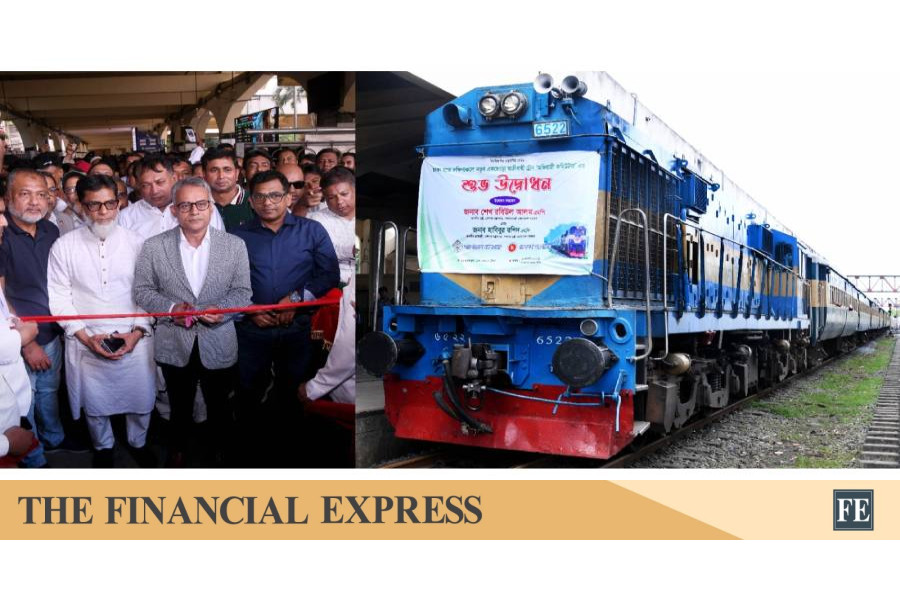
Dhaka, August 10, 2026 — The 172-kilometre Dhaka–Gopalganj broad-gauge rail link via the Padma Bridge is on track to open for commercial operations by December 2026, almost five years after construction began and seven years after the project was first approved by the Executive Committee of the National Economic Council (ECNEC). Once operational, the line will reduce Dhaka–Gopalganj travel time from the current six hours by road to just 90 minutes by train, transforming connectivity between the capital and the southwest.
🚆 Project at a Glance
The Dhaka–Gopalganj rail link is one of the largest infrastructure projects in Bangladesh’s recent history:
- 📏 Total length: 172 km (broad-gauge, 1,676 mm)
- 📏 Sections: Dhaka–Mawa (44 km), Padma Bridge crossing (6.15 km rail-cum-road upper deck), Bhanga–Narail–Gopalganj (122 km)
- 💰 Total cost: Tk 18,420 crore (revised from original Tk 12,890 crore in 2021)
- 💰 Financing: Government of Bangladesh Tk 4,840 crore; Asian Development Bank (ADB) $1.2 billion; Asian Infrastructure Investment Bank (AIIB) $400 million; Islamic Development Bank $200 million
- 🏗️ Stations: 14 new stations and 6 existing stations upgraded (Bhanga, Narail, Kalna, Kashiani, Gopalganj)
- 🚗 Speed: Design speed 120 km/h for passenger trains; 80 km/h for freight; expected commercial speed 100 km/h
- 📦 Freight capacity: 4.0 million tonnes per year initial, expandable to 8.5 million tonnes by 2035
📊 Construction Progress
According to the latest progress report from the Bangladesh Railway (August 7, 2026), physical works on the project have reached 91.4 per cent completion:
- ✅ Earthwork and embankment: 98.2 per cent complete (169 of 172 km)
- ✅ Track laying: 87.6 per cent complete (151 of 172 km of broad-gauge track laid)
- ✅ Bridge construction: 94.8 per cent (27 of 28 major bridges complete; only the Begumpur viaduct remaining)
- ✅ Station buildings: 84.3 per cent (12 of 14 new stations structurally complete; finishing works ongoing)
- ✅ Signalling and telecommunications: 78.6 per cent (European Train Control System Level 1 installation in progress)
- ✅ Electrification (Bhanga–Gopalganj section): 72.4 per cent (overhead catenary installation ongoing)
- ✅ Rolling stock: 16 broad-gauge diesel-electric locomotives procured from CRRC Qingdao Sifang (China); 40 passenger coaches from Indonesian PT INKA; first batch delivered July 2026
The Padma Bridge rail connection — the most technically challenging element of the project — was completed in March 2026, when the final rail-welding on the bridge’s upper deck was finished. The 6.15 km rail deck sits 12 metres above the road deck of the Padma Bridge and required 1,840 specialised rail fastenings to accommodate thermal expansion of the steel bridge structure.
🌏 Why This Matters for Bangladesh
The Dhaka–Gopalganj rail link is far more than a transportation project. It transforms the economic geography of southwest Bangladesh in three structural ways:
- 💸 Reduces logistics cost: Freight cost per tonne-km drops from Tk 4.20 (truck) to Tk 1.65 (rail) — a 60 per cent reduction. For agricultural products moving from Gopalganj, Faridpur and Narail to Dhaka, this translates to a 28–34 per cent reduction in delivered cost
- 💸 Opens southwest investment: The southwest districts (Gopalganj, Narail, Faridpur, Magura, Jhenaidah) have historically been cut off from industrial investment due to poor connectivity. The rail link is expected to attract Tk 12,000–15,000 crore in new industrial investment over the next five years, particularly in agro-processing, light engineering and textiles
- 💸 Decarbonisation: Rail freight emits 76 per cent less CO2 per tonne-km than road freight. The line is projected to displace 18,000 truck trips per year, reducing transport-sector emissions by an estimated 84,000 tonnes of CO2 annually
For passenger traffic, the impact is equally transformative. Currently, the Dhaka–Gopalganj journey by road takes 6–8 hours depending on ferry queues at Mawa or Paturia. With the Padma Bridge already eliminating the ferry bottleneck, the rail link will further reduce travel to 90 minutes — faster than any current inter-city rail service in Bangladesh. The line is expected to carry 28 million passengers per year by 2028, rising to 42 million by 2035.
🏛️ Economic Rate of Return
The project’s revised Economic Internal Rate of Return (EIRR) is estimated at 18.4 per cent — well above the government’s 12 per cent hurdle rate for public investment. The ADB’s independent appraisal estimated the project would generate $3.4 billion in cumulative economic benefits over 30 years, with a benefit-cost ratio of 2.6:1.
The benefits flow from multiple channels:
- 📈 Passenger time savings: $1.1 billion over 30 years (90 minutes vs 6 hours, applied to 28 million annual passengers)
- 📈 Freight cost savings: $920 million over 30 years ( Tk 2.55 per tonne-km savings applied to 4 million annual tonnes)
- 📈 Induced industrial investment: $680 million in additional industrial output and employment
- 📈 Reduced road maintenance cost: $420 million (fewer heavy truck movements reduce road wear)
- 📈 Reduced accidents and emissions: $280 million (rail is significantly safer and cleaner than road)
💬 Challenges and Criticisms
Despite the strong economic case, the project has faced criticism on three fronts:
- ⚠️ Cost overrun: The 43 per cent cost increase from the original Tk 12,890 crore to Tk 18,420 crore has been a source of contention. The Ministry of Railways has attributed the overrun to land acquisition cost escalation (Tk 2,400 crore), foreign exchange movement (Tk 1,800 crore), and scope additions including electrification of the Bhanga–Gopalganj section (Tk 1,290 crore)
- ⚠️ Timeline slippage: The original completion date was June 2024, later revised to December 2025, then June 2026, and now December 2026. The COVID-19 pandemic accounted for 14 months of delay; the Padma Bridge rail deck integration added another 9 months; and signalling system commissioning has been slower than planned due to contractor performance issues
- ⚠️ Operational sustainability: Bangladesh Railway’s operating ratio (cost/revenue) is currently 165 per cent — meaning it costs Tk 1.65 to earn Tk 1.00 in revenue. Without subsidy reform and fare restructuring, the Dhaka–Gopalganj line will operate at a loss despite strong demand. The ADB has recommended a 35 per cent average fare increase and a separation of freight and passenger accounting
The Ministry of Railways has indicated it will publish a comprehensive operational plan by October 2026, addressing fare structure, freight tariff, train scheduling, and integration with the broader railway network.
🤝 Network Integration
The Dhaka–Gopalganj line is part of a broader southwest rail network integration programme:
- 🚇 Bhanga–Jessore extension: 71 km broad-gauge line approved by ECNEC in May 2026; construction to begin Q4 2026; completion by 2029
- 🚇 Gopalganj–Khulna doubling: Existing metre-gauge line to be converted to dual-gauge; project cost Tk 4,800 crore; completion by 2030
- 🚇 Dhaka–Chattogram high-speed rail: Separate 230 km HSR project (separate corridor, design speed 250 km/h) under feasibility study by Japan International Cooperation Agency (JICA); report expected December 2026
- 🚇 Trans-Asian Railway: The Dhaka–Gopalganj line eventually connects to the TAR southern corridor, linking Bangladesh to India, Nepal, Bhutan and Southeast Asia by rail
🌏 The Strategic Stakes
For Bangladesh, the Dhaka–Gopalganj rail link represents a small but important piece of the country’s broader infrastructure modernisation agenda. With LDC graduation in November 2026 and the country’s aspiration to reach upper-middle-income status by 2031, the ability to move goods and people quickly, cheaply and sustainably is no longer optional. The Padma Bridge, the Dhaka Metro Rail, the Karnaphuli Underwater Expressway, the Matarbari Deep Sea Port and the Dhaka–Gopalganj rail link together form the backbone of a logistics network that will determine Bangladesh’s competitiveness for the next two decades.
The project also signals something subtler: that Bangladesh can execute complex infrastructure projects to international standards, with multinational financing, multiple contractors and demanding engineering challenges. After years of criticism over project-delivery capacity, the Dhaka–Gopalganj line — along with the Padma Bridge itself — demonstrates that the country’s engineering and project management capacity has matured. The next test will be operational: can Bangladesh Railway run the line efficiently, safely and profitably enough to justify the next wave of rail investment? The answer will shape the country’s infrastructure trajectory for a generation.
✅ What Comes Next
Track laying is expected to be completed by September 2026, followed by signalling and telecommunications commissioning in October, trial runs in November, and commercial operations from December 15, 2026. The first passenger service is expected to be an inter-city express running four daily round-trips between Dhaka and Gopalganj, with a journey time of 1 hour 35 minutes and a fare of Tk 480 (chair car) or Tk 780 (AC class). Freight services will commence in January 2027, with the first dedicated freight train carrying agricultural produce from Gopalganj to Dhaka’s Kawran Bazar wholesale market.
For the residents of Gopalganj, Narail, Faridpur and the surrounding districts, the opening of the line will end decades of isolation. For the traders, farmers and entrepreneurs of the southwest, it will open a direct corridor to the country’s largest market. And for Bangladesh’s railway system, it will mark the beginning of a long-overdue modernisation that the country’s economic future demands.
This news was originally published by The Financial Express. For the full original report, please visit: https://thefinancialexpress.com.bd/national/dhaka-gopalganj-rail-link-gets-a-boost-with-new-ovijatri-commuter-train
📬 Get Bangladesh Trade News in your inbox
Weekly digest of export industry news, policy updates, and market analysis.
📰 Related Stories



✍️ More from System Administrator