Bangladesh Seeks Australia Support for RCEP Accession and Bilateral FTA
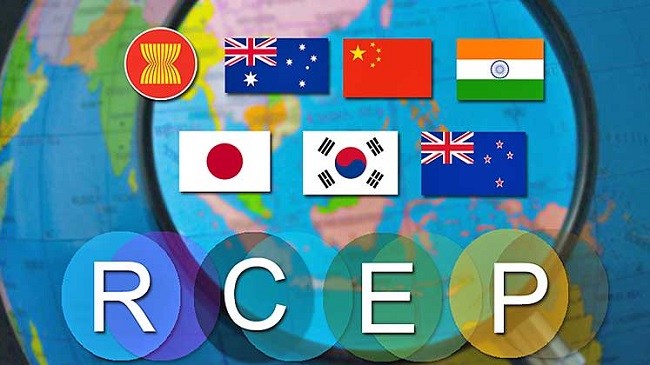
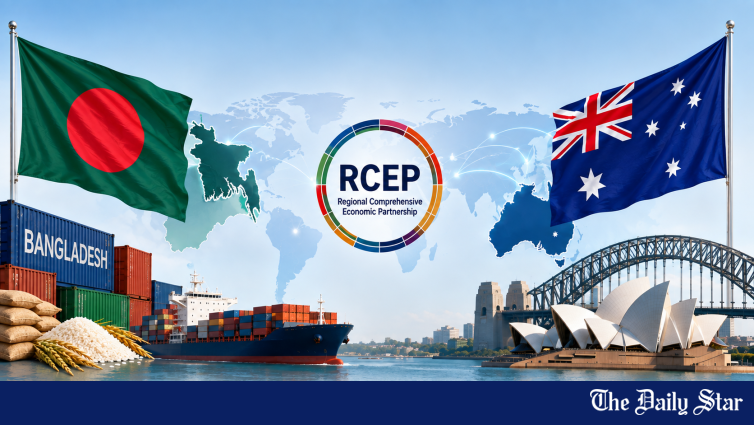
Canberra, August 13, 2026 — Bangladesh has formally sought Australia's backing for its accession to the Regional Comprehensive Economic Partnership (RCEP), the world's largest free trade bloc, as part of a strategic push to secure preferential market access after graduating from the least developed country (LDC) category. Commerce Secretary Md Ataur Rahman Khan made the request during a meeting with senior Australian trade officials in Canberra on Wednesday.
🇦🇺 The Canberra Meeting: Who Met Whom
The commerce secretary led a Bangladeshi delegation to Australia and New Zealand this week to explore opportunities for expanded bilateral trade. In Canberra, he held detailed talks with:
- 👥 Ravi Kewalram — First Assistant Secretary, Australian Department of Foreign Affairs and Trade
- 👥 Sarah Storey — First Assistant Secretary, South and Central Asia Division
The meetings covered a comprehensive trade agenda spanning RCEP accession, bilateral FTA prospects, LDC graduation transition, fibre trade, clean energy cooperation, and workforce development.
🌐 Why RCEP Matters: A 170-Million Consumer Bridge
With a market of approximately 170 million people, Bangladesh's accession to RCEP would create a strategic trade bridge connecting South Asia with East Asia and the Association of Southeast Asian Nations (ASEAN). RCEP is the world's largest free trade agreement by combined GDP, covering 15 Asia-Pacific economies including China, Japan, South Korea, Australia, New Zealand, and the 10 ASEAN members.
Bangladesh has already formally submitted the RCEP accession questionnaire and begun aligning its domestic laws on intellectual property, competition, and personal data protection with RCEP standards — signalling that the bid is genuine and substantive, not merely diplomatic signalling.
⏳ LDC Transition Extension: A Critical Ask
Bangladesh has applied to the United Nations for an extension of its LDC graduation preparation period until November 2029, citing global energy-price inflation, trade disruptions, and recent domestic economic challenges. The UN Committee for Development Policy (CDP) has already recommended the extension, and the UN General Assembly is expected to take a final decision in September 2026.
During the Canberra meeting, Bangladesh explicitly sought Australia's friendly support for the extension. The three-year grace period is widely seen as critical breathing room for Dhaka to finalise bilateral and regional trade agreements before losing preferential market access.
Bangladesh also expressed gratitude to Australia for continuing duty-free, quota-free (DFQF) market access for Bangladeshi products even after LDC graduation — a decision that protects Bangladesh's $700+ million annual exports to Australia.
📝 Bilateral FTA Proposal: Australia to Consult Stakeholders
Beyond RCEP, Bangladesh proposed that Australia consider concluding a bilateral free trade agreement. In response, Australia indicated it would consult with stakeholders and determine the appropriate course of action — a measured but non-committal response that leaves the door open for future negotiations.
A bilateral FTA would complement RCEP membership by addressing country-specific market access barriers, investment protection, and rules of origin that multilateral agreements often cannot fully resolve.
🧵 RMG and Premium Australian Fibres: A Complementary Trade
One of the more commercially significant threads of the Canberra meeting was the discussion on fibre trade. Australia is a global leader in high-quality wool and cotton production, while Bangladesh is the world's second-largest apparel exporter. The two sides identified a clear complementarity:
- 🧱 Australian wool and cotton — could supply Bangladesh's apparel industry for higher-value products
- 👕 Bangladesh RMG sector — identified as an important destination for Australia's premium natural fibres
- 💰 Higher-value product positioning — Bangladesh could use Australian fibres to move up the apparel value chain
- 🌏 Global apparel market — Australian fibre + Bangladeshi manufacturing = premium garments for Western buyers
For Bangladesh's apparel industry — under pressure from US tariff uncertainty and the loss of duty-free access in several markets — access to premium Australian natural fibres could open a new value-added segment that competes on quality rather than price alone.
⚡ Clean Energy and Workforce Development
The Canberra meetings also explored two emerging cooperation areas:
- ⚡ Clean-energy technologies and grid modernisation — Australia's expertise in renewable energy, energy storage, and smart grids is highly relevant to Bangladesh's energy transition
- 💼 Workforce development — cooperation with Australian technical and vocational education and training (TVET) institutions to build industry-ready skills in Bangladesh
Both areas align directly with Bangladesh's FY2026-27 reform priorities, which emphasise energy security, climate resilience, and skills upgrading as enablers of export competitiveness.
📊 Bangladesh-Australia Trade Snapshot
While Bangladesh's trade with Australia is modest compared to its RMG-driven trade with the EU and US, the relationship offers significant untapped potential:
- 🇧🇩 Bangladesh exports to Australia — RMG (~80%), leather, frozen foods, agro-products, jute goods
- 🇦🇺 Australia exports to Bangladesh — cotton, wool, education services, machinery, dairy
- 💰 DFQF access — Australia confirmed continuation post-LDC graduation
- 📈 Growth potential — wool-based apparel, agri-tech, clean energy, education services
🌐 Strategic Context: A Coordinated Indo-Pacific Pivot
The Canberra visit is part of a broader Bangladeshi trade diplomacy pivot toward the Indo-Pacific. With LDC graduation scheduled for November 2026 (or November 2029 if the UN grants the extension), Dhaka is systematically building commercial relationships with mid-sized developed economies that share its interest in a rules-based trading order. The Australia-New Zealand tour follows earlier trade pact signings with Japan (EPA) and South Korea (CEPA), and ongoing negotiations with the EU, GCC, and the United States.
For Bangladesh's export community, the Canberra meeting opens a strategic pathway: RCEP membership for regional market access, a bilateral FTA with Australia for fibre and education trade, and a clean-energy partnership to support industrial competitiveness. Whether Canberra reciprocates with FTA enthusiasm — or prefers to keep the relationship at the RCEP level — will be one of the more consequential trade-policy questions of the coming months.
This news was originally published by The Daily Star. For the full original report, please visit: https://www.thedailystar.net/business/news/bangladesh-seeks-australias-support-joining-rcep-4247021
Related on BangladeshExport
📬 Get Bangladesh Trade News in your inbox
Weekly digest of export industry news, policy updates, and market analysis.
📰 Related Stories