Alliance Knit Composite Lays Off 565 Workers in Ashulia Amid Order Slump
AKCL factory cites falling purchase orders and banking difficulties; workers receive dues August 10; labour federation demands reinstatement under Section 20 of Labour Act
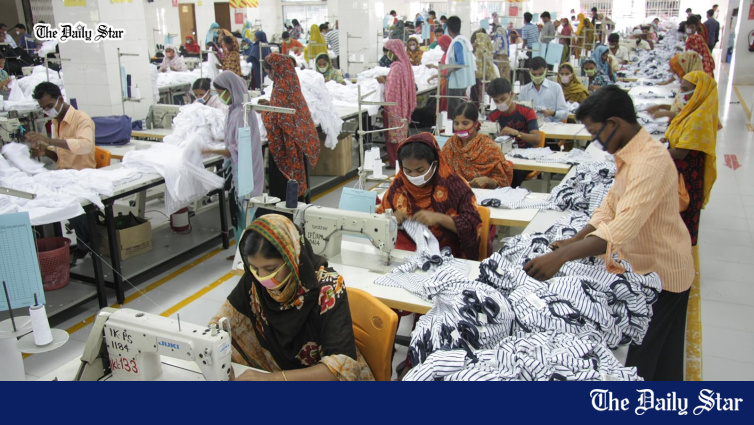
Ashulia, August 6, 2026 — Alliance Knit Composite Ltd (AKCL), an export-oriented garment factory in Ashulia, has laid off 565 workers, citing a severe business downturn driven by falling purchase orders and inadequate banking support — adding to the growing list of factory closures and layoffs across Bangladesh's garment belt as the sector grapples with weak global demand and domestic economic pressures.
The decision was announced in a notice issued by the factory's Human Resources and Administration Department on August 6. According to the notice, the factory has been struggling due to a sharp decline in purchase orders and inadequate banking support, which have significantly disrupted production. The management said it was forced to reduce its workforce to ensure the factory's survival and maintain business continuity.
📋 Layoff Details
- 🏭 Factory: Alliance Knit Composite Ltd (AKCL), Ashulia
- 👥 Workers laid off: 565
- 👥 Total workforce: ~3,000
- 📅 Effective date: August 8, 2026
- 📜 Legal basis: Section 20, Bangladesh Labour Act, 2006
- 💰 Dues payment: August 10, 2026
- 🔄 Re-employment: Priority for laid-off workers if production expands
The notice said the layoff, effective from August 8, was carried out under Section 20 of the Bangladesh Labour Act, 2006. It added that all affected workers would receive their legal dues and compensation within the timeframe stipulated in Section 20(2) of the law. The factory also said the laid-off workers would be given priority for re-employment if production expands or new recruitment becomes necessary.
💬 Management Explanation
Speaking to The Daily Star, Md Mominul Islam, manager (Human Resources and Administration) at the factory, said AKCL employs around 3,000 workers but has been facing financial difficulties for the past several months due to the global economic slowdown.
"Because of a shortage of purchase orders, we have had to stop production by around 2:00pm or 3:00pm almost every day over the past few months. Under the circumstances, the management decided to lay off 565 workers," he said. He added that the workers would receive all their dues on August 10.
The pattern of early production shutdowns — stopping by 2:00 or 3:00 PM daily — is a clear indicator of the order shortage that has been plaguing the sector. With factories unable to maintain full-day production, the gap between fixed costs (worker salaries, machinery depreciation, facility overhead) and declining revenue from fewer orders becomes unsustainable — forcing management to reduce headcount to match the reduced production volume.
😔 Worker Perspective
Md Jiarul Haque, a sewing operator at the factory, said he had travelled to his home in Dinajpur. He first learned of the decision via text messages from the company on Thursday night. "I don't know why I was laid off. Later, I learned that the notice had also been posted at the factory's main gate. Losing my job has left me deeply worried," he told The Daily Star.
The experience of Jiarul Haque — receiving a text message while visiting his village — illustrates the human impact of the sector's economic difficulties. For workers who earn monthly salaries that are already stretched thin by 9.16 percent inflation, the sudden loss of employment creates an immediate financial crisis that extends to their families, dependents, and the rural economies that benefit from garment workers' remittances home.
⚠️ Labour Federation Response
Rafiqul Islam, president of the Bangladesh Garments and Shramik Federation, alleged that the claim of a business downturn or shortage of work orders was merely an excuse. "Laying off such a large number of workers is inhumane. We demand that the notice be withdrawn immediately and that all laid-off workers be reinstated," he said.
The labour federation's demand for reinstatement reflects a broader tension in the sector: while factory owners cite genuine economic pressures (order shortages, banking difficulties, gas crisis), labour leaders argue that some layoffs may be opportunistic — using the economic downturn as cover to shed workers who may have been involved in labour activism or who represent higher wage costs. Without transparent auditing of the claimed order shortages, it is difficult to verify whether each individual layoff is genuinely economically justified.
📋 Strategic Context
The AKCL layoff of 565 workers is the latest in a series of employment losses documented across Bangladesh's garment sector. The Industrial Police reported 158 factory closures in Gazipur between May 2025 and April 2026, and the BGMEA, BTMA, and BKMEA recently recommended 370 distressed factories for the Tk 60,000 crore stimulus package. The 565-worker layoff at a single factory represents a significant concentration of job losses that will directly affect the local economy of Ashulia — one of the country's most important garment manufacturing hubs.
For the broader sector, the AKCL layoff underscores the urgent need for the stimulus package funds to reach distressed factories before more workers lose their jobs. The 370 factories recommended by the trade associations represent only a portion of the nearly 700 closed or distressed units nationwide — meaning that factories like AKCL that are not yet on the stimulus list may continue shedding workers while waiting for financial support. The combination of weak global demand, the gas crisis, high borrowing costs, and the US tariff pressure creates a multi-dimensional crisis that no single policy intervention can resolve. The path to sector stability requires simultaneous progress on energy supply, financial support, market diversification, and compliance — all of which are works in progress rather than completed reforms.
This news was originally published by The Daily Star. For the full original report, please visit: https://www.thedailystar.net/business/economy/rmg/news/565-workers-lose-jobs-ashulia-garment-factory-management-cites-order-slump-4242301
Related on BangladeshExport
📬 Get Bangladesh Trade News in your inbox
Weekly digest of export industry news, policy updates, and market analysis.
📰 Related Stories