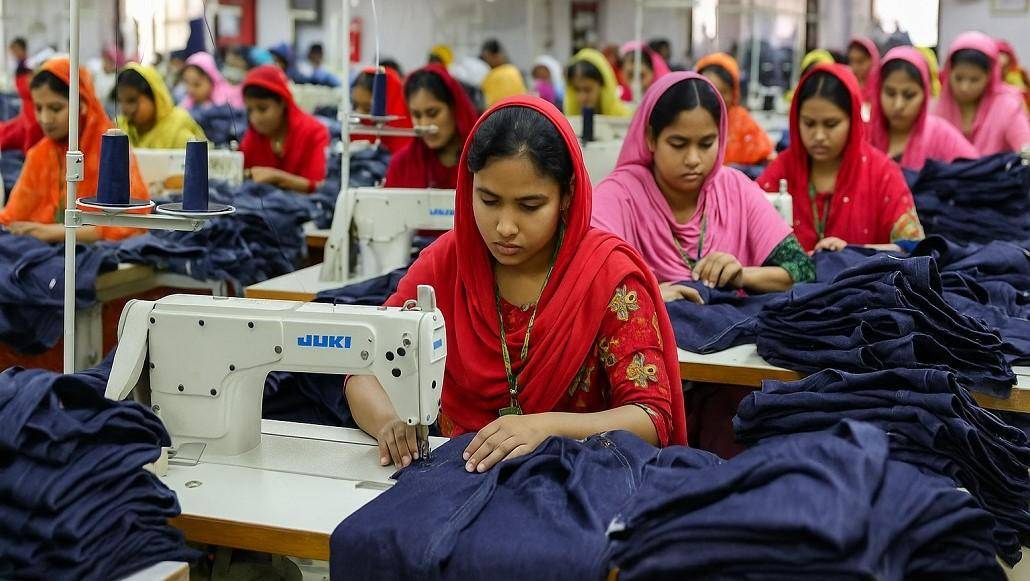
158 Factories Shut in Gazipur: Thousands of Workers Hunt for Jobs
Investigation reveals 158 garment factory closures in Gazipur since May 2025; laid-off workers queue daily outside remaining factories as database misuse allegations surface
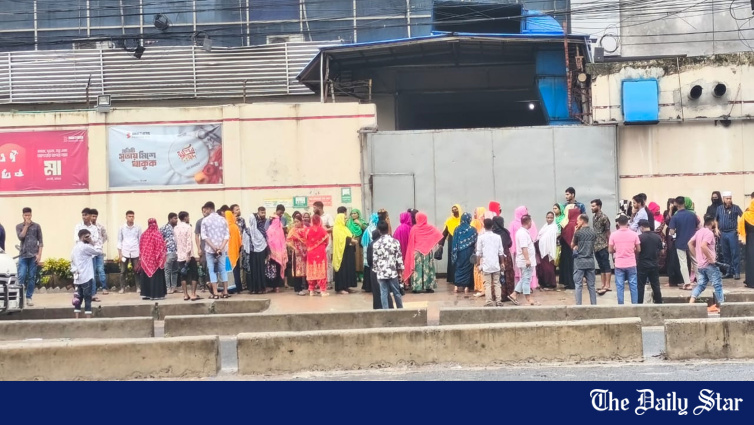
Gazipur, August 4, 2026 — Every morning for the past 15 days, Minara Begum has left her home with a photocopy of her national ID and a job application, joining thousands of unemployed garment workers who gather outside factory gates across Gazipur's industrial zones in a desperate search for new employment. Most days, she returns home empty-handed.
The 55-year-old veteran operator, who has worked in factories across Bangladesh for decades, last held a job before her previous factory shut down two weeks ago. Since then, she has joined a daily ritual that has become a defining image of Bangladesh's apparel sector crisis: long queues of male and female job seekers forming outside operating factories from early morning, competing for a handful of vacancies that may not even exist.
"I don't know how I will manage my house rent, my children's education expenses, and unpaid bills," Minara told The Daily Star, standing outside Rouf Style Company in Bhogra. "Five others and I go out every day looking for work, but none of us has been able to find a job."
📊 158 Factories Closed in 13 Months
The crisis unfolding across Gazipur's industrial belt is staggering in scale. A total of 158 garment factories in the district shut down between May 3, 2025 and April 11, 2026, according to Gazipur Industrial Police Superintendent Amzad Hossain. The district currently has 2,674 factories in operation, meaning roughly one in every 18 factories has closed in just over a year.
The closures break down as follows:
- 💲 83 factories closed due to insufficient work orders
- 💳 51 factories closed due to financial crises
- ⚠️ 7 factories closed due to labour unrest
- 👥 2 factories closed due to shareholder disputes
- 📦 15 factories closed due to raw material shortages and other causes
🗺️ Industrial Zones Hit Hardest
Visits to industrial areas including Chandana Chowrasta, Basan, Bhogra, Konabari, Kashimpur, Tongi, Gazipur Sadar, Sreepur, and Kaliakair revealed long queues of job seekers forming from early morning. Many wait for hours without securing so much as an interview, as hundreds compete for a handful of vacancies — a situation worsened by the closure of numerous garment and industrial factories across the belt.
Units belonging to Lithi Group, Keya Group, Dird Group, Beximco Group, and several other companies have suspended operations indefinitely or halted production, leaving hundreds of thousands of workers unemployed. The repeated rejections are stripping many workers of hope.
Lithi Group Director Mohammad Nazmul told The Daily Star: "We have decided to shut down four of our units due to market instability and banking complexities." The admission highlights how the factory closure wave is being driven not just by energy shortages, but by a combination of weak export demand, banking sector stress, and broader macroeconomic headwinds.
👥 Database Misuse and Gender Bias Allegations
Mohammad Ashrafuzzaman, central organising secretary of the National Garments Workers' Alliance Bangladesh, said the closure of large and medium-sized factories has created a humanitarian and economic crisis alongside the industrial one. He alleged that settlement agreements often reduce the compensation workers are legally owed, and that many workers struggle to find new jobs due to misuse of biometric and fingerprint databases by previous employers.
Workers who participated in protests or demanded unpaid wages are being unofficially blacklisted, Ashrafuzzaman said. The allegation points to a systemic issue where the very databases designed to verify employment histories are being weaponised against workers who assert their legal rights.
Shafiul Alam, central joint general secretary of the Bangladesh Garments and Industrial Workers Federation and president of its Gazipur Metropolitan unit, said most workers affected by permanent closures and layoffs have yet to find new employment. He alleged that some factories add negative information about workers to the BGMEA database, making it difficult for skilled workers to find jobs elsewhere, while recruitment has also slowed at factories still operating.
"Women workers have been affected the most," Shafiul said — a claim borne out by the experience of workers on the ground.
👩 Women Workers Bear the Brunt
Asma Akter, 40, who worked as an operator at Dird Group in Rajendrapur for more than three years, said 18,000 workers lost their jobs during labour unrest a year ago. She claims that 70 percent of them were women. Her own attempt to find new work has been blocked by a single entry in her employment record.
"My database record was marked as 'dismissed', so no factory wanted to hire me," she said. She has been unable to find work since.
The gender dimension of the crisis reflects broader shifts in the garment workforce. Women made up roughly 80 percent of Bangladesh's garment workforce between 1980 and 1994, according to BGMEA data. That figure fell to around 53 percent in 2023, according to the Bangladesh Institute of Development Studies (BIDS) — a decline that predates the current factory closure wave but is now being accelerated by it.
🔍 Database Blacklisting: A Systemic Problem
The allegations around database misuse point to a structural problem in the industry's employment verification system. The BGMEA database, designed to track worker employment histories and prevent unauthorised job-hopping, is allegedly being used to blacklist workers who participated in strikes, demanded unpaid wages, or filed complaints with the Department of Inspection for Factories and Establishments.
When asked about the number of factories currently under temporary closure in Gazipur, MM Mamun Or Rashid, deputy chief inspector of the Department of Inspection for Factories and Establishments, could not provide the data immediately — highlighting the broader transparency gap around the scale of temporary suspensions, which are distinct from permanent closures but still leave workers without income.
😔 Workers Consider Leaving the Sector
For many unemployed workers, the future appears bleak. Waiting outside Brothers Fashion Limited's factory in Chandana Chowrasta, 40-year-old Ashfia says she is considering giving up job hunting altogether. "I heard they were hiring. This is my last attempt. If I don't get a job today, I'll return to my village."
Two others who had come with her had already gone home after failing to find work. Ashfia said she might have to work as a domestic helper to survive — a stark illustration of how the closure wave is pushing skilled garment workers into informal, lower-paid, and less regulated employment.
📋 Strategic Context
The Gazipur factory closure crisis is unfolding against a backdrop of overlapping pressures on Bangladesh's apparel sector: severe gas and electricity shortages that have forced many factories to operate at reduced capacity, a 9 percent year-on-year decline in exports to major markets, the imposition of new US tariffs including a 19 percent reciprocal duty and a 10 percent forced labour tariff, and intensifying competition from Vietnam and other regional rivals.
While BGMEA has pushed back against reports of factory closures driven specifically by the gas crisis — arguing that many member factories are operating at 60-70 percent capacity — the Industrial Police data on 158 closures reveals the deeper structural pressures at work. Insufficient work orders and financial crises, not energy shortages alone, are the dominant drivers of permanent shutdowns, suggesting that the sector's challenges extend well beyond the immediate energy crunch.
For the workers queueing outside factory gates each morning, the distinction between temporary capacity reductions and permanent closures is academic. What matters is whether they can secure a job that pays enough to cover rent, school fees, and unpaid bills — and for thousands of skilled operators like Minara Begum and Asma Akter, that question remains unanswered.
This news was originally published by The Daily Star. For the full original report, please visit: https://www.thedailystar.net/business/economy/news/factories-close-thousands-hunt-jobs-gates-4239376
Related on BangladeshExport
📬 Get Bangladesh Trade News in your inbox
Weekly digest of export industry news, policy updates, and market analysis.
📰 Related Stories