Red Sea Shipping Slows After Houthi Attack on Saudi Aramco Facilities
Bab el-Mandeb traffic drops to lowest in months with only 11 vessels transiting Sunday, while Strait of Hormuz remains disrupted; Houthi strikes on Jizan and Yanbu Aramco sites send crude prices to two-month highs
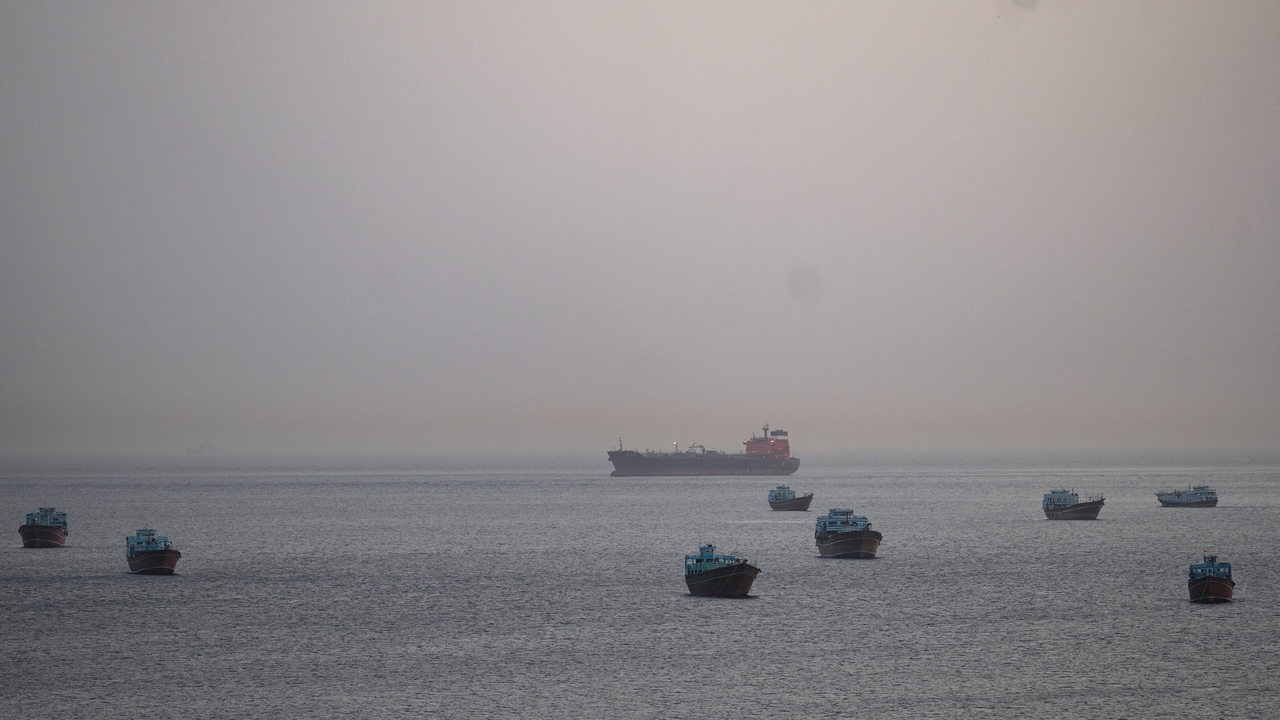
Dhaka, July 27, 2026 — Ship traffic through the critical Bab el-Mandeb strait fell sharply on Sunday after Yemeni Houthi forces attacked Saudi Arabian oil installations along the Red Sea coast, while transit through the Strait of Hormuz remained low over the weekend, according to shipping data from Kpler. The dual disruption of two of the world's most important maritime chokepoints threatens to compound the global energy shipping crisis and poses significant implications for Bangladesh's import-dependent economy. ⚠
🚢 Only eleven commodity vessels passed through the Bab el-Mandeb strait on Sunday — the lowest level in months — as the Tehran-aligned Houthis expanded their naval blockade strategy to include Saudi oil exports. The escalation broadens the US-Iran conflict that has already choked oil supply through the Strait of Hormuz, creating a two-front shipping crisis in the Middle East's most critical energy transport corridors.
📊 Bab el-Mandeb Traffic Details
🚢 According to Kpler's shipping data, the eleven vessels that passed through Bab el-Mandeb on Sunday included:
- 🛢️ Seven oil tankers — the majority of Sunday's traffic
- 🚢 Three of those tankers entered the Red Sea — heading towards Saudi ports
- 📍 Four vessels exited the Red Sea — completing their transit
📊 Among the vessels transiting the strait, the data showed several large crude carriers engaged in significant oil shipments:
- 🚢 Two Very Large Crude Carriers (VLCCs) — heading to the port of Yanbu to load Saudi crude
- 🇷🇺 One Russian-linked ship — also transiting the strait
🚢 Notable Vessel Movements
📜 The four vessels that exited the Red Sea on Sunday included several significant crude oil shipments bound for Asian markets:
- 🇭🇰 Hong Kong-flagged VLCC New Explorer — carrying 2 million barrels of Saudi and Emirati crude for eastern China's Ningbo port
- 🇷🇺 A tanker carrying 1 million barrels of Russian crude — bound for China
- 🇸🇦 A tanker with approximately 750,000 barrels of Saudi crude — heading to another destination
- 🇭🇰 Hong Kong-flagged VLCC New Pearl — carrying 2 million barrels of Saudi crude for eastern China's Zhoushan port, the fourth Chinese supertanker to leave since the Houthis declared their naval blockade
💼 Associated Maritime Hong Kong, the manager for both New Explorer and New Pearl, did not immediately respond to a request for comment outside office hours, according to the report.
🏛 Houthi Attacks on Saudi Aramco
🇸🇦 Houthi military spokesperson Yahya Saree said the group struck sites belonging to Saudi state oil company Aramco in the cities of Jizan and Yanbu on Saturday. The attacks on Saudi oil infrastructure represent a significant escalation of the Houthi blockade strategy, expanding from targeting shipping to directly attacking oil production and export facilities.
📊 The targeting of Jizan and Yanbu is strategically significant because both cities host major Saudi Aramco facilities:
- 🏭 Yanbu — a major Red Sea oil terminal and refinery complex, critical for Saudi crude exports to European and Asian markets
- 🏭 Jizan — an industrial city with a major oil refinery and terminal facilities on the southern Red Sea coast
⚠ By striking both facilities simultaneously, the Houthis demonstrated their ability to disrupt Saudi oil exports at multiple points along the Red Sea corridor — complicating Saudi Arabia's efforts to maintain stable oil shipments through alternative routes when the Bab el-Mandeb strait becomes unsafe for transit.
🚢 Strait of Hormuz Also Affected
📊 The shipping disruption is not limited to the Red Sea. Fewer than 10 commodity vessels passed through the Strait of Hormuz daily over the weekend, even though the US and Iran have paused strikes in the Middle East, according to Kpler data. The weekend traffic patterns showed:
- 🚢 Sunday: 7 vessels transited, including 3 Iranian-linked oil products tankers that exited the Strait
- 🚢 Saturday: Only 3 vessels passed with transponders switched off
- 🚢 Friday: 7 vessels passed, mostly exiting the Gulf, including 2 VLCCs carrying crude from Iraq and the UAE
📜 The Saturday traffic included particularly notable movements with transponders switched off:
- 🇶🇦 A VLCC heading to Qatar to load oil
- 🇦🇪 A liquefied petroleum gas tanker going to the Ruwais port in the UAE to load a cargo
- 🇯🇵 A tanker carrying Qatari naphtha heading to Japan
💰 Impact on Crude Oil Prices
📈 The shipping disruption caused prices of physical crude cargoes in the Middle East, Europe, and Africa to jump to two-month highs last week. The combination of Houthi attacks on Saudi Aramco facilities and reduced traffic through both Bab el-Mandeb and Hormuz has created a compound supply chain shock that is reverberating through global oil markets.
📊 For Bangladesh, which is heavily dependent on imported energy — including LNG, crude oil, and refined petroleum products — the dual disruption of Red Sea and Hormuz shipping lanes poses a direct threat to the country's energy security. Bangladesh's energy import bill has already surged from $4.3 billion in FY2021 to $11.2 billion in FY2026, and any further escalation in Middle East shipping disruptions could compound the fiscal and balance-of-payments pressures identified by S&P Global in its recent outlook revision.
🌏 Bangladesh's Vulnerability to Middle East Shipping Disruptions
🇧🇩 Bangladesh is particularly vulnerable to disruptions in Middle East maritime corridors for several reasons:
- 🚢 LNG imports — Bangladesh relies on FSRUs at Moheshkhali to import LNG, much of which transits through Middle East shipping lanes
- 🛢️ Crude oil imports — Bangladesh imports crude oil from Middle East producers, with shipments transiting through Hormuz
- 👕 RMG raw materials — cotton, dyes, and other inputs transit through Suez Canal and Red Sea routes
- 🇽🇦 Remittance economy — millions of Bangladeshi workers in Middle East countries are affected by regional instability
- 🚢 Export shipments — Bangladeshi RMG exports to Europe transit through Suez Canal and Red Sea
📜 Broader Geopolitical Context
🌏 The Houthi attacks on Saudi Aramco facilities represent an expansion of the Iran-aligned group's blockade strategy beyond purely naval interdiction. By striking land-based oil infrastructure, the Houthis are demonstrating their ability to disrupt Saudi oil exports at their source — not just at sea. This escalation significantly complicates Saudi Arabia's options for maintaining stable oil exports and increases the risk of broader regional conflict.
🇺🇸 The expansion of Houthi operations also creates new complexities for US diplomatic efforts to maintain a pause in strikes with Iran. While the US-Iran ceasefire has reduced direct tensions between Washington and Tehran, the continuation of Houthi attacks — a group widely understood to receive Iranian support — undermines the broader regional de-escalation agenda.
🚢 Implications for Global Shipping Routes
📊 The simultaneous disruption of both Bab el-Mandeb and Hormuz creates a particularly challenging environment for global shipping companies, which must now navigate two major chokepoints with elevated risk profiles. Ship owners and operators face difficult decisions about:
- 🚧 Route selection — whether to transit the affected straits or reroute around Africa
- 💰 Insurance costs — war risk premiums rising for transits through affected areas
- ⏳ Delivery timelines — longer routes adding days or weeks to voyage times
- 💲 Freight rates — higher costs being passed through to cargo owners and ultimately consumers
- 🔍 Charter decisions — increased scrutiny of vessel flags, ownership, and cargo types
📈 Looking Ahead: Risks and Scenarios
🌏 The coming weeks will be critical in determining whether the Houthi escalation triggers a broader regional conflict or remains a contained disruption. Key factors to watch include:
- 🇸🇦 Saudi response — whether Riyadh retaliates militarily against Houthi positions in Yemen
- 🇺🇸 US diplomatic engagement — whether Washington can use its influence to restrain regional escalation
- 🇮🇷 Iran's role — whether Tehran uses its influence with the Houthis to de-escalate
- 🚢 Insurance markets — whether war risk premiums continue to rise, further compressing shipping economics
- 💰 Oil prices — whether crude prices continue to climb, with knock-on effects for global inflation
🇧🇩 For Bangladesh, the immediate priority is to assess the implications for the country's energy import pipeline and to ensure that adequate reserves and alternative supply arrangements are in place to weather a potential extended disruption. With the country's FSRU at Moheshkhali already operating under repair conditions following last week's fire incident, the timing of the Red Sea shipping disruption could not be worse — underscoring the urgency of diversifying Bangladesh's energy import infrastructure and accelerating the deployment of additional FSRUs.
📊 As the situation evolves, Bangladeshi policymakers will need to monitor developments closely and prepare contingency plans for a range of scenarios — from a quick de-escalation that restores normal shipping patterns to a prolonged disruption that requires significant adjustments to the country's energy and trade logistics strategies.
This news was originally published by The Daily Star. For the full original report, please visit: https://www.thedailystar.net/business/news/red-sea-shipping-slows-after-houthi-attack-saudi-arabia-data-shows-4233836
📬 Get Bangladesh Trade News in your inbox
Weekly digest of export industry news, policy updates, and market analysis.
📰 Related Stories