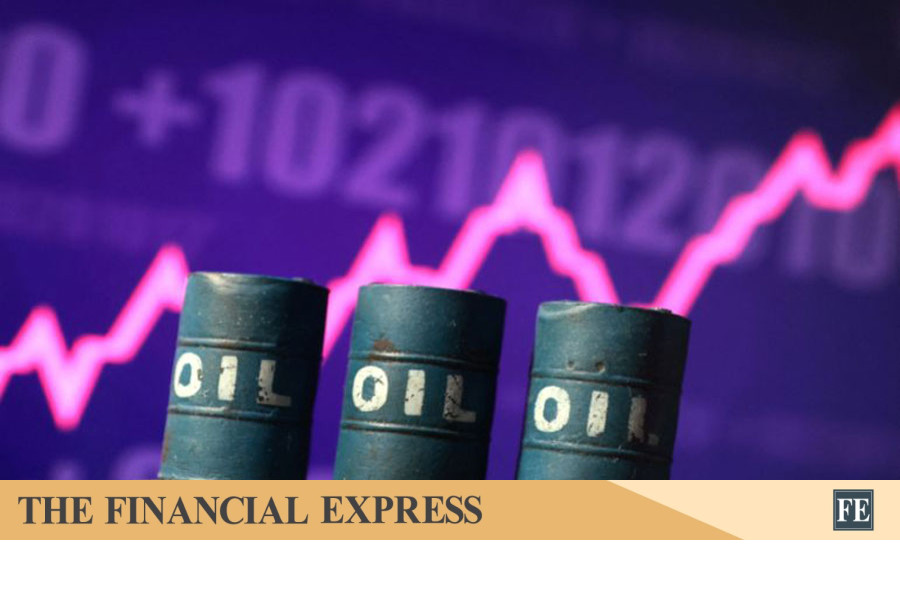
Oil Markets Brace For Long-Term Tightness As Iran War Refuses To End, Brent Crude Holds Above $100
International Energy Agency forecasts diesel supplies to remain tight through 2027; oil markets initially treated Iran war as brief disruption but now see long-term bearish trend reversal.

📨 Oil markets initially treated the Iran war as a brief bullish disruption in a long-term bearish trend. That view has now fundamentally shifted. As the conflict between the United States and Iran shows no signs of resolution, oil markets are bracing for an extended period of supply tightness — with Brent crude holding above $100 per barrel and analysts increasingly projecting that elevated prices could persist for years rather than months.
📊 The shift in market sentiment reflects several factors. First, the closure of the Strait of Hormuz — one of the world''s most critical oil and LNG shipping chokepoints — has disrupted supplies from Qatar, the United Arab Emirates, and other Gulf producers. Second, international sanctions on Iranian oil have removed a significant volume of crude from global markets. Third, the broader geopolitical uncertainty created by the conflict has led oil traders to demand a higher risk premium, pushing prices above where supply-demand fundamentals alone would suggest.
🏛 Diesel supply tightness through 2027
The International Energy Agency (IEA) has forecast that diesel supplies will remain tight through 2027, reflecting the combined impact of refinery capacity constraints, supply disruptions, and elevated demand. Diesel is a particularly critical fuel for the global economy — it powers trucks, ships, agricultural machinery, and industrial generators. Sustained tightness in diesel markets translates directly into higher transport costs, higher food prices, and broader inflationary pressure across the global economy.
For Bangladesh, the diesel supply tightness is particularly concerning. The country imports a significant portion of its diesel requirements, and diesel accounts for about 65% of Bangladesh''s petroleum product consumption. The Bangladesh Petroleum Corporation (BPC) has already incurred losses of Tk 228.76 billion between March and August 2026 as it absorbed the gap between elevated international diesel prices and capped domestic prices. The prospect of continued tightness through 2027 suggests that BPC''s financial strain could continue for an extended period.
💰 Why the war is changing the long-term oil outlook
The Iran war is changing the long-term oil outlook in several ways:
- ⚠ Supply infrastructure damage: Military conflict has damaged oil production and refining infrastructure in the region, and repairs will take years even after the conflict ends.
- ⚠ Investment freeze: International oil companies are reluctant to invest in new production capacity in conflict-affected regions, reducing future supply growth.
- ⚠ Sanctions persistence: Sanctions on Iranian oil are likely to remain in place even after the conflict ends, keeping Iranian crude off global markets.
- ⚠ Geopolitical risk premium: Traders will demand a persistent risk premium for oil from the Middle East, keeping prices elevated even when supplies are available.
- ⚠ Strategic stockpiling: Major oil-importing countries are likely to accelerate strategic stockpiling, increasing demand and putting further upward pressure on prices.
🌏 Implications for Bangladesh
For Bangladesh, the prospect of sustained high oil prices has significant macroeconomic implications. The country is heavily dependent on imported oil and LNG to meet its energy needs, and elevated international prices translate directly into higher import costs, pressure on foreign exchange reserves, and elevated domestic inflation.
The Bangladesh Petroleum Corporation''s financial strain — with Tk 195 billion already drawn down from project funds to sustain oil imports — is likely to continue if oil prices remain elevated. The government''s recent fuel price adjustments (raising diesel, kerosene, octane, and petrol prices by Tk 20 per litre on 21 September) provided some relief to BPC''s financial position, but the gap between international and domestic prices remains substantial.
The broader macroeconomic impact includes continued pressure on the trade balance, foreign exchange reserves, and inflation. Bangladesh''s inflation is already running at 8.26% in August 2026, well above the government''s FY27 target of 7.5%. Sustained high oil prices will make it more difficult for the central bank to bring inflation back to target, potentially requiring tighter monetary policy that constrains credit growth and economic activity.
👥 Implications for global trade
The long-term oil market tightness will also affect global trade patterns. Higher shipping costs — driven by elevated bunker fuel prices — will translate into higher landed costs for traded goods, potentially dampening global trade volumes. For Bangladesh''s export-oriented sectors, particularly readymade garments, higher shipping costs could erode the competitive advantage that the country has built through low-cost production.
The redirection of trade flows away from conflict-affected regions is also creating new opportunities. Some oil importers are looking to source supplies from alternative producers — including the United States, Brazil, and African countries — creating new trade relationships. Bangladesh may need to diversify its own oil and LNG sourcing to reduce its dependence on Middle Eastern suppliers that are exposed to conflict-related disruptions.
🤝 Looking ahead
The oil market outlook for the coming years is likely to be characterised by sustained elevated prices, periodic supply disruptions, and continued geopolitical risk. For oil-importing countries like Bangladesh, this outlook requires a strategic response that includes:
- ✅ Strategic petroleum reserves: Building domestic strategic petroleum reserves to provide a buffer against supply disruptions.
- ✅ Domestic energy development: Accelerating domestic gas exploration, renewable energy deployment, and energy efficiency improvements to reduce dependence on imported fuels.
- ✅ Supplier diversification: Diversifying oil and LNG sourcing away from conflict-affected regions to reduce supply risk.
- ✅ Fuel pricing reform: Implementing more responsive domestic fuel pricing mechanisms that can adjust to international price changes without creating massive financial losses for state-owned oil companies.
- ✅ Macroeconomic hedging: Building foreign exchange reserves and implementing prudent fiscal and monetary policies that can absorb the macroeconomic shocks from sustained high oil prices.
The coming months and years will test Bangladesh''s ability to navigate the sustained challenges of an elevated oil price environment. The country''s macroeconomic stability, external balance, and inflation trajectory will all be significantly influenced by how well it manages the energy security challenges created by the Iran war and the broader Middle East conflict.
This news was originally published by The Daily Star. For the full original report, please visit: https://www.thedailystar.net/business/global-economy/news/oils-long-view-darkens-iran-war-refuses-end-4299736
📬 Get Bangladesh Trade News in your inbox
Weekly digest of export industry news, policy updates, and market analysis.
📰 Related Stories