IOM Chief: Investing Remittances in SMEs Can Create Jobs and Strengthen Bangladesh Economy
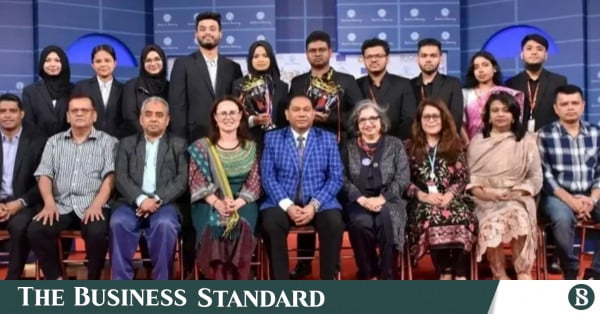
Dhaka, August 22, 2026 — Investing a portion of remittance inflows in small and medium enterprises (SMEs) will create new jobs, strengthen the local economy, and open up new opportunities for future generations, IOM Bangladesh Chief of Mission Laura Tomm Bonde said on 22 August 2026. She was addressing a mock parliamentary debate as chief guest at the Bangladesh Film Development Corporation (FDC) in Dhaka to mark International Day of Family Remittances 2026.
"When migration is safe, regular and orderly, its benefits are not limited to an individual migrant," Bonde said, emphasising that safe, regular, and orderly migration contributes to the overall development of families, society, and the country. She stressed that every remittance reflects the hard work, resilience, and sense of responsibility of Bangladeshi expatriates.
📊 The Remittance-SME Connection
Bonde emphasised that directing a portion of remittances into the SME sector would boost local economic momentum and create sustainable opportunities for future generations. The event was jointly organised by Debate for Democracy and IOM Bangladesh, with support from the European Union.
- 💰 Remittances as a key driver — remittances serve as a major pillar of foreign exchange reserves
- 👥 25% workforce link — migration is directly linked to the employment of nearly 25% of Bangladesh's workforce
- 📉 Poverty reduction — the national poverty rate would have been roughly 10% higher without overseas employment opportunities
- 🏭 SME investment — channelling remittances into productive investments rather than consumption alone ensures long-term financial stability
👥 Expatriate Workers as Economic Heroes
Hasan Ahmed Chowdhury Kiron, Chairman of Debate for Democracy, who chaired the event, described expatriate workers as the nation's economic heroes. He said remittances serve as a key driver of the economy and a major pillar of foreign exchange reserves. He stressed the importance of channelling remittances into productive investments, particularly SMEs, rather than using them solely for consumption, to ensure the long-term financial stability of migrant families.
🤝 IOM-Bangladesh Cooperation
Bonde said IOM is working closely with the government to improve migration management and ensure the protection of migrants. The organisation's partnership with Bangladesh spans years of cooperation on safe migration, returnee reintegration, and the productive use of remittances for development.
🏛 Mock Parliamentary Debate
The debate competition, titled "Investing Remittances in the SME Sector is the Best Strategy for Protecting Migrant Families," brought together university debate teams to discuss the policy implications of remittance investment. Dhaka International University emerged as the winner, defeating the debating team from the State University of Bangladesh. The event highlighted both migrant protection and the productive investment of remittance flows.
🌐 Strategic Context for Bangladesh's Export Economy
The IOM chief's remarks carry significant weight for Bangladesh's economic strategy. Bangladesh's remittance inflows have been surging — reaching $4.74 billion in the first 48 days of FY27 (a 21.6% year-on-year increase), and gross foreign exchange reserves stood at $37.24 billion as of 18 August 2026. However, much of this remittance is consumed rather than invested, limiting its developmental impact on the broader economy.
For Bangladesh's export economy, the shift from consumption-driven remittance use to SME investment could create a virtuous cycle: remittances invested in SMEs generate employment, which increases domestic production capacity, which in turn supports export diversification beyond RMG. The BNP government's Tk 60,000 crore stimulus package for struggling industries, combined with the PKSF's Tk 5,000 crore microenterprise financing deal, already provides the institutional framework for channelling investment into SMEs. What is needed is the cultural shift that Bonde and Kiron are advocating — moving remittance recipients from viewing remittances as income for consumption to seeing them as capital for investment in productive enterprises.
The 25% workforce linkage to migration underscores how deeply Bangladesh's economy depends on overseas employment. With LDC graduation approaching in November 2026 and the country needing to build non-RMG export capacity, the productive investment of remittance flows into SMEs represents one of the most promising pathways to sustainable, diversified economic growth. The IOM's continued engagement with Bangladesh on migration management and remittance productivity will be critical to ensuring that the country's demographic dividend and overseas workforce generate lasting economic value rather than short-term consumption gains.
The challenge, however, is structural. Bangladesh's financial system currently lacks the intermediation mechanisms to efficiently channel remittance flows into SME investment. Most remittance recipients do not have access to investment-grade financial products, business development services, or market linkages that would make SME investment viable. Addressing this gap will require coordinated action between Bangladesh Bank, the Ministry of Finance, the Ministry of Expatriates' Welfare, and development partners like IOM and the EU to create the financial infrastructure and support services that can convert remittance consumption into remittance investment at scale.
If this cultural and institutional shift can be achieved, the impact on Bangladesh's economy would be transformative. With remittances running at an annualised rate of over $25 billion, even a 10% shift from consumption to SME investment would inject $2.5 billion per year into productive enterprise — an amount that could create hundreds of thousands of jobs and significantly accelerate the country's economic diversification agenda. The IOM's advocacy for this shift, supported by the EU and organisations like Debate for Democracy, represents an important step toward building that awareness among migrant families and policymakers alike.
This news was originally published by The Business Standard. For the full original report, please visit: https://www.tbsnews.net/economy/investing-remittances-smes-can-create-jobs-strengthen-local-economy-iom-chief-1521996
📬 Get Bangladesh Trade News in your inbox
Weekly digest of export industry news, policy updates, and market analysis.
📰 Related Stories