Importers Blamed for 80 Percent of Port Clearance Delays at Chattogram Despite Automation
Chattogram Customs House review finds importers and C&F agents cause 80% of clearance delays, with AEO green channel consignments still taking 271 hours despite automation
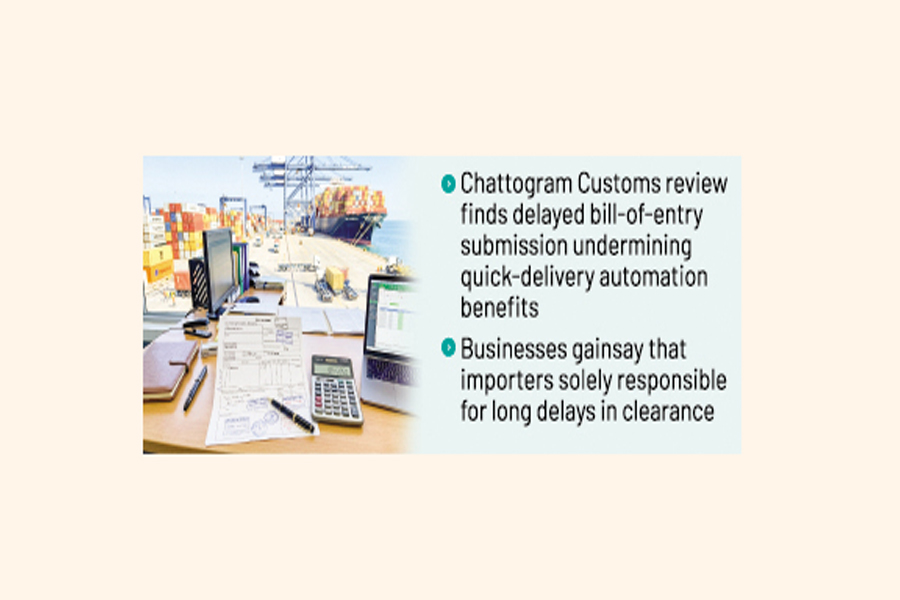
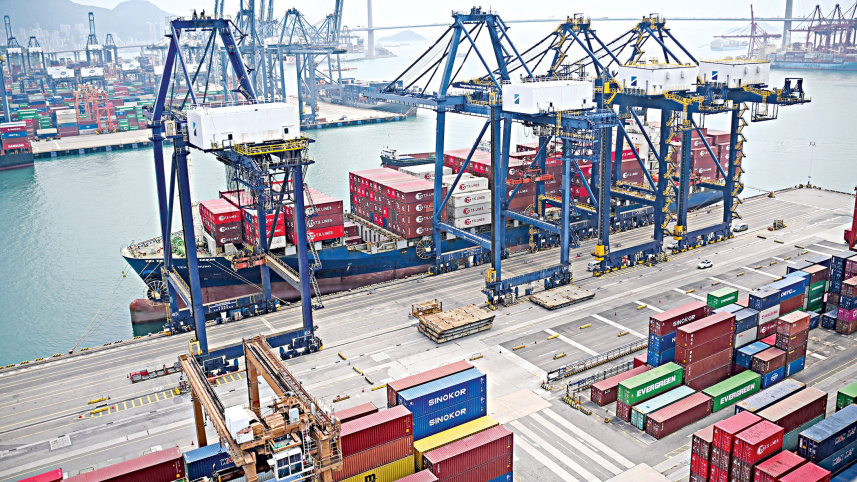
Chattogram, August 1, 2026 — Importers and their clearing and forwarding (C&F) agents are found to account for nearly 80 percent of the total port-clearance time at Bangladesh's prime seaport, significantly limiting the benefits of customs automation. 📊 The finding comes from a Chattogram Customs House (CCH) review conducted in the wake of contentions regarding time lapses in trade handling at ports. 🏗️
📋 The review shows that despite the introduction of several quick-fire automated processes, Bangladesh's port-clearance time has not fallen substantially because importers often delay submitting Bills of Entry (B/E). ⚠️
📊 Key Findings from CCH Review
📈 The analysis, based on ASYCUDA World data for April 2026, found:
- ⏱️ Average clearance time — 271 hours (more than 11 days) for AEO green channel consignments
- 📋 From IGM to release — from Import General Manifest submission to final release
- 🏭 Importer delays — account for ~80% of total clearance time
- ⚙️ Customs processing — only ~20% of total time
- 📊 Customs assessment speed — 46% completed within 1 day, 76% within 1 day, 82% within 2 days, 88% within 3 days
📊 Customs officials have said they have virtually no manual involvement in releasing AEO consignments. Once an importer submits the Bill of Entry, customs assessment is completed automatically. 📋
"Whatever improvements customs introduces, the overall port release time cannot be reduced unless importers submit their Bills of Entry promptly. We need a proper policy requiring importers or their agents to submit Bills of Entry within a specified timeframe."
📊 The official said the National Single Window (NSW) initiative has already shortened customs assessment time, with most assessments now completed within two days. 📋
🇮🇳 India Comparison: Mandatory B/E Submission
📋 The official cited India's experience as a model. India made submission of Bills of Entry mandatory within a day of cargo arrival in 2019:
- 📊 India ranking improvement — World Bank Ease of Doing Business (Trading across Border) improved from 146th to 80th position
- ⏱️ India clearance time — average fell from 264.5 hours to 96.7 hours within a year
- 📋 India Customs Act 1962, Section 46 — requires importers to present B/E before the end of the day preceding cargo arrival
- ⚠️ Bangladesh gap — customs rules do NOT prescribe any mandatory deadline for importers to submit B/E
⏱️ Detailed Time Breakdown
📊 A presentation by Chattogram Customs House showed detailed time breakdowns:
- 📋 Manifest processing — customs takes average 58 hours (conversion, container, DG segments, manifest registration)
- ⚙️ Assessment — 76% completed within 1 day of B/E submission
- 💰 Post-duty release — average another 89 hours AFTER duty payment
- 💳 A-Challan delays — importers take 2-3 days to pay duties despite digital payment availability
🏭 Industry Perspective: AEO Certified Company
📋 Tapas Biswas, Manager (VAT, Finance) at Pharmaceuticals PLC, an AEO-certified company, provided the importer perspective:
"Some junior customs officials still remain doubtful about AEO companies, suspecting that they may evade duties or receive excessive privileges. Such mistrust sometimes creates unnecessary delays."
📊 He also pointed to additional challenges:
- 🔄 Frequent transfers — of customs officials, requiring new officers to learn AEO procedures
- 📅 AEO renewal delays — certification expired in December 2025 but renewal not yet received
- 🚢 CPA processing — release documents at Chittagong Port Authority before customs clearance
- 💻 Digital adaptation — limited adaptation to digital customs system slows process
⚠️ However, Mr Biswas disagreed with the customs assessment that importers alone are responsible for 80% of clearance delays:
"Importers cannot be held solely responsible for such a large share of the delay. Procedural bottlenecks across multiple agencies also contribute significantly to the overall clearance process."
🔮 Implications for Trade Facilitation
🌐 The findings have significant implications for Bangladesh's trade competitiveness:
- 📦 Export supply chain — slow import clearance affects raw material availability
- 💰 Business costs — extended clearance increases storage and demurrage costs
- 📊 Global ranking — port clearance time affects ease of doing business ranking
- ⏱️ PM's 14-day target — challenge to achieve with importer-side delays
🎯 The solution requires policy reform — making B/E submission mandatory within a specified timeframe, similar to India's approach. Combined with the PM's recent announcement of 24/7 customs services at Chattogram Port, this could significantly reduce clearance times and improve Bangladesh's trade competitiveness. 🚀
This news was originally published by The Financial Express. For the full original report, please visit: https://thefinancialexpress.com.bd/trade/importers-limiting-benefits-of-customs-automation
📬 Get Bangladesh Trade News in your inbox
Weekly digest of export industry news, policy updates, and market analysis.
📰 Related Stories