IMF: Private Consumption Trails Economic Output As Inflation Hits Bangladesh Households
IMF Regional Economic Outlook recommends Bangladesh maintain tight monetary policy, strengthen weak financial sector, increase revenue collection for public investment.
📊 A latest IMF report suggests boosting household consumption and protecting vulnerable workers in Bangladesh to make economic growth more resilient as high inflation squeezes commoners' affordability in spending. In this regard, the International Monetary Fund (IMF) recommends that the country maintain tight monetary policy to contain inflation, strengthen weak financial sector and increase revenue collection for enhancing investment in public works.
🏛 The suggestions are laid in IMF's "Regional Economic Outlook: Asia and Pacific" released Thursday under the title "Resilience Amid Uncertainty: Can It Be Sustained?" It notes that private consumption in Bangladesh has grown more slowly than economic output, while the country's large informal workforce leaves households exposed to income shocks. The disconnect between economic output growth and household consumption growth is a critical weakness in Bangladesh's growth model — and one that has significant implications for both welfare and economic sustainability.
👥 Why consumption matters
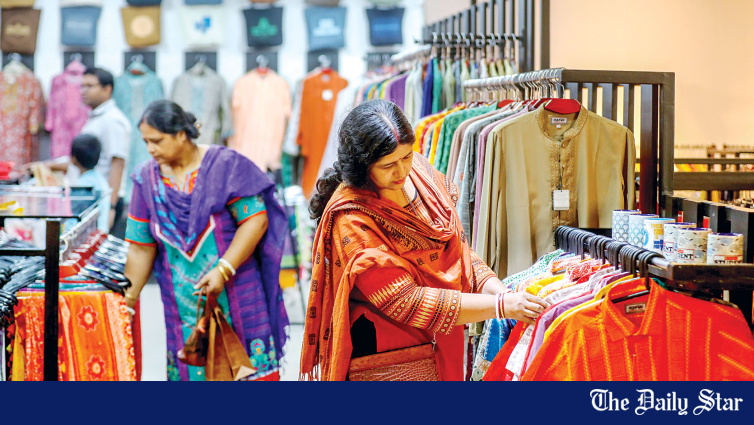
Private consumption is typically the largest component of GDP in most economies — in Bangladesh, it accounts for roughly 70% of GDP. When consumption growth trails GDP growth, it means that the benefits of economic growth are not being fully translated into improved living standards for households. Instead, the gains from growth are accruing to other parts of the economy — such as corporate profits, government revenues, or investment — rather than to household incomes and consumption.
This pattern is particularly concerning in Bangladesh's current macroeconomic context. With inflation running at 8.26% in August 2026, households are facing significant erosion of their purchasing power. If consumption growth is also trailing GDP growth, it means that real household incomes are falling even further behind — pushing more households into poverty and creating a drag on broader economic growth.
💰 IMF recommendations
The IMF's recommendations for Bangladesh focus on three key areas:
- ✅ Maintain tight monetary policy: The IMF recommends maintaining tight monetary conditions to contain inflation, which reached 8.0 per cent in September 2026. "It is very important to maintain a tight monetary condition in Bangladesh to be able to offset the impact of inflation," said Sonali Jain-Chandra, deputy director of the IMF's Asia and Pacific Department.
- ✅ Strengthen the financial sector: Bangladesh's banking sector weaknesses — including non-performing loans at 33% and weak governance at several banks — are constraining credit growth and undermining financial stability. The IMF recommends strengthening the financial sector to support more efficient credit allocation and broader economic growth.
- ✅ Increase revenue collection: Bangladesh's revenue-to-GDP ratio of 7% is among the lowest in the world, constraining the government's ability to invest in public works, social protection, and human development. The IMF recommends increasing revenue collection to enable greater public investment.
🌏 The informal workforce challenge
The IMF report's observation about Bangladesh's "large informal workforce" highlights a critical structural challenge. A significant share of Bangladesh's workforce is employed in the informal sector — where workers have no formal employment contracts, no social security coverage, and no access to formal credit or savings instruments. These workers are particularly exposed to income shocks, as they have no safety net to fall back on when they lose their jobs or face illness, injury, or other personal crises.
The informal workforce's vulnerability to income shocks is one of the key reasons why household consumption in Bangladesh is less resilient than in economies with more formalised labour markets. When informal workers face income shocks, they have no choice but to cut consumption — creating a direct link between income shocks and consumption declines. Strengthening social protection for informal workers would help break this link and make consumption more resilient.
🤝 Implications for Bangladesh's growth model
The IMF's analysis has important implications for Bangladesh's growth model. The country's growth strategy over the past two decades has been heavily dependent on export-led manufacturing growth — particularly in the readymade garment sector. While this strategy has delivered impressive GDP growth, it has not translated into proportionate improvements in household consumption and living standards for all segments of the population.
Rebalancing Bangladesh's growth model to be more inclusive — with greater emphasis on household consumption, social protection, and broad-based employment creation — could make growth more resilient while also delivering better welfare outcomes. The IMF's recommendations point towards this rebalancing: tighter monetary policy to protect household purchasing power, financial sector reform to support more efficient credit allocation, and revenue mobilisation to enable greater public investment.
💰 Looking ahead
For Bangladesh, the IMF's analysis provides a useful framework for thinking about the country's growth challenges. The combination of elevated inflation, weak consumption growth, and a large vulnerable informal workforce creates a difficult environment for inclusive economic development. The IMF's recommendations — if effectively implemented — could help address these challenges and put Bangladesh on a more sustainable and inclusive growth trajectory.
The proposed $4.5 billion IMF loan programme, currently being negotiated, should support the implementation of these recommendations. The programme's focus on revenue mobilisation, banking sector reform, and monetary policy tightening aligns directly with the IMF's analysis. If the programme is successfully implemented, it could help restore macroeconomic stability while also supporting the structural reforms needed to make Bangladesh's growth more inclusive and resilient.
The coming years will show whether Bangladesh can successfully rebalance its growth model to deliver stronger household consumption growth, better protection for vulnerable workers, and more sustainable macroeconomic performance. The stakes are high — both for the millions of Bangladeshis who are struggling with the cost of living, and for the country's broader development trajectory.
This news was originally published by The Financial Express. For the full original report, please visit: https://thefinancialexpress.com.bd/economy/private-consumption-trails-economic-output-as-inflation-hits-households
📬 Get Bangladesh Trade News in your inbox
Weekly digest of export industry news, policy updates, and market analysis.
📰 Related Stories