Gas Crisis Shuts 18 Percent of Gazipur Factories: Industrial Police
Around 17-18% of Gazipur factories declare three-day closure amid severe gas crisis; thousands of workers sent home; bdnews24.com report via Financial Express

Dhaka, August 5, 2026 — Around 17-18 percent of Gazipur's factories have declared a three-day closure amid a severe gas crisis, sending thousands of workers home — adding to the growing evidence of the industrial devastation caused by Bangladesh's prolonged energy shortage.
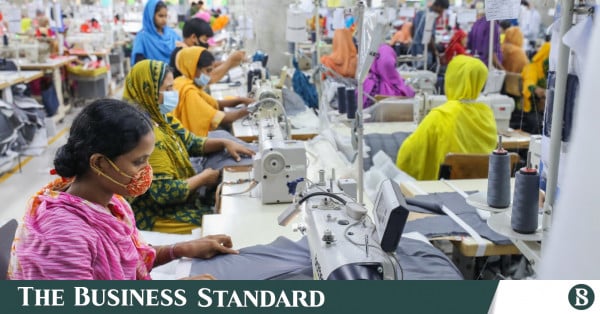
The closure data, reported by bdnews24.com and carried by The Financial Express, provides another quantitative measure of the gas crisis's impact on Bangladesh's industrial sector. Gazipur is one of the country's most important garment manufacturing hubs, housing hundreds of factories that supply major international brands. A 17-18 percent closure rate in this critical industrial belt means that roughly one in six factories in the area has found it more economical to shut down temporarily than to attempt production under gas-constrained conditions.
📊 The Gazipur Industrial Belt
Gazipur is home to a significant portion of Bangladesh's garment manufacturing capacity. The district, along with neighboring Savar, Ashulia, Narayanganj, and Bhaluka, accounts for more than 60 percent of the country's textile and garment factories. The 17-18 percent closure rate in Gazipur aligns with the broader pattern of industrial disruption documented across multiple sources:
- 📊 Gazipur factories closed (3-day): 17-18% of total
- 📊 158 factories shut in Gazipur (May 2025-Apr 2026): Per Industrial Police data (Daily Star, Aug 4)
- 📊 20%+ garment factories nationwide on three-day break: Per BGMEA/BKMEA (TBS, Aug 5)
- 📊 Plastic factories at 30% capacity: Per BPGMEA (Daily Star, Aug 5)
- 📊 Factory production down 40% in two weeks: Per Prothom Alo (Aug 4)
🛢️ The Gas Crisis Trajectory
The gas crisis that triggered these closures has been intensifying since the July 21 fire at the Excelerate Energy FSRU in Cox's Bazar, which cut pipeline gas supply by more than 17 percent. The crisis has been compounded by the broader Middle East conflict disrupting LNG supply chains, and by domestic gas production declines that have been ongoing since 2017. Bangladesh's daily gas supply has fallen to 2.15 billion cubic feet against demand of 3.8 billion cubic feet — a shortfall of 43 percent that has forced industries across the country to ration operations.
👥 Impact on Workers
The three-day closure sends thousands of workers home — many of them daily-wage earners who will lose income during the shutdown. For workers who were already struggling with the 9.16 percent inflation eroding their purchasing power, the lost wages from factory closures add another layer of economic hardship. The pattern of temporary closures, extended holidays, and reduced production capacity has created an environment of chronic uncertainty for Bangladesh's industrial workforce — workers who cannot plan their finances because they do not know whether their factory will be operating next week.
📋 Strategic Context
The 17-18 percent closure rate in Gazipur provides a concrete, location-specific data point that complements the broader national statistics on factory closures and capacity utilisation. Combined with the 158 permanent factory closures documented by the Industrial Police (reported on August 4), the 20 percent nationwide three-day break (reported on August 5), and the 30 percent capacity utilisation in the plastic sector (reported on August 5), the picture that emerges is of an industrial sector under severe and sustained pressure from the gas crisis.
The coincidence of these closures with the August 5 public holiday means that some factories may have chosen the holiday period for their closure specifically to minimize the production impact. However, the underlying cause — the gas crisis — is not going away. Until the FSRU is repaired and additional gas supply is secured, factories across Bangladesh will continue to face the difficult choice between operating at uneconomical reduced capacity or shutting down temporarily and sending workers home. The government's LDC graduation roadmap targets 7 percent GDP growth by 2029, but achieving that target requires an industrial sector operating at full capacity — not one where 17-18 percent of factories in the country's key manufacturing belt are forced to close because of energy supply failures. The gas crisis is not just an energy problem; it is the binding constraint on Bangladesh's entire economic recovery and growth trajectory.
This news was originally published by The Financial Express. For the full original report, please visit: https://thefinancialexpress.com.bd/national/gas-crisis-shuts-18pc-of-gazipur-factories
📬 Get Bangladesh Trade News in your inbox
Weekly digest of export industry news, policy updates, and market analysis.
📰 Related Stories