Fu-wang Foods Lays Off Factory for Six Months Amid Bangladesh Gas Crisis
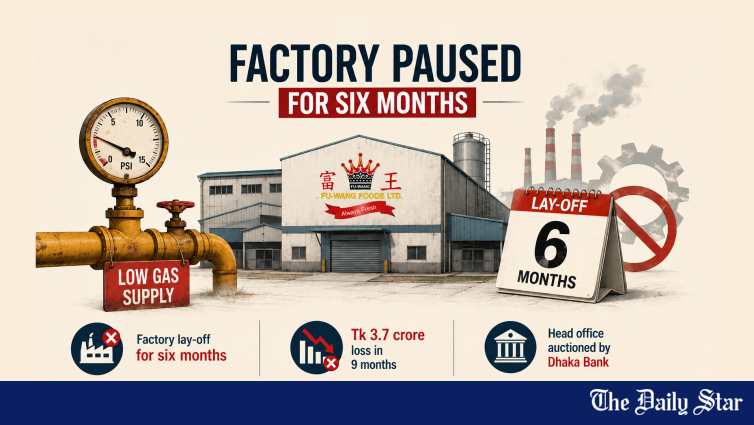
Dhaka, August 23, 2026 — Fu-wang Foods, a listed food products maker, has announced a factory lay-off for six months, citing inadequate gas pressure and rising raw material prices. In a disclosure on the Dhaka Stock Exchange (DSE) website on 23 August 2026, the company said its board had decided the lay-off for six months starting Saturday. This is the first time a listed company has announced a lay-off amid the recent gas crisis.
The company is classified in the Z category on the DSE, reserved for firms with poor financial and compliance records. Fu-wang Foods has 992 employees, according to its website. The lay-off affects all of these workers, who now face six months without employment income.
📊 The Company's Financial Distress
Fu-wang was already struggling before the latest gas crisis. The company failed to pay dividends for the past two financial years, did not hold its annual general meeting leading to its downgrade to Z category, incurred a loss of Tk 3.7 crore in the first three quarters of 2024-25, and did not publish any financial reports after that period. The situation was so dire that the company told the DSE in October 2025 that an auction had been held of the head office of Fu-wang Foods Limited by Dhaka Bank Limited against a loan provided by the bank.
Mohammad Zaman, Company Secretary of Fu-wang Foods, told The Daily Star that the bank issue had been resolved as the loan was rescheduled. "Now, raw material prices have risen while gas pressure is also limited. For both problems, the board decided to lay off the factory," he said.
⛽ The Gas Crisis Context
The impact of the gas crisis that began on July 21, 2026 is spreading across the country's industrial belts, with factories cutting production, shutting units, and sending workers on leave. Factory owners said gas pressure, which had gradually declined before the latest crisis, fell from the normal 15 PSI to 2-4 PSI last week and then to almost zero over the past few days.
- ⚠ Normal gas pressure: 15 PSI
- ⚠ Last week: 2-4 PSI
- ⚠ Recent days: Near zero
- 🚢 Excelerate FSRU fire: July 21, 2026 (cut 450 mmcfd)
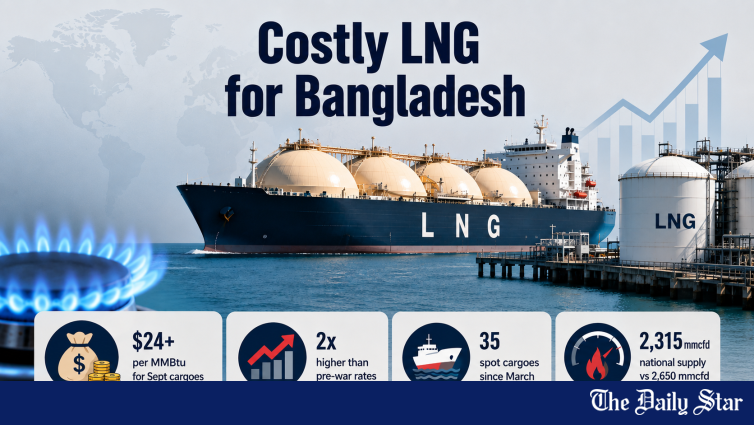
- 💰 LNG costs: $24+/MMBtu (more than double pre-war $10-12)
- 🏭 Narsingdi textile factories halted: 100+
- 💰 Energy crisis cost to industry: Tk 2,387 crore daily
Today, Fu-wang Foods' shares dropped 0.89 percent to Tk 11.10 at the DSE, reflecting investor concern about the company's future and the broader impact of the gas crisis on listed manufacturing companies.
👥 Worker Impact
The factory closure directly affects 992 workers employed at the facility, who now face six months without income. This adds to the broader employment crisis in Bangladesh's industrial sector, where 95 factories permanently shut down in Gazipur, Savar-Ashulia, and Narayanganj-Narsingdi between January and August 2026, resulting in 61,881 direct job losses, according to CPD data. The cumulative impact of these job losses on household incomes, consumer demand, and social stability is substantial and growing.
🌐 Strategic Context for Bangladesh's Export Economy
The Fu-wang Foods closure demonstrates that the gas crisis is no longer just a textile-sector problem — it is affecting all gas-dependent industries, including food processing, steel, paper, particleboard, ceramics, and fertiliser production. For Bangladesh's export economy, the spread of the gas crisis to food processing is particularly concerning because agro-processing has been identified as a priority sector for export diversification beyond RMG. Companies like PRAN-RFL, ACI Foods, and other agro-processors face similar risks if the gas supply situation does not improve.
The energy crisis has already cost Bangladesh industry an estimated Tk 2,387 crore daily, according to earlier reports. The Fu-wang Foods lay-off is the first formal confirmation from a DSE-listed company that the crisis has reached a point where factories cannot sustain operations even on a reduced basis. Other listed companies in food processing, pharmaceuticals, and ceramics may face similar decisions in the coming weeks if the gas supply situation does not improve significantly. The DSE's Z category classification for Fu-wang Foods reflects the broader fragility of Bangladesh's listed manufacturing sector, where companies with weak financial fundamentals are disproportionately vulnerable to external shocks like the gas crisis because they lack the financial reserves to weather extended disruptions to their production operations.
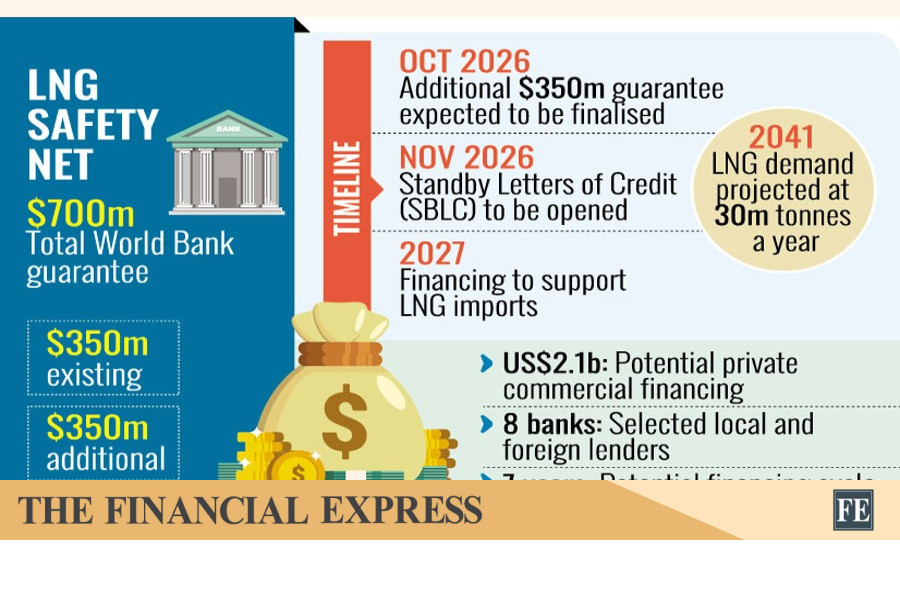
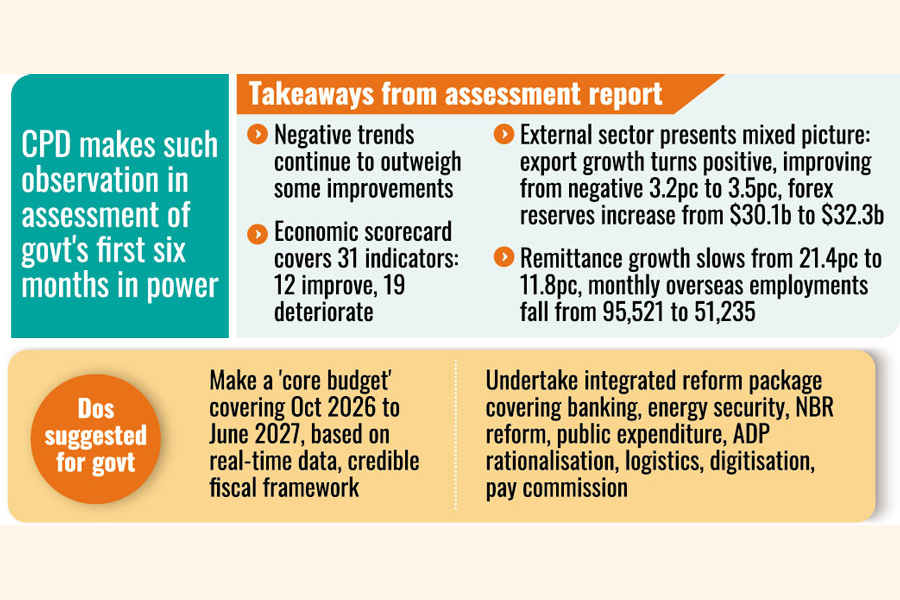
The BNP government's energy sector reform agenda must urgently address both the immediate supply crisis and the structural challenges. The CPD's recent assessment identified the prolonged gas crisis as one of the key concerns, noting it has exposed "weaknesses in crisis management and supply planning." Without resolving the gas supply crisis through Excelerate FSRU repair, LNG cargo procurement, domestic gas exploration, and renewable energy investment (including the 1,768 MWp rooftop solar potential identified by CPD for RMG factories), Bangladesh's manufacturing sector will continue to face disruptions that undermine both domestic production and export competitiveness, with each factory closure representing lost output, lost jobs, and lost foreign exchange earnings that the country can ill afford as it approaches LDC graduation in November 2026.
This news was originally published by The Daily Star. For the full original report, please visit: https://www.thedailystar.net/business/news/fu-wang-foods-lays-factory-six-months-amid-gas-crisis-4254841
📬 Get Bangladesh Trade News in your inbox
Weekly digest of export industry news, policy updates, and market analysis.
📰 Related Stories